

Key Takeaways
- Telematics programmes use real driving data - speed, mileage, braking - to set your premium instead of demographic proxies.
- Pay-per-mile insurance charges a base rate plus a per-mile fee, benefiting drivers who rarely use their vehicle.
- Insurers collect location, time-of-day, and behaviour data; understanding what's tracked matters before enrolling.
- Low-mileage and cautious drivers generally see savings, while high-mileage or aggressive drivers may pay more.
- Privacy trade-offs are real: the data shared with an insurer can influence future pricing and underwriting decisions.
Premiums reflect actual driving, not demographics
Low-mileage or careful drivers are no longer subsidising higher-risk policyholders through blended rate pools. Your behaviour becomes the primary pricing input.
Significant savings for infrequent drivers
Pay-per-mile programmes can reduce annual premiums substantially for drivers who log well under the national average - some policyholders report savings in the range of 20-40%, though individual results vary.
Feedback can encourage safer habits
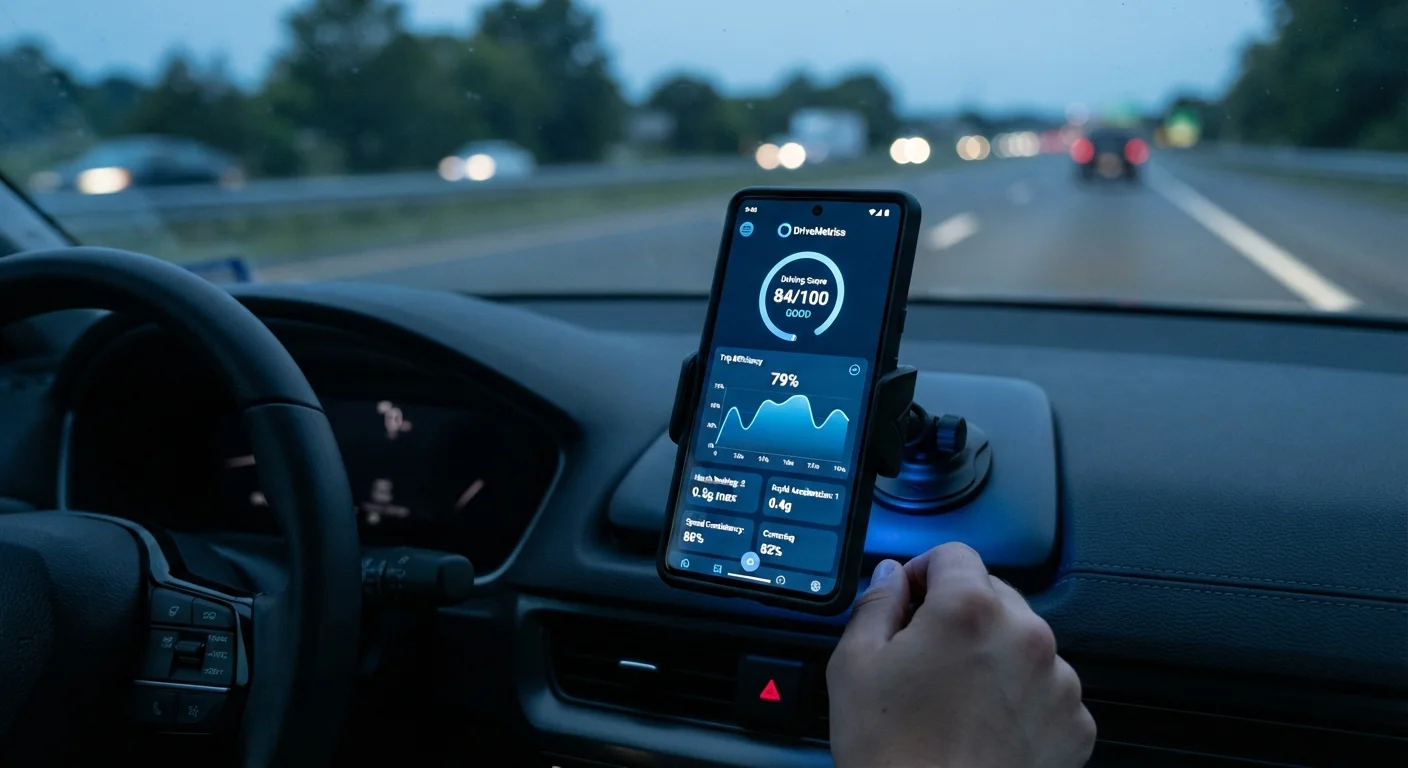
Scoring dashboards make driving patterns visible, which some drivers find motivating. Awareness of hard-braking frequency, for example, can prompt more attentive driving over time.
Transparent pricing structure
Pay-per-mile billing makes the cost of each trip legible. Drivers can model their monthly cost based on anticipated mileage rather than waiting for an insurer's renewal estimate.
Entry-level option for building an insurance record
Drivers with thin insurance histories who demonstrate careful driving may access better rates more quickly than through traditional underwriting timelines.
Extensive data collection raises privacy concerns
Location, time-of-day, speed, and phone-use data are transmitted to the insurer and potentially retained long-term. How that data is used beyond premium pricing - including sharing with third parties - varies by policy and state law.
Scores can penalise context-dependent driving
A hard-braking event caused by a pedestrian stepping out looks identical in the data to reckless following distance. The telematics system has no way to distinguish between the two.
High-mileage drivers will likely pay more
Pay-per-mile programmes are structurally unfavourable for anyone who drives frequently. A driver averaging 15,000-20,000 miles per year may pay significantly more than under a flat-rate policy.
Night driving and urban patterns raise scores
Shift workers, healthcare workers, or anyone who routinely drives late at night or in dense traffic may be penalised regardless of their actual accident history.
Two-way pricing programmes carry rate-increase risk
Not all telematics programmes are "discount only." In programmes with bidirectional pricing, a poor monitoring period can result in a higher renewal premium, not just a forfeited discount.
Our Verdict
Usage-based and pay-per-mile insurance can meaningfully reduce costs for drivers who clock low annual mileage or demonstrate consistently safe habits. The trade-off is a level of behavioural monitoring that not every driver is comfortable with. Premiums are more transparent and tied to actual risk, but the data collected is extensive and the impact of poor scores can follow a policyholder at renewal.
Best suited to remote workers, retirees, or urban residents who drive infrequently and want their premium to reflect that reality rather than broad demographic averages.
How Traditional Auto Insurance Pricing Works - and Where Telematics Departs
Standard auto insurance pricing relies heavily on statistical proxies: your age, ZIP code, credit score, vehicle model, and claims history are combined into a risk profile. The approach is actuarially sound but imprecise - a 45-year-old with a clean record who drives 20,000 miles a year pays from the same rate table as one who drives 4,000. As our overview Auto Insurance Decoded explains, traditional coverage tiers treat similar-looking policyholders as interchangeable.
Telematics flips that logic. Rather than inferring risk from demographics, it observes actual driving behaviour through a plug-in OBD-II device, a smartphone app, or factory-installed vehicle hardware. The insurer then prices the policy around what you actually do behind the wheel.
Two distinct models have emerged. Usage-based insurance (UBI) adjusts your discount - or occasionally your rate - based on driving quality scores derived from telematics data. Pay-per-mile insurance is more structural: you pay a fixed base rate each month plus a per-mile charge for every mile driven. Low-mileage drivers can see substantial savings; high-mileage drivers may not.
OBD-II Devices vs. Smartphone Apps
Plug-in OBD-II dongles draw data directly from the vehicle's onboard computer, capturing speed and hard-braking data with high fidelity. Smartphone apps rely on GPS and accelerometer sensors, which can be less precise but are easier to deploy - and may also monitor phone-use behaviour during trips. Some insurers offer both options; the data collected and the scoring methodology can differ between them, so it's worth asking which method a specific programme uses before enrolling.
What Data Telematics Programmes Actually Collect
The scope of data collection varies by programme, but most capture some combination of the following:
- Miles driven - the primary variable in pay-per-mile pricing
- Time of day - night-time driving correlates with higher crash rates, so late trips can weigh against you
- Hard braking and rapid acceleration - frequent events suggest aggressive or inattentive driving
- Speed - sustained high speeds above posted limits can lower your score
- Phone use while driving - detected through motion and signal patterns in app-based programmes
Location data is collected in many programmes, though some insurers allow drivers to opt out of GPS tracking while still participating. It's worth requesting a clear data-use disclosure before enrolling - insurers are generally required to provide one. Worth noting: the same factors that telematics programmes now reward (low mileage, careful braking) are the kind of behaviours that, without telematics, might never register at all - whereas ZIP code or credit score would still influence your rate. See factors that can raise your rate for context on how non-driving variables affect traditional premiums.
~15%
Typical UBI discount range for safe drivers
Industry analyses generally estimate usage-based insurance discounts in the 10-20% range for qualifying drivers, though actual savings depend heavily on programme structure and individual scoring.
5,000 mi
Annual mileage where pay-per-mile often breaks even
Drivers logging roughly 5,000 miles per year or fewer are frequently cited as the threshold group for whom per-mile pricing tends to outperform traditional flat-rate premiums.
2 in 3
US insurers offering a telematics programme
According to insurance industry surveys, a substantial majority of major US personal auto insurers now offer at least one usage-based or telematics-enabled pricing option.
Pros and Cons of Enrolling
Telematics programmes are neither universally beneficial nor universally risky - the outcome depends almost entirely on your driving patterns and privacy comfort level.
Premiums reflect actual driving, not demographics
Low-mileage or careful drivers are no longer subsidising higher-risk policyholders through blended rate pools. Your behaviour becomes the primary pricing input.
Significant savings for infrequent drivers
Pay-per-mile programmes can reduce annual premiums substantially for drivers who log well under the national average - some policyholders report savings in the range of 20-40%, though individual results vary.
Feedback can encourage safer habits
Scoring dashboards make driving patterns visible, which some drivers find motivating. Awareness of hard-braking frequency, for example, can prompt more attentive driving over time.
Transparent pricing structure
Pay-per-mile billing makes the cost of each trip legible. Drivers can model their monthly cost based on anticipated mileage rather than waiting for an insurer's renewal estimate.
Entry-level option for building an insurance record
Drivers with thin insurance histories who demonstrate careful driving may access better rates more quickly than through traditional underwriting timelines.
The disadvantages are real and worth weighing before signing up.
Extensive data collection raises privacy concerns
Location, time-of-day, speed, and phone-use data are transmitted to the insurer and potentially retained long-term. How that data is used beyond premium pricing - including sharing with third parties - varies by policy and state law.
Scores can penalise context-dependent driving
A hard-braking event caused by a pedestrian stepping out looks identical in the data to reckless following distance. The telematics system has no way to distinguish between the two.
High-mileage drivers will likely pay more
Pay-per-mile programmes are structurally unfavourable for anyone who drives frequently. A driver averaging 15,000-20,000 miles per year may pay significantly more than under a flat-rate policy.
Night driving and urban patterns raise scores
Shift workers, healthcare workers, or anyone who routinely drives late at night or in dense traffic may be penalised regardless of their actual accident history.
Two-way pricing programmes carry rate-increase risk
Not all telematics programmes are "discount only." In programmes with bidirectional pricing, a poor monitoring period can result in a higher renewal premium, not just a forfeited discount.
It's also worth remembering that a bad score during a monitoring period can stay on your record. Some programmes are structured as "discount only" - meaning your base rate won't increase from telematics data alone - but others allow two-way adjustments. Confirm which model applies before enrolling. For a broader look at coverage decisions that can have unintended consequences, see coverage decisions that often come back to haunt drivers.
Is Telematics Insurance Right for Your Situation?
The financial case is clearest for drivers who fall into these categories: people who work from home or use public transit for most trips, retirees who drive mainly for errands or leisure, and urban households where a car sits unused for days at a time. Pay-per-mile programmes, in particular, can translate a low-mileage lifestyle directly into a lower monthly bill - a form of smarter budgeting that aligns cost with actual use.
Conversely, if you have a long commute, frequently drive during peak hours or at night, or are still developing driving habits (younger drivers, for example), a telematics programme carries more pricing risk than reward. It could also be counterproductive if your driving style generates hard-braking events that aren't reckless - navigating city stop-and-go traffic, for instance, produces very different telematics signatures than highway cruising.
Before enrolling, it's worth auditing your own driving: estimate your annual mileage honestly, think about when and where you typically drive, and read the programme's terms regarding data retention and rate adjustments. A programme that only offers upside - discounts for good scores, no penalty for poor ones - carries much lower risk than a fully bidirectional pricing model.
This article provides general information about insurance pricing models and is not personalised insurance or financial advice. Coverage terms, data practices, and eligibility vary by insurer and state. Consult a licensed insurance agent to evaluate options suited to your specific circumstances.