

Key Takeaways
- Mental wellness needs are not fixed - they evolve through early, middle, and later adulthood.
- Each life stage brings distinct stressors: identity in your 20s, caregiving and career pressure in your 40s, transitions and meaning in your 60s.
- Recognizing your current stage helps you choose strategies that actually fit your life.
- Social connection remains a consistent pillar of wellness across all adult life stages.
- Professional support is appropriate and beneficial at any age - not only during crisis.
- Lifestyle foundations like sleep, movement, and nutrition support mental health throughout adulthood.
Mental Wellness Across the Lifespan
Mental wellness is an ongoing state of emotional, psychological, and social well-being that allows a person to cope with normal life stressors, maintain fulfilling relationships, and function effectively. Crucially, the specific challenges and strategies that support wellness are not static - they shift in meaningful ways as adults move through different life stages. What feels like a mental wellness priority in your 20s often looks quite different from what matters in your 40s or 60s.
Developmental psychology distinguishes between early, middle, and late adulthood, each associated with distinct psychosocial tasks (per Erik Erikson's framework) that shape emotional needs and stressors.
Why Life Stage Shapes Mental Wellness
Mental wellness is not a destination you arrive at and maintain unchanged. It's a dynamic state influenced by the circumstances, relationships, and internal questions that define each phase of adult life. A 28-year-old navigating career uncertainty and identity formation faces fundamentally different psychological terrain than a 52-year-old managing aging parents and a shifting sense of purpose.
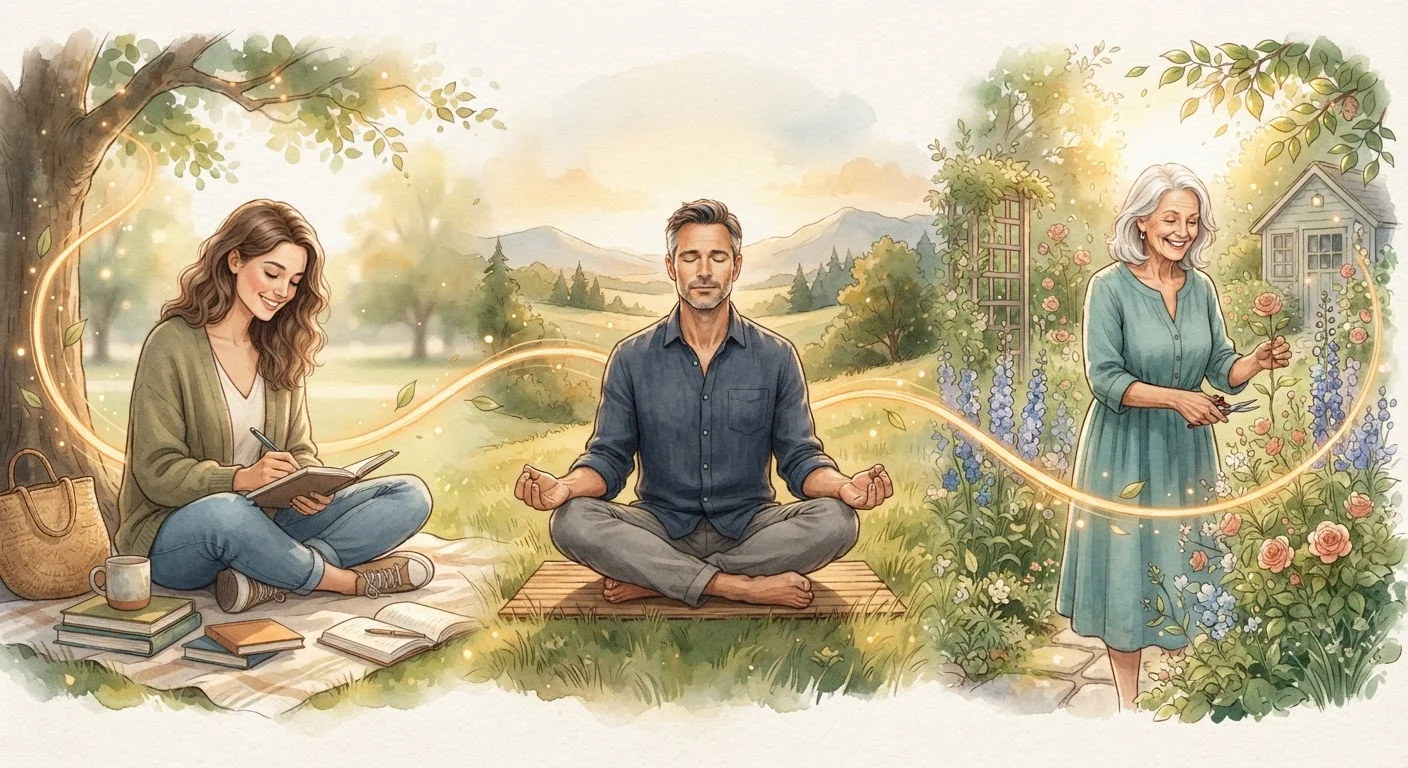
Developmental psychologists have long observed that adulthood unfolds in stages - early (roughly 20s-30s), middle (40s-50s), and later (60s and beyond) - each anchored by distinct challenges and growth opportunities. Understanding which stage you're in isn't about putting yourself in a box; it's about giving yourself useful context so that wellness strategies actually fit your life.
This Is General Education, Not Personal Advice
The patterns described in this article reflect broad developmental trends observed across populations - they are not diagnostic criteria or prescriptions. Individual experiences vary widely based on culture, health history, socioeconomic factors, and personal circumstance. If you are concerned about your mental health at any life stage, please speak with a qualified healthcare or mental health professional.
This article provides general health education, not personal medical or psychological advice. If you are experiencing significant distress or mental health symptoms, please consult a qualified healthcare professional.
Early Adulthood: Identity, Uncertainty, and Building Foundations
The 20s and early 30s are often marked by high-stakes transitions: establishing a career, forming close relationships, and answering questions about who you are and what you want. This period can carry real emotional weight despite its outward appearance of energy and possibility.
Common mental wellness challenges in early adulthood include anxiety related to financial pressure and career uncertainty, the strain of navigating new romantic partnerships, and the identity work of separating from family of origin. Social comparison - intensified by digital platforms - is a recognized stressor for this age group.
Effective supports in this stage often involve building emotional self-awareness, developing practical stress-management skills, and cultivating a social network of genuine depth. The range of mental wellness strategies available is broad; early adulthood is an excellent time to explore what resonates. Establishing lifestyle habits around sleep, movement, and nutrition during this window also creates a durable foundation - these factors have a well-documented relationship with mood and cognitive resilience, as explored in our overview of sleep, exercise, and nutrition's role in mental well-being.
Start With What's Shifted, Not What's Wrong
Rather than framing mental wellness check-ins as problem-finding exercises, try asking yourself what has changed in your life recently and how those changes are affecting your emotional energy. Life-stage transitions - a new job, a child leaving home, a retirement - are predictable triggers for wellness recalibration. Naming the transition often makes the emotional response less confusing and more manageable.
Middle Adulthood: Competing Demands and the Search for Meaning
The 40s and 50s frequently bring a convergence of responsibilities: raising children or launching them into independence, supporting aging parents, sustaining long-term relationships, and maintaining career momentum. This "sandwich generation" experience can create a chronic low-grade stress that erodes mental wellness gradually, rather than in acute episodes.
Midlife is also when many adults encounter what researchers describe as an evaluation of life direction - questioning whether current paths align with deeper values. While popular culture often frames this as a "crisis," it is more accurately a developmental signal worth taking seriously.
Wellness strategies well-suited to this stage include setting boundaries around time and energy, investing intentionally in relationships that provide genuine reciprocity, and carving out space for reflection. Connection with others who share similar life pressures can be valuable. Our guide to building a meaningful adult social life addresses this in practical terms. Therapy or counseling during midlife can be particularly effective for processing accumulated stressors and recalibrating priorities.
1 in 5
U.S. adults experience a mental illness each year
According to the National Institute of Mental Health, mental health conditions are common across all adult age groups, not concentrated in any single life stage.
~50%
Adults 45-64 who report frequent mental distress
The CDC's Behavioral Risk Factor Surveillance System data has consistently identified midlife adults as among those reporting elevated rates of mental distress.
43%
Older adults with depression who go untreated
Research published in health aging literature suggests a substantial portion of older adults with depression do not receive professional treatment, highlighting a gap in later-life mental health care.
Later Adulthood: Transitions, Loss, and Sustaining Well-Being
From the 60s onward, mental wellness shifts to encompass new terrain: retirement and redefined identity, navigating physical health changes, processing loss of peers and partners, and finding continued sources of meaning. Contrary to common assumptions, older adults often report greater emotional regulation and life satisfaction than younger cohorts - but this does not mean wellness challenges disappear.
Loneliness and social isolation are significant risks in later adulthood, particularly after retirement or the loss of a partner. Cognitive engagement - staying mentally active through learning, creative pursuits, or meaningful work - is associated with better psychological outcomes, though it is not a guarantee against cognitive decline.
For adults who feel emotionally adrift rather than acutely distressed, the concept of emotional wellbeing for adults who feel fine but not quite right offers a useful and grounded starting point. Professional mental health support remains effective and appropriate in this life stage, even though older adults have historically been less likely to seek it. If you are noticing changes in mood, memory, or daily functioning, speaking with a healthcare provider is always a reasonable next step.
This article is intended for general informational and educational purposes only and does not constitute medical or psychological advice. Please consult a qualified healthcare professional for guidance specific to your circumstances.