

Key Takeaways
- Prolonged sitting raises risks for cardiovascular, metabolic, and musculoskeletal health beyond what exercise alone can fully offset.
- Breaking up sitting with short movement bouts throughout the day is one of the most evidence-supported strategies available.
- Ergonomic setup, posture awareness, and deliberate micro-breaks are practical, low-cost interventions most desk workers can implement immediately.
- A single daily workout does not cancel the health costs of eight or more hours of continuous sitting.
- Consistency in small daily habits tends to produce more durable benefits than periodic, intense efforts.
Why Sitting All Day Is a Distinct Health Problem
For most of human history, sustained stillness was rare. Today, desk-based work has made sitting for six to ten hours a day the norm for millions of American adults. Research published in leading epidemiological journals has consistently linked prolonged sedentary time to elevated risks for cardiovascular disease, type 2 diabetes, and all-cause mortality - independent of whether a person exercises regularly.
That last point matters. A common assumption is that a morning run or an evening gym session cancels the effects of eight hours in a chair. The evidence suggests otherwise. As one widely cited framework describes it, too much sitting is a distinct risk behavior, separate from too little exercise. Movement throughout the day - not just structured workouts - plays a meaningful role in metabolic and circulatory health.
The good news: the strategies below are practical, require no special equipment, and can be layered into most existing work routines. They are not substitutes for medical care or a replacement for broader physical activity guidelines - but they are a meaningful place to start.
Start with one change, not six
When introducing new habits, behavioral research consistently shows that starting with a single, specific change produces better long-term results than overhauling everything at once. Choose the one strategy from this list that fits most naturally into your existing routine and practice it for two to three weeks before adding another. Small, durable shifts compound over time.
Practical Strategies to Counter Desk-Bound Days
Follow the 30-minute movement rule
Research from institutions including the American Heart Association suggests that breaking up continuous sitting every 30 minutes with even two to five minutes of light movement - standing, walking, or simple stretching - can help mitigate some of the metabolic and circulatory effects of prolonged sedentary time. Setting a recurring timer or using a wearable reminder keeps this habit automatic rather than aspirational.
Two to five minutes of movement every half hour can meaningfully interrupt the metabolic cost of sitting.
Optimize your workstation ergonomics
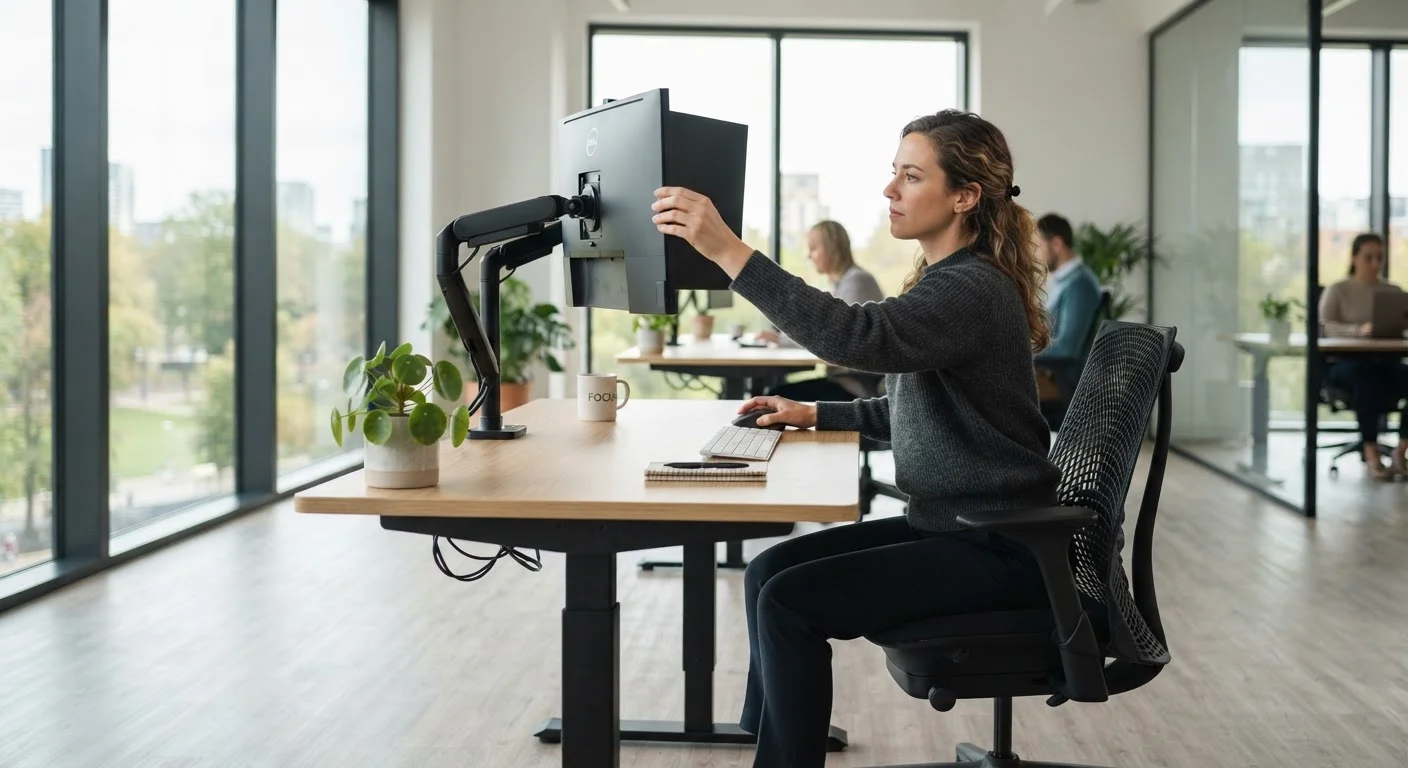
Ergonomics - the science of fitting a workspace to the worker - directly affects posture, muscle fatigue, and long-term musculoskeletal health. Key principles include positioning your monitor at eye level to reduce neck strain, ensuring your feet rest flat on the floor or a footrest, and keeping your elbows at roughly a 90-degree angle at the keyboard. A properly set up workstation does not eliminate the need to move, but it reduces the cumulative strain of hours spent in a fixed position.
A well-configured workstation reduces cumulative strain even before you add any movement strategy.
Alternate between sitting and standing
Height-adjustable or sit-stand desks have grown in popularity, and the underlying rationale is sound: alternating postures engages different muscle groups and reduces the load on spinal structures. However, standing continuously for hours presents its own risks, including lower-limb fatigue and varicose vein development. Aim for a dynamic balance - shifting between sitting, standing, and walking throughout the day - rather than simply replacing one static posture with another.
Shifting between sitting, standing, and walking is more effective than swapping one static posture for another.
Use walking meetings and phone-call movement
Not every meeting requires a screen. Walking meetings - conducted on foot rather than around a conference table - are a low-friction way to accumulate steps without carving out separate exercise time. Similarly, taking phone calls standing or walking is a simple behavioral substitution that adds movement to what would otherwise be a sedentary activity. These micro-changes accumulate meaningfully over a full workweek.
Turning phone calls and low-tech meetings into walking opportunities adds genuine activity without extra time.
Incorporate targeted desk stretches
Certain muscle groups are particularly affected by prolonged sitting: hip flexors shorten, upper trapezius muscles tighten, and thoracic (mid-back) mobility tends to decrease. Targeted stretches - such as chest openers, seated spinal rotations, and standing hip flexor stretches - address these patterns specifically. Even two or three minutes of focused stretching at regular intervals can help counteract postural imbalances that develop over months and years of desk work.
Hip flexors, upper traps, and thoracic mobility are the specific targets most desk workers need to address.
Prioritize intentional end-of-day movement
While a single workout cannot fully offset prolonged sitting, ending the workday with deliberate physical activity - a brisk walk, a brief strength session, or a yoga class - still provides substantial cardiovascular and metabolic benefits. The key is treating this time as non-negotiable, not optional. Pairing it with something enjoyable or social increases the likelihood of long-term adherence, which matters far more than any single session's intensity.
Consistency in end-of-day movement matters far more than the intensity of any individual session.
What counts as sedentary time?
In research contexts, sedentary behavior is typically defined as any waking activity performed while sitting or reclining that involves low energy expenditure - generally below 1.5 metabolic equivalents (METs). Importantly, this includes activities like watching television, reading at a desk, and passive commuting, not just formal work hours. Tracking your total daily sedentary time, not just work hours, gives a more accurate picture of your actual movement profile.
Building These Habits Into a Sustainable Routine
Individual strategies work best when they are woven into a coherent routine rather than applied sporadically. Building a weekly movement routine that actually sticks involves layering small habits until they feel automatic - the same principle applies to desk-day interventions.
If you're unsure how much structured physical activity to target alongside these micro-habits, physical activity guidelines from major health bodies provide a useful evidence-based reference point. And on days when fatigue accumulates, understanding the difference between structured rest and active recovery can help you make smarter decisions about how to recharge.
If you have existing musculoskeletal conditions, cardiovascular concerns, or other health factors that affect your ability to move, speak with a qualified healthcare professional before making significant changes to your activity patterns. The strategies described here are general information, not personalized medical advice.
This article is for informational and educational purposes only and does not constitute medical advice. Always consult a qualified healthcare provider regarding any health concerns or before making changes to your physical activity routine.