

Key Takeaways
- Solid hardwood can be sanded and refinished many more times than engineered wood, extending its usable lifespan significantly.
- Engineered wood handles moisture and humidity swings far better than solid hardwood, making it safer for basements and kitchens.
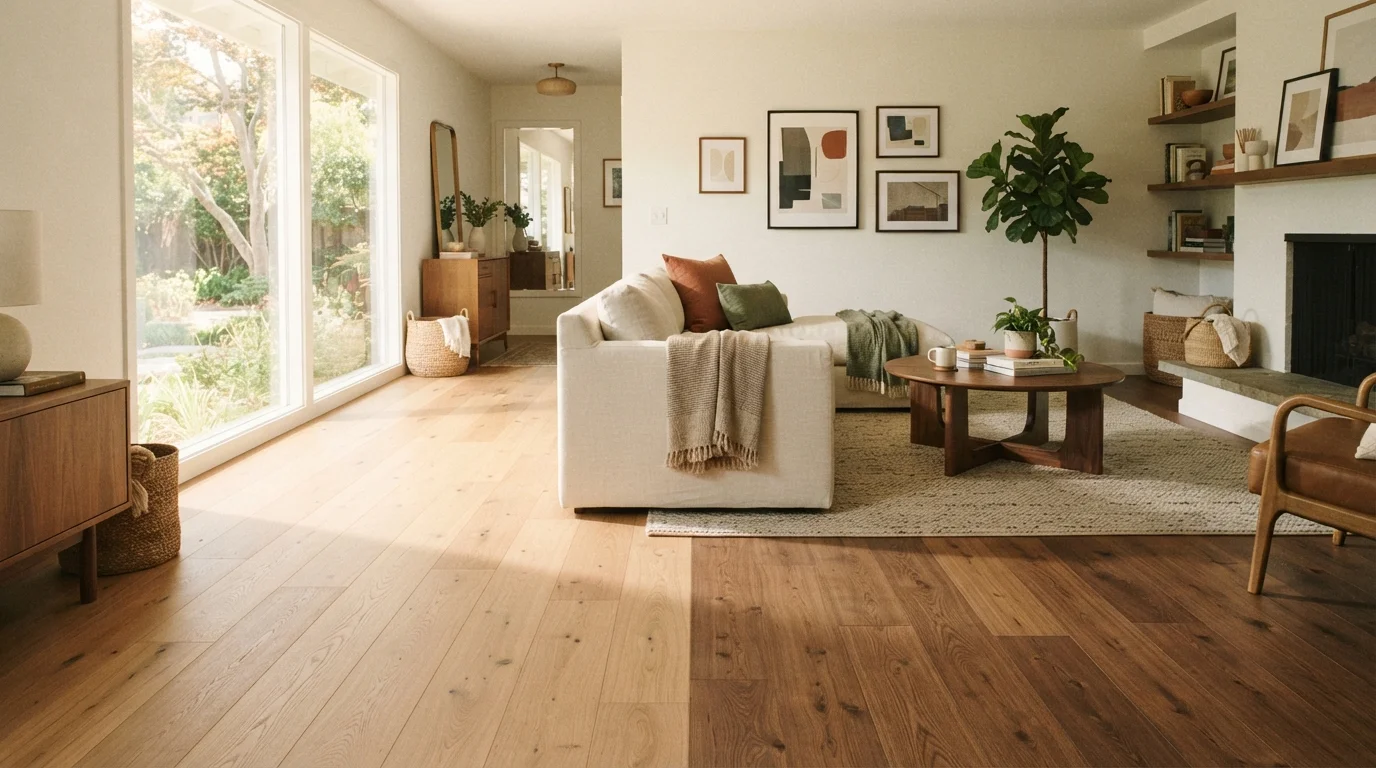
- Both products can look virtually identical once installed - the real differences are structural, not cosmetic.
- Solid hardwood typically cannot be installed on or below grade; engineered wood expands these installation options.
- Wear layer thickness in engineered wood varies widely - thinner layers allow fewer refinishes, so check specs before buying.
Option A
Solid Hardwood Flooring
The time-tested classic with unmatched refinishing potential.
Best for: Dry, climate-controlled living spaces where long-term refinishing and resale appeal matter most.
Option B
Engineered Wood Flooring
The dimensionally stable, moisture-tolerant modern alternative.
Best for: Homes with fluctuating humidity, below-grade spaces, or concrete subfloors where solid wood would warp.
If you want flooring that can be refinished repeatedly over decades
Solid Hardwood Flooring
Solid hardwood is typically ¾ inch thick throughout, allowing multiple sandings over its lifetime - a major advantage for aging homes or high-traffic areas.
If you're installing in a basement, kitchen, or climate with high humidity swings
Engineered Wood Flooring
Its cross-ply core resists expansion and contraction caused by moisture, making it dramatically more stable in challenging environments.
If you're working over a concrete slab subfloor
Engineered Wood Flooring
Solid hardwood requires a wood subfloor and cannot be glued directly to concrete; engineered wood supports glue-down and floating installations over concrete.
If long-term resale value and traditional aesthetics are priorities
Solid Hardwood Flooring
Real estate markets in many regions associate solid hardwood with quality, and its refinishable nature means it can be refreshed before a sale.
What Sets These Two Flooring Types Apart
Solid hardwood is milled from a single piece of lumber - usually ¾ inch thick - and its performance characteristics follow directly from that structure. It expands and contracts as indoor humidity rises and falls, which means installation location and climate control matter enormously.
Engineered wood is built differently: a hardwood veneer is bonded over multiple layers of plywood or high-density fiberboard, with the grain of each layer running perpendicular to the next. This cross-ply construction counteracts the natural tendency of wood to move with moisture, giving engineered flooring its defining advantage in variable conditions.
Both products are genuine wood - engineered wood is not laminate or vinyl. The top surface of engineered flooring is real hardwood, and in many cases the two floors are visually indistinguishable once installed.
| Criterion | Solid Hardwood | Engineered Wood |
|---|---|---|
| Construction | Single solid wood plank | Hardwood veneer over plywood core |
| Typical thickness | ¾ inch | ⅜ to ¾ inch |
| Moisture resistance | Low - expands and contracts significantly | Moderate - dimensionally more stable |
| Refinish potential | 3-5 times over lifetime | 1-3 times, depends on wear layer |
| Installation locations | Above grade only, wood subfloor | Above, on, or below grade; concrete OK |
| Over radiant heat | Risky; limited compatibility | Generally compatible; verify product specs |
| Lifespan (well maintained) | 50-100+ years | 20-50 years (wear layer dependent) |
| Visual appearance | Traditional hardwood look | Virtually identical to solid hardwood |
Durability and Wear Over Time
For most homeowners, durability means two things: resistance to surface damage and how many times the floor can be restored. Solid hardwood has the clear edge on the second count. Because the entire board is wood, it can be sanded back and refinished - industry guidance generally suggests three to five times over a floor's lifetime, depending on how aggressively each sanding removes material.
Engineered wood's refinish potential depends entirely on the wear layer - the thickness of hardwood veneer on top. Wear layers typically range from about 2 mm to 6 mm. A 2 mm layer may support one light sanding; a 6 mm layer can be refinished two or three times. When shopping, verify the actual wear layer measurement rather than relying on general product descriptions.
~¾ in
Thickness of a standard solid hardwood plank
This consistent thickness is what allows solid hardwood to be sanded and refinished multiple times across its lifespan.
2-6 mm
Wear layer range in engineered wood
Thicker wear layers (5-6 mm) significantly expand refinishing options; thinner layers (2 mm) may allow only one light sanding.
Below grade
Installations where solid hardwood cannot be used
Basements and slab-on-grade installations are off-limits for solid hardwood but are common, supported use cases for engineered wood.
On surface hardness, both flooring types perform comparably within the same wood species. A white oak engineered floor is no softer than a solid white oak floor - species and finish coating determine day-to-day scratch resistance, not construction type.
Moisture, Installation, and Where Each Floor Actually Works
Solid hardwood must be installed above grade on a wood subfloor, with a crawl space or basement below that is dry and ventilated. It requires acclimation - boards need to sit in the room for several days before installation to adjust to ambient humidity. Homes without consistent climate control, or rooms prone to humidity spikes, put solid hardwood at real risk of cupping, gapping, or buckling.
Engineered wood opens up installation locations that solid hardwood simply cannot occupy. It can be floated over concrete, glued directly to a slab, or installed in basements at or slightly below grade. This makes it the practical choice for finished basements, over radiant heat systems, and in regions with pronounced seasonal humidity swings.
Radiant Heat and Wood Floors: Check Before You Install
Solid hardwood is generally not recommended over in-floor radiant heating systems because the sustained low heat dries out wood and accelerates movement. Many engineered wood products are rated for use over radiant heat, but maximum temperature limits vary by manufacturer. Always verify compatibility with the specific product's technical data sheet before installation - and keep system temperatures within recommended ranges to preserve the floor.
Neither type is waterproof. Standing water left on any wood floor - solid or engineered - will cause damage. The difference is that engineered wood tolerates ambient moisture far better; it does not substitute for proper waterproofing in areas prone to flooding or water intrusion.
Cost, Maintenance, and Long-Term Value
Installation cost for both flooring types is broadly similar when comparing equivalent species and grades. Material prices vary by species, grade, and finish, but neither category is uniformly cheaper than the other. Where costs diverge is in the long run: a solid hardwood floor that is properly maintained and periodically refinished can last 80 or more years. An engineered floor with a thin wear layer may reach the end of its refinish life in 20 to 30 years.
Routine maintenance is essentially the same for both: sweep regularly, use a damp - never wet - mop, and address spills promptly. Avoid steam mops on either surface, as sustained heat and moisture can damage both the finish and the wood.
From a home value perspective, solid hardwood carries strong recognition among buyers in many US markets. Engineered wood is increasingly accepted as an equivalent, particularly as awareness of its structural advantages has grown - but local market expectations vary, and it's worth understanding what buyers in your area typically expect.