

Key Takeaways
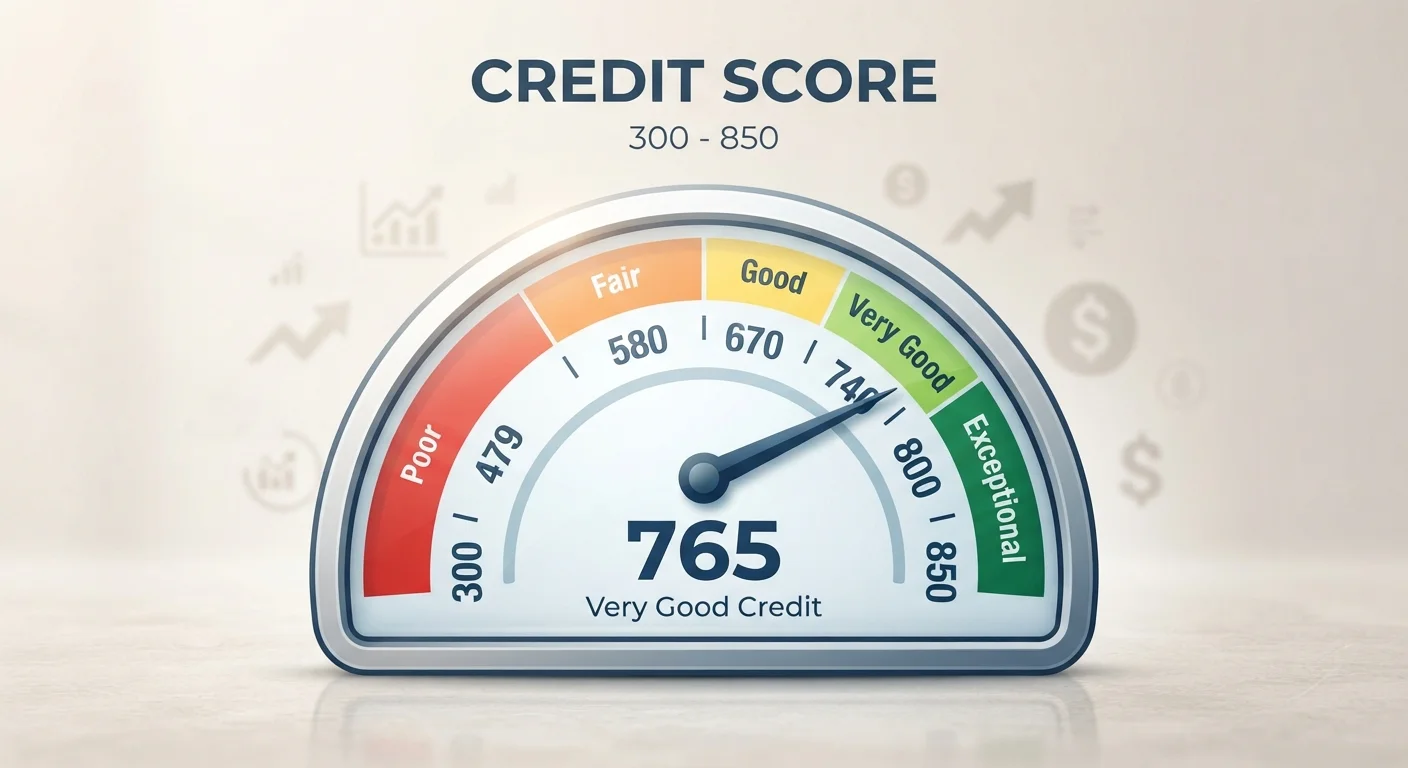
- Credit scores range from 300 to 850, with higher scores indicating lower lending risk.
- Five key factors - payment history, amounts owed, credit history length, new credit, and credit mix - determine your score.
- Scores below 580 are generally considered poor; scores above 740 typically qualify for favorable terms.
- Lenders use scores to set interest rates, credit limits, and approval decisions.
- Checking your own score does not hurt it - only certain lender inquiries can affect your score.
Credit Score
A credit score is a three-digit number - typically ranging from 300 to 850 - that summarizes how reliably you have managed debt and credit obligations in the past. Lenders use it as a quick, standardized way to estimate the risk of lending money to you. The higher the number, the lower the perceived risk.
The most widely used model is the FICO Score, though VantageScore is also common. Both use the same 300-850 scale but may weigh factors slightly differently, which means your score can vary depending on which model a lender uses.
The Score Range and What Each Band Means
The 300-850 credit score scale is divided into bands that lenders use as shorthand for risk. Here is how the FICO model generally categorizes those ranges:
| Score Range | Category | What It Typically Signals |
|---|---|---|
| 800-850 | Exceptional | Consistent, long track record of on-time payments and low utilization |
| 740-799 | Very Good | Strong credit habits; likely to qualify for competitive rates |
| 670-739 | Good | Near or above average; most lenders will approve applications |
| 580-669 | Fair | Some credit challenges; may face higher rates or stricter terms |
| 300-579 | Poor | Significant risk flags; approval often requires secured products or co-signers |
These thresholds are not universal rules - individual lenders set their own cutoffs and use additional criteria alongside the score. For a fuller picture of what else shapes a lending decision, see factors lenders consider beyond your credit score.
716
Average U.S. FICO Score
According to FICO's published data, the average American credit score has historically hovered in the 'good' range, reflecting broad improvement in credit habits over the past decade.
~35%
Weight of Payment History in FICO Score
Payment history is the largest single factor in the FICO scoring model, underscoring why consistent on-time payments matter more than any other behavior.
7 years
How long most negative marks remain
The Fair Credit Reporting Act (FCRA) sets the standard reporting window for most negative items such as late payments and collections at seven years.
How Your Score Is Calculated
Credit scores are built from data in your credit report. Understanding the five core ingredients helps you see where changes in behavior show up fastest.
- Payment history (≈35%): Whether you pay on time is the single largest factor. Even one missed payment can have a meaningful negative impact.
- Amounts owed / credit utilization (≈30%): This measures how much of your available revolving credit you are using. Keeping utilization below 30% is a widely cited guideline, though lower is generally better.
- Length of credit history (≈15%): Older accounts contribute positively. This is why closing old accounts can sometimes lower a score.
- New credit (≈10%): Applying for multiple new accounts in a short period adds hard inquiries, which can temporarily reduce your score.
- Credit mix (≈10%): Having a variety of account types - credit cards, installment loans, auto loans - can be viewed favorably, though you should never take on debt solely to diversify.
These weights are approximate and can vary by scoring model. Your credit report is the source document behind all of these calculations. If you have not reviewed yours, reading your credit report for the first time is a practical starting point.
Monitor Your Score Regularly
Many banks, credit unions, and financial apps now provide free access to your credit score. Checking it regularly helps you spot unexpected changes that may indicate an error or unauthorized account. Because checking your own score is a soft inquiry, it will not affect your score - there is no downside to staying informed.
Why Lenders Use Scores - and Their Limits
Credit scores give lenders a fast, consistent way to compare applicants. Before standardized scoring, loan decisions were far more subjective and inconsistent. Scores allow a lender to apply the same criteria across millions of applications.
In practice, your score influences:
- Approval or denial - Many lenders have minimum score thresholds for specific products.
- Interest rate offered - Higher scores typically correspond to lower rates, which compounds significantly over the life of a mortgage or auto loan.
- Credit limit size - Issuers often set initial limits based partly on your score.
- Required deposits - For utilities or secured cards, a lower score may trigger a larger upfront deposit.
However, scores have limits. They do not capture income, employment stability, or assets. That is why, even with a high score, lenders also evaluate debt-to-income ratio and other qualitative factors.
“A credit score is simply a snapshot of your credit risk at a particular point in time. It is not a permanent judgment - it changes as your behavior changes.”
— Consumer Financial Protection Bureau, U.S. federal agency responsible for consumer financial education and oversight
It is also worth understanding the difference between the score and the report that feeds it. The two are related but serve distinct purposes - a point explained in detail in the credit report vs. credit score distinction.
This article is for general informational and educational purposes only and does not constitute personalized financial or legal advice. Consult a licensed financial professional for guidance specific to your situation.