

Key Takeaways
- Displayed star ratings are shaped by algorithms, not just raw averages of submitted scores.
- Platforms weight newer, verified-purchase, and high-engagement reviews more heavily than others.
- A product with fewer reviews may show a distorted score due to Bayesian or confidence-interval adjustments.
- Fake and incentivized reviews are a known industry problem that moderation systems catch imperfectly.
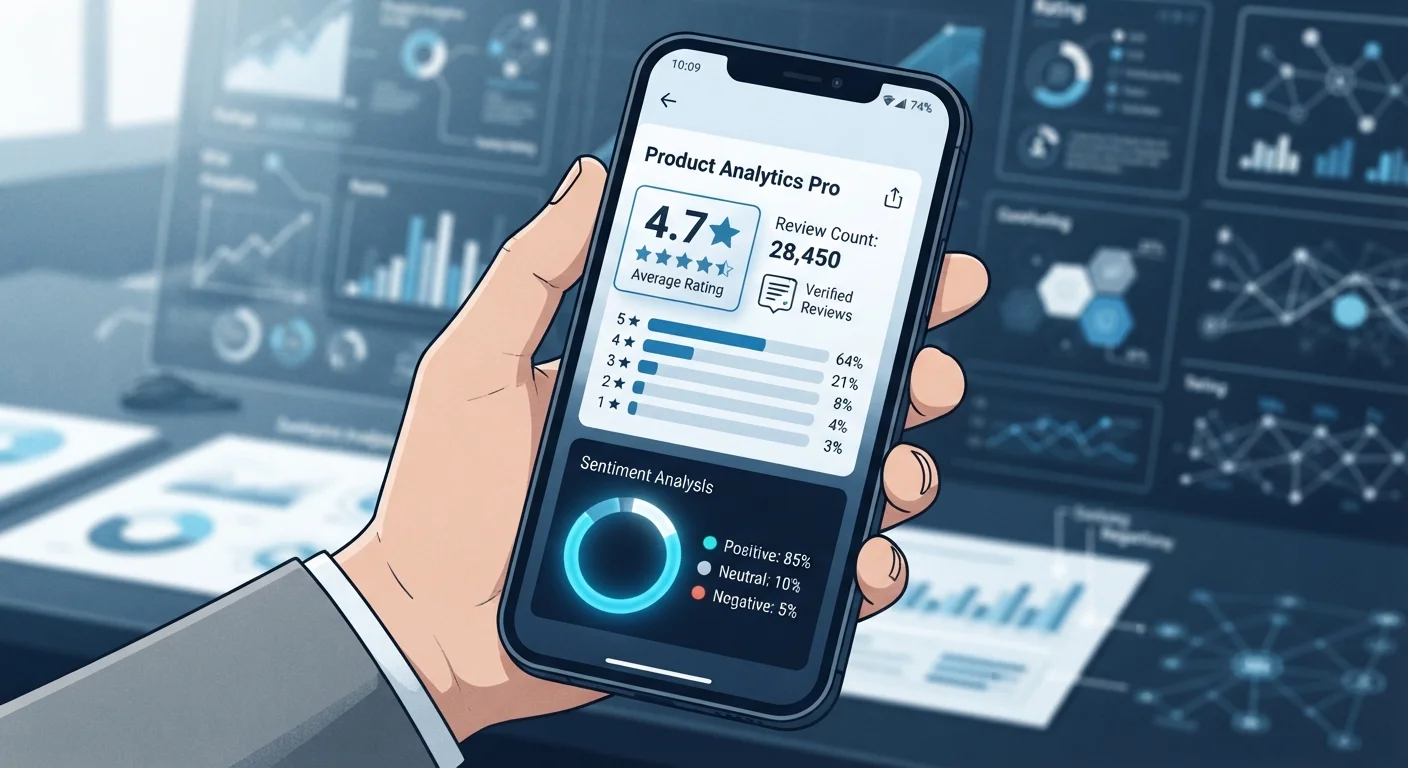
- Reading the full distribution of ratings - not just the average - gives a more accurate picture.
Review Rating Aggregation
Review rating aggregation is the process by which a platform collects individual user scores and combines them into a single displayed rating, such as a 4.2-star average. Most platforms don't simply average every submitted review equally - they apply algorithmic filters, weighting systems, and moderation rules that can significantly shift the final number. The result you see reflects both user opinion and platform methodology, not raw feedback alone.
Some platforms use Bayesian averaging, which pulls scores toward a global mean when a product has few reviews, preventing extreme ratings from dominating until sufficient data accumulates.
The Gap Between What You See and What Happened
When you see 4.6 stars on a product listing, it looks like objective math - thousands of people voted, and this is the result. In practice, that number has passed through several layers of algorithmic processing before it reached you. Understanding those layers changes how you should read it.
Most platforms don't publish their exact weighting formulas, treating them as proprietary. What researchers and consumer advocates have documented is that common adjustments include: recency weighting (newer reviews count more), purchase verification status, reviewer account age and activity, and helpfulness votes from other users. Any of these can move a displayed score meaningfully away from a simple mean of all submitted ratings.
This isn't inherently deceptive - the goal is to produce a more reliable signal by down-weighting suspicious or low-credibility reviews. But it means the score you see is as much a product of the platform's editorial choices as it is of actual customer sentiment. See the complete guide to reading reviews critically for a broader framework on evaluating what you find.
42%
Online reviews estimated as unreliable or fake
A 2023 analysis by the consumer research organization Fakespot estimated that a substantial share of reviews in certain product categories fail authenticity checks, though rates vary widely by category and platform.
3.9×
Higher conversion rate attributed to review presence
Research published by the Spiegel Research Center found that displaying reviews significantly increases purchase likelihood, illustrating why the accuracy of those reviews is a high-stakes consumer issue.
How Bayesian Averaging Distorts Small Samples
A product with only eight reviews showing 4.9 stars sounds exceptional. But several major platforms apply a statistical technique called Bayesian averaging, which pulls a product's score toward the platform's global average when the review count is low. The practical effect: a new product with eight five-star reviews might display as 4.2 stars, not 4.9, because the algorithm doesn't yet trust the small sample.
The reverse is also true - a product with a genuine weakness but only a few low reviews may display higher than its raw average. As review counts grow, the displayed score converges toward the true average. This means low-review products are particularly hard to interpret from the score alone, regardless of which direction they're skewed.
Bayesian Averaging Is a Feature, Not a Bug
Platforms apply Bayesian adjustments to prevent manipulation of scores through early review flooding - a common tactic where sellers solicit reviews immediately after launch to establish an artificially high baseline. While this can make new products look less impressive than their early scores suggest, it generally improves long-run reliability. Shoppers should treat very high scores on low-review products as provisional rather than established.
The common assumptions that lead shoppers astray covers why equating review volume with quality is one of the most prevalent misreadings online.
The Fake and Incentivized Review Problem
Fraudulent reviews remain a persistent challenge despite aggressive platform moderation. Common patterns include review farms that generate bulk submissions from unrelated accounts, seller-incentivized reviews where buyers receive refunds or gifts in exchange for positive feedback, and review hijacking, where a high-rated listing is repurposed for an entirely different product.
Platform detection systems have improved considerably, using device fingerprinting, behavioral analysis, and purchase record cross-referencing. Even so, independent audits have repeatedly found that meaningful percentages of reviews in certain categories slip through filters. The implication for shoppers: a high aggregate score is a weaker signal in product categories known for review manipulation, including some electronics accessories, supplements, and imported goods.
Filter Reviews by Date, Not Just Rating
When evaluating a product, sort reviews by most recent rather than most helpful or highest rated. Helpful-vote rankings tend to surface older reviews that reflect a product's earlier state. Recent reviews are more likely to reflect the version you'll actually receive, especially for goods that change suppliers or formulations over time.
For a practical lens on distinguishing authentic feedback from noise, the article on reading between the lines of online product reviews breaks down specific signals worth looking for.
What to Look at Instead of (or Alongside) the Star Score
The aggregate score is a starting point, not a conclusion. More informative signals include:
- Rating distribution: A product with a bimodal distribution - many 5-star and many 1-star reviews - tells a different story than one with ratings clustered around 4. Polarized distributions often indicate that the product works well for a specific use case but poorly for another.
- Review text over time: Filtering reviews chronologically can reveal whether quality changed after a product reformulation, supplier switch, or ownership change.
- Verified purchase percentage: Where platforms display this, a high proportion of unverified reviews warrants extra skepticism.
- Reviewer profiles: Accounts that review dozens of unrelated products in a short window are a red flag regardless of what they said.
Labels like "top rated" compound the opacity - they often reflect a combination of sales velocity, return rate, and rating score rather than user satisfaction alone. The article on what top-rated labels actually tell you explains how these badges are constructed. The Comparing Products hub offers additional frameworks for evaluating options across categories before committing to a purchase.