
Travelling Through the American Southwest: A Destination-by-Destination Breakdown

Key Takeaways
- The Grand Canyon, Zion, Sedona, and Monument Valley each offer a distinct experience and visitor profile.
- Most major Southwest destinations are connected by driveable routes, making road trips the most practical option.
- Peak season crowds at national parks require advance permit planning, sometimes months ahead.
- Sedona offers comparable red-rock scenery with fewer permit requirements than nearby national parks.
- A well-sequenced itinerary can cover four major destinations in seven to ten days.
Why the Southwest Works as a Road Trip
Few regions in the continental United States pack this much geographic variety into a driveable corridor. Within roughly 500 miles, travelers can move between Utah's narrow canyon narrows, Arizona's mile-deep gorge, New Mexico's high desert, and the painted spires of the Navajo Nation - all connected by US highways and state roads that are genuinely part of the experience.
The Southwest rewards deliberate planning. Distances look manageable on a map but expand quickly once elevation changes, park entry windows, and permit logistics enter the picture. Understanding what each destination actually offers - before committing to a route - helps travelers avoid the common mistake of over-scheduling and under-experiencing.
For travelers coordinating across different ages or mobility levels, multi-generational trip planning becomes especially relevant here, since some Southwest trails are strenuous while others are accessible to most visitors.
5M+
Annual visitors to Grand Canyon National Park
The Grand Canyon consistently ranks among the most visited national parks in the United States, according to NPS visitation data.
277 miles
Length of the Grand Canyon
The canyon stretches 277 river miles long and reaches depths of over a mile, according to the National Park Service.
~500 miles
Driveable corridor covering major Southwest stops
Las Vegas to Monument Valley via Zion, the Grand Canyon, and Sedona spans roughly 500 road miles, making the full circuit feasible in a week.
The Grand Canyon: Scale That Requires Strategy
The Grand Canyon's reputation is fully earned, but its sheer size can disorient first-time visitors. The South Rim - the most visited section - is open year-round and offers rim-side viewpoints accessible to virtually all fitness levels. The North Rim is only open seasonally and requires a longer drive. Inner canyon hiking is a different category of experience entirely: the descent is deceptively easy, but the climb back in heat can become dangerous without careful preparation.
Accommodation inside the park books out many months in advance. Day visitors arriving by car during summer should expect significant congestion at the main entrance and limited parking; the park shuttle system mitigates this but requires patience. For anyone new to national park entry logistics, the US National Parks entry and permits guide covers passes, timed-entry systems, and what conditions travelers commonly underestimate.
Inner Canyon Hiking Is a Serious Undertaking
The National Park Service actively cautions against attempting to hike from the South Rim to the Colorado River and back in a single day - a distance many visitors underestimate as manageable. Summer temperatures at the canyon bottom regularly exceed 110°F, and heat-related rescues are common. If inner canyon hiking is on your itinerary, plan for a permitted overnight stay, carry more water than you think you need, and check current NPS advisories before you descend.
Zion National Park: Slot Canyons and Serious Hiking
Zion, in southwestern Utah, is defined by its scale in the opposite direction from the Grand Canyon - instead of looking down into a vast open chasm, visitors navigate through towering sandstone walls that close in around them. The park's signature hike, The Narrows, involves wading through the Virgin River inside a slot canyon. Angels Landing - a trail ending on a narrow fin of rock with chain-assisted scrambling - carries genuine exposure and is now subject to a permit lottery.
The park operates a mandatory shuttle system within its main canyon during peak season, eliminating private vehicle access to many trailheads. Zion is genuinely one of the more physically demanding Southwest parks to experience at its best; visitors expecting easy sightseeing from the car will find the viewpoints pleasant but limited. Those willing to walk will find it extraordinary.
Book Zion's Angels Landing permit through the lottery system the season before you travel - same-day entry permits do exist but are extremely limited and not a reliable backup.
The Angels Landing permit lottery became mandatory in 2022 and demand significantly outpaces supply during spring and fall peak seasons.
Schedule Grand Canyon rim walks for early morning or the hour before sunset - midday light flattens the canyon's depth visually and the heat at the rim in summer is substantial.
The canyon's color and shadow contrast are most dramatic at low sun angles, and cooler morning temperatures make the experience significantly more comfortable.
Zion pairs naturally with Bryce Canyon National Park, roughly 90 minutes northeast, where hoodoo formations - tall, thin spires of weathered rock - create a landscape unlike anything else in the region.
Sedona: Red Rock Country Without a Park Pass
Sedona occupies a distinct category in the Southwest: it offers dramatic red rock scenery comparable to some national parks but operates largely outside the federal park system. Much of the surrounding terrain is managed as national forest and recreation area, with trailhead parking requiring a Red Rock Pass rather than an America the Beautiful park pass. The town itself has a well-developed tourism infrastructure - lodging, restaurants, and tour operators are plentiful - which makes it a more convenient base for certain traveler profiles.
The trails around Sedona range from short, flat walks to technical scrambles. Cathedral Rock, Bell Rock, and Devil's Bridge are among the most-visited formations. The area also draws visitors interested in its wellness and spa culture, which is a separate draw from the landscape itself. Sedona is a practical addition to a Grand Canyon itinerary, sitting about two hours south of the canyon's South Rim entrance.
Sedona's Red Rock Pass vs. America the Beautiful
The America the Beautiful annual pass - which covers entrance fees at federal national parks - does not cover the Red Rock Pass required for most Sedona trailhead parking. These are separate fee systems. If Sedona is part of a wider Southwest trip that includes multiple national parks, purchase both passes rather than assuming one covers the other.
Monument Valley and the Colorado Plateau
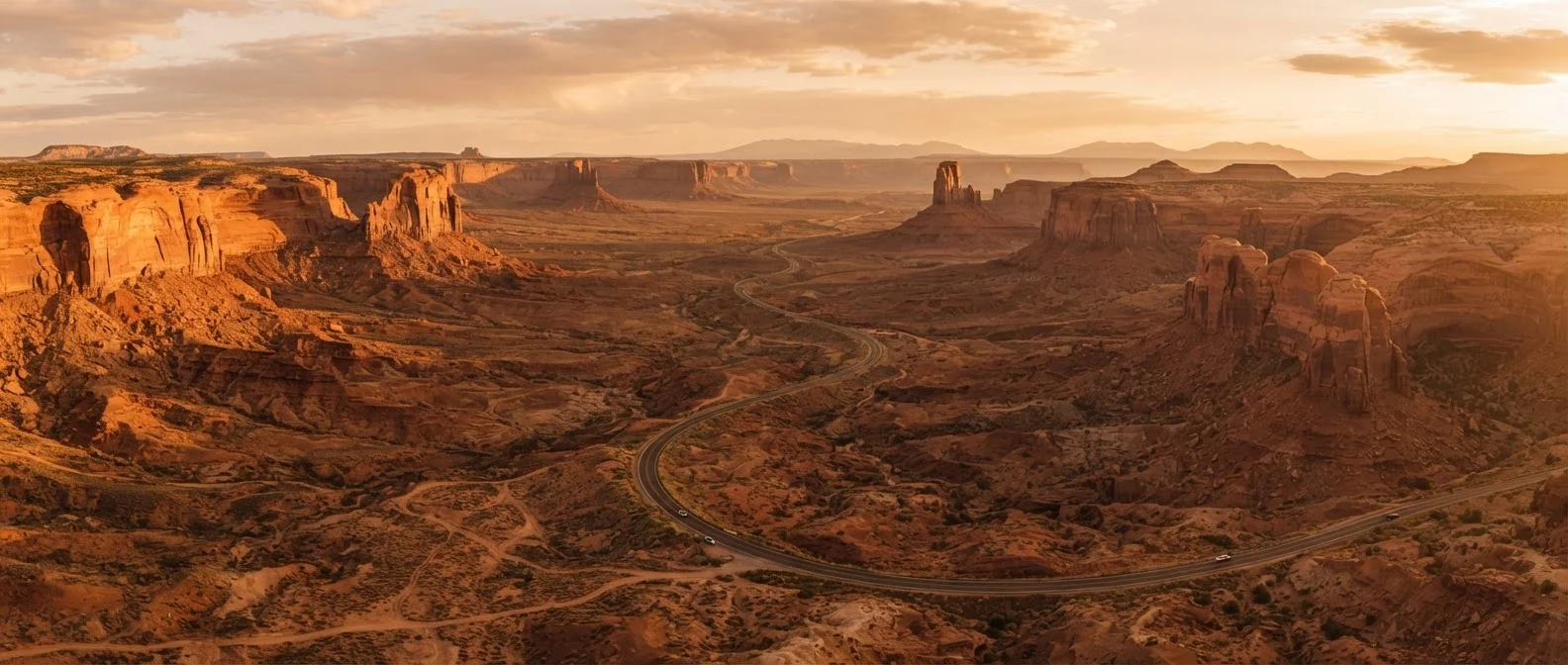
Monument Valley straddles the Arizona-Utah border within the Navajo Nation and is managed by the Navajo Nation Parks and Recreation department - not the National Park Service. Access, fees, and tour arrangements are handled accordingly. The valley's buttes and mesas are among the most photographed landforms in North America, in large part because of their long history of appearing in film.
The 17-mile Valley Drive is unpaved and requires a standard vehicle with reasonable clearance; guided jeep and horseback tours are available and provide access to areas otherwise closed to visitors. Respectful conduct is expected throughout - this is an actively inhabited Nation with its own protocols for visitor behavior, photography, and permitted areas.
Monument Valley connects well to other Colorado Plateau destinations including Mesa Verde National Park in Colorado, which preserves ancestral Puebloan cliff dwellings, and the remote but remarkable Canyonlands and Arches national parks in Utah. Researching a destination before arrival is particularly worthwhile here, where cultural context significantly shapes the experience.
“Monument Valley is not just scenery - it is a place where the landscape carries deep cultural meaning for the Diné people. Visitors who take time to understand that context leave with something more than photographs.”
— Navajo Nation Tourism Department, Official tourism authority for the Navajo Nation
How to Sequence a Southwest Trip
A logical starting point for most US-based travelers is Las Vegas or Phoenix, both of which have major airports and serve as natural gateways. A seven-to-ten day route commonly runs: Las Vegas → Zion → Bryce Canyon → Grand Canyon (South Rim) → Sedona → Monument Valley, looping back to Phoenix. This avoids doubling back and sequences the parks in a way that minimizes driving days.
The critical planning variable is permits. Angels Landing at Zion and some Grand Canyon corridor camping require advance lottery entries that open months before the travel window. Accommodation at the Grand Canyon South Rim should be booked as early as possible for spring and fall travel. Summer travel across the region requires serious heat management, particularly for any hiking below canyon rims where temperatures can exceed 110°F.
Building a well-structured travel itinerary covers how to pace multi-destination trips so that driving days, active days, and rest days are balanced rather than stacked. That balance matters even more in the Southwest, where the physical demands of hiking at altitude and in heat are easy to underestimate from the planning stage.
For travelers weighing domestic destinations against international options, it's worth noting that the Southwest's logistics are entirely self-contained - no visa considerations, currency changes, or international connectivity gaps. The region competes directly on experience, and by most accounts, it delivers.
The "Mighty Five" Utah Parks
Utah's five national parks - Zion, Bryce Canyon, Capitol Reef, Canyonlands, and Arches - are sometimes marketed together as the "Mighty Five" and can be combined into a dedicated Utah loop. This is a separate, equally rewarding itinerary from the Arizona-focused Southwest circuit described here. Travelers with ten or more days might consider anchoring either in Utah or in Arizona rather than attempting both in a single trip.
This article is for general travel information purposes only. Conditions, permit requirements, fees, and access rules at national parks and Navajo Nation lands change regularly. Always verify current entry requirements, safety advisories, and reservation availability with official park and government sources before traveling.