

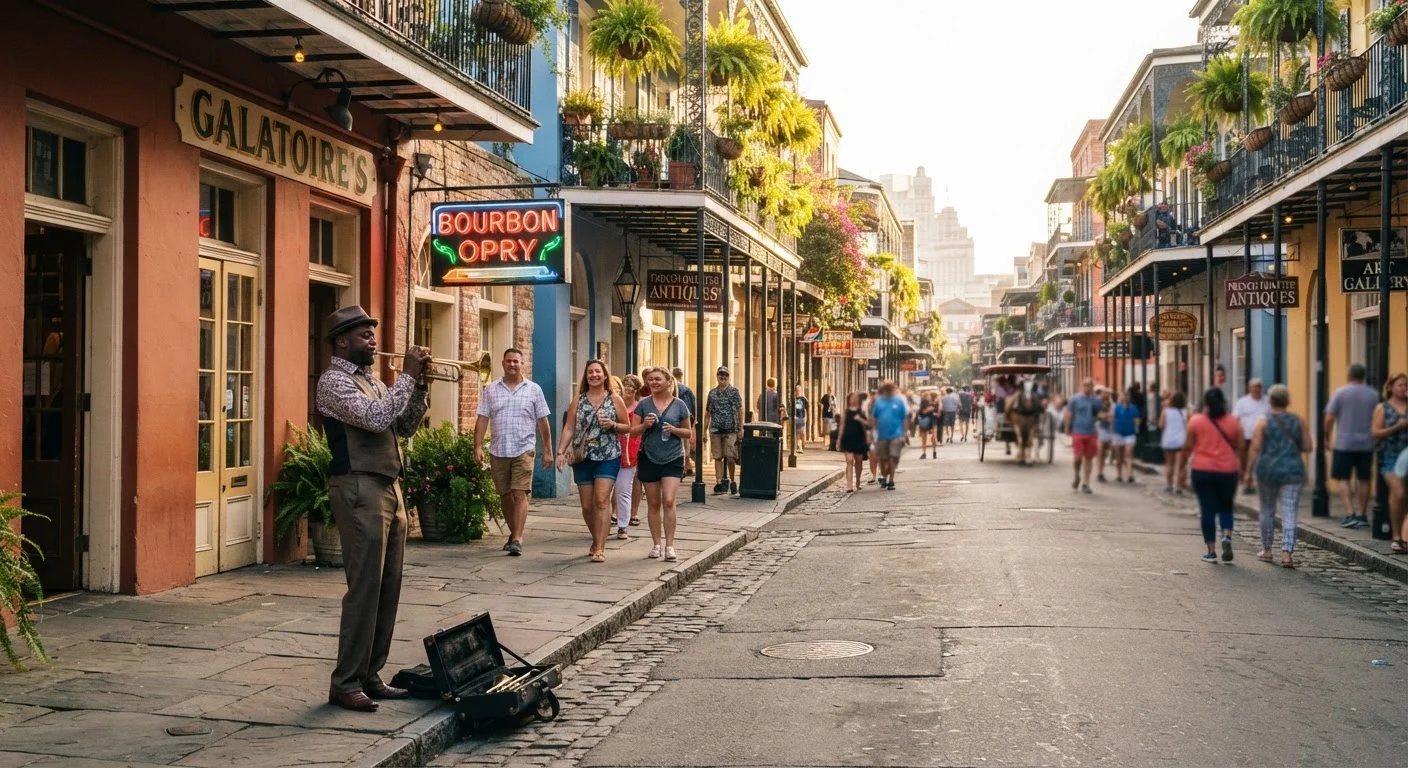
Key Takeaways
- New Orleans has a thriving food and music scene operating 365 days a year.
- Neighbourhoods like the Marigny, Bywater, and Tremé offer authentic local life away from tourist crowds.
- Spring and fall are generally considered the most comfortable times to visit weather-wise.
- The city hosts dozens of festivals outside Mardi Gras, including Jazz Fest every spring.
- Seafood, Creole cooking, and po'boys are accessible at neighbourhood spots well beyond Bourbon Street.
New Orleans Beyond Mardi Gras
New Orleans is a year-round destination with a distinctive culture shaped by French, Spanish, African, and Caribbean influences. Outside the Mardi Gras season - which peaks in February or early March - the city offers world-class cuisine, live jazz, historic architecture, and vibrant neighbourhood life with significantly smaller crowds. It is one of the most culturally layered cities in the United States.
Mardi Gras is not a single event but a season running from Epiphany (January 6) through Fat Tuesday. The week immediately before Fat Tuesday is when crowds peak most dramatically.
The City That Lives Outside the Party
New Orleans has one of the most misunderstood reputations of any American city. Mention it in conversation and most people immediately picture beads, parades, and packed balconies on Bourbon Street. That image is real - but it describes about one week out of 52. The other 51 weeks, New Orleans is something richer, quieter, and far more interesting to explore.
The city's identity runs centuries deep. It was shaped by French and Spanish colonial rule, by the largest slave market in North America, by Caribbean immigration, and by a musical tradition that gave the world jazz. Those layers don't disappear when the last float rolls. They're woven into the architecture, the food, the language, and the rhythms of everyday life in a way that makes New Orleans unlike anywhere else in the United States.
“New Orleans is the only city in America where you can go to a funeral and feel like dancing. The music, the food, the way people live - it's all one continuous celebration of being alive.”
— Ellis Marsalis Jr., Legendary New Orleans jazz pianist and educator
A Food Culture That Needs No Occasion
New Orleans cuisine is one of the most distinctive in North America, and it operates at full tilt every day of the year. Creole and Cajun cooking are related but distinct traditions - Creole draws heavily on city influences including French sauces, African seasoning techniques, and Spanish ingredients, while Cajun cooking has its roots in the rural parishes west of the city. Both traditions show up on menus across town.
The most authentic experiences often happen far from the French Quarter. Neighbourhood restaurants in the Tremé, Mid-City, and Uptown serve gumbo, red beans and rice (a Monday tradition tied to washday history), and crawfish étouffée to locals who eat there weekly. Beignets - fried dough dusted with powdered sugar - are a legitimate part of daily life, not just a tourist checkbox.
Eat Where Locals Eat on Mondays
Red beans and rice on Monday is a New Orleans institution with roots going back to the 19th century, when it was traditionally cooked on washday because the dish could simmer unattended. Dozens of neighbourhood restaurants still honor this tradition every Monday. It's one of the most direct ways to connect with living local culture.
The city's po'boy culture deserves particular attention. Stuffed with fried shrimp, roast beef debris, or oysters and "dressed" with lettuce, tomato, and mayo, a good po'boy from a neighbourhood shop is one of the most satisfying lunches available anywhere in the country.
Music Every Night, Not Just One Season
Jazz didn't retire after Mardi Gras. On any given Tuesday evening, you can find live brass bands in the Marigny, traditional jazz at Frenchmen Street clubs, and second-line parades winding through residential neighbourhoods. The city's relationship with music is communal and constant - it shows up at funerals, neighbourhood gatherings, and Sunday church services as naturally as it does on stage.
130+
Live music venues in New Orleans
New Orleans is consistently cited among US cities with the highest density of live music venues per capita, supporting nightly performances across genres.
400,000+
Jazz Fest attendees annually
The New Orleans Jazz & Heritage Festival typically draws over 400,000 attendees across its two-weekend run each spring, making it one of the largest music events in the US.
~$9B
Annual tourism economic impact
According to the New Orleans & Company tourism organization, visitor spending contributes billions to the local economy annually, spread across all seasons.
The New Orleans Jazz & Heritage Festival, held every spring across two weekends, is arguably a bigger draw for serious music fans than Mardi Gras. It features hundreds of artists across multiple stages, with an emphasis on Louisiana musical traditions alongside national acts across genres. Beyond Jazz Fest, Frenchmen Street in the Marigny remains a nightly destination for live music in a setting that feels entirely local.
Neighbourhoods Worth Slowing Down For
The French Quarter is the obvious starting point, and its architecture - wrought-iron galleries, stucco facades, hidden courtyards - genuinely earns the attention. But the neighbourhood runs heavily commercial, and the experience changes significantly once you step beyond it.
The Tremé, directly adjacent to the Quarter, is widely recognised as one of the oldest African American urban communities in the country and the cradle of jazz culture. Walking its streets connects visitors to a living history that no museum can fully replicate. The Marigny and Bywater, downriver from the Quarter, are where artists, musicians, and long-time locals have settled. Shotgun houses painted in vivid colors, independent cafés, and community gardens define the texture of these blocks.
Uptown and the Garden District offer a different register entirely - grand antebellum mansions, oak-canopied streets, and a quieter pace that makes the city feel almost Southern Gothic in the best possible sense. The St. Charles streetcar line connecting these areas is one of the most pleasant urban rides in the country.
Accessibility and Climate Considerations
New Orleans summers are genuinely hot and humid, with heat index values regularly exceeding 100°F. Visitors sensitive to heat or with certain health conditions should plan accordingly. The city is also largely flat and walkable, though some historic sidewalks and cobblestone areas can be challenging for those with mobility considerations. Always verify current conditions through official sources before your trip.