

Key Takeaways
- CPO programmes are not standardised - each manufacturer sets its own inspection criteria and warranty terms.
- Manufacturer-backed CPO coverage differs significantly from dealer-only certification, which has no automaker oversight.
- CPO warranties typically cover powertrain components but may exclude wear items, cosmetic damage, and pre-existing conditions.
- Mileage and age limits determine CPO eligibility, and these thresholds vary by brand.
- Always request the actual inspection checklist and read the warranty agreement before signing.
Certified Pre-Owned (CPO)
A certified pre-owned vehicle is a used car that has passed a manufacturer- or dealer-defined inspection process and comes with some form of extended warranty or guarantee. The certification is meant to give buyers more confidence than a standard used-car purchase. However, the requirements behind that label differ significantly from one programme to the next.
Manufacturer-backed CPO programmes are distinct from dealer-certified programmes; only the former involves direct oversight and warranty backing from the automaker itself.
What Stands Behind the CPO Badge
Walk onto most franchised dealership lots and you'll see used vehicles wearing a "Certified Pre-Owned" badge. The label signals that the car passed some form of inspection and carries additional warranty protection - but it does not signal a uniform standard. Every automaker defines its own CPO programme independently, which means what that badge promises in one showroom can be meaningfully different from what it promises in another.
Manufacturer-backed CPO programmes - offered by automakers directly through their franchised dealers - are the most structured. They typically require vehicles to fall within a set age and mileage window (commonly under six years old and under 80,000 miles, though thresholds vary), pass a multi-point inspection, and be sold with an extended limited warranty backed by the manufacturer. Reconditioning standards, roadside assistance inclusions, and trial periods for services like satellite radio are often bundled in as well.
Dealer-only certification, by contrast, has no automaker oversight. A dealer can call a vehicle "certified" after conducting its own internal inspection. There's no mandated checklist, no manufacturer standing behind the warranty, and no consistent standard across dealerships. Buyers comparing these two types are not comparing like for like.
Manufacturer vs. Dealer Certification: A Key Distinction
When a vehicle is marketed as "manufacturer certified," it means the automaker's programme standards and warranty are in play. When a dealer uses the word "certified" without manufacturer backing, the protections are defined entirely by that dealer. Always ask which type of certification applies before treating the label as a guarantee of quality.
What CPO Warranties Typically Cover - and Don't
Even the most comprehensive manufacturer CPO programmes have exclusions that buyers often overlook. Understanding the structure of CPO warranty coverage is essential before assigning value to it.
What's usually covered: Powertrain components (engine, transmission, drive axles) are almost always included. Many programmes extend coverage to major mechanical systems - electrical, suspension, fuel delivery - though the depth varies. Some premium-brand programmes approach bumper-to-bumper territory for a limited period.
What's commonly excluded:
- Wear items: brake pads, rotors, tires, wiper blades, belts, and hoses are typically not covered because they degrade through normal use.
- Cosmetic damage: paint chips, interior wear, and minor dents are generally excluded.
- Pre-existing conditions: damage present at the time of sale that was not repaired during reconditioning may not be eligible for a claim.
- Maintenance services: oil changes, fluid flushes, and filters are the owner's responsibility.
The deductible structure matters too. Some CPO warranties carry a per-visit deductible; others cover repairs with no out-of-pocket cost at the point of service. Read the actual warranty agreement - not just the marketing summary - to know which applies. For a broader look at how warranty terms shape the real cost of a purchase, see how to evaluate warranty and return terms.
100-200
Inspection points in typical manufacturer CPO programmes
The number of checkpoints varies by brand; some luxury-segment programmes inspect significantly more items than mainstream ones.
~6 years
Common maximum vehicle age for CPO eligibility
Most manufacturer CPO programmes cap vehicle age at five to six model years, though thresholds differ by automaker.
Varies
CPO warranty duration across manufacturers
Extended powertrain coverage ranges from one year with unlimited mileage to seven years from original sale date, depending on the programme.
How to Evaluate a CPO Programme Before You Buy
Not all CPO programmes deliver equal value. Treating certification as a starting point rather than a conclusion is the right mindset.
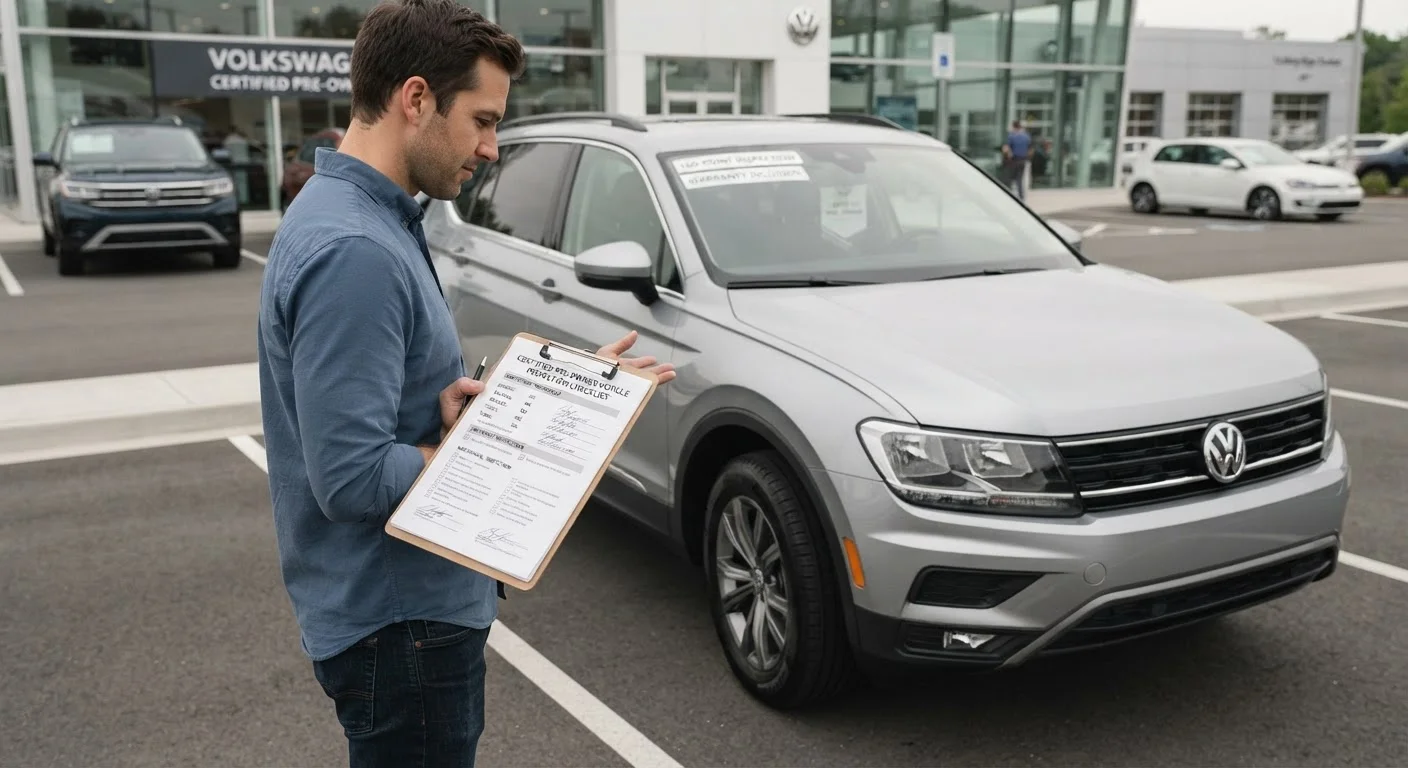
Request the inspection report. Most manufacturer programmes conduct a 100- to 200-point inspection. Ask to see the actual checklist - it should show which items were inspected, which passed, and which were repaired. If the dealer can't produce it, that's meaningful information.
Verify the vehicle history independently. CPO status does not mean a clean title or accident-free history. Run the VIN through a vehicle history service to check for prior accidents, flood damage, and title issues. A CPO badge doesn't replace due diligence.
Compare remaining factory warranty to CPO warranty. Some vehicles are sold CPO while still carrying significant factory warranty time. In those cases, the "extended" CPO coverage may start only after the factory warranty expires, so the near-term coverage you're paying for may already be in place.
Confirm transferability and geographic coverage. If you plan to sell the vehicle before the CPO warranty expires, check whether the remaining coverage transfers. Also confirm that warranty service is available at dealerships nationwide, not just at the selling location.
Get an Independent Inspection Regardless of CPO Status
A certified label reduces uncertainty but doesn't eliminate it. Having an independent mechanic perform a pre-purchase inspection - typically costing between $100 and $200 - can surface issues that the dealer's inspection missed or didn't prioritize. It's one of the most cost-effective steps any used-car buyer can take.
If you're weighing CPO against a new vehicle purchase, the trade-offs between new and used cars covers depreciation, financing rate differences, and reliability considerations that affect the full cost comparison. And if financing is part of your plan, understanding key finance agreement terms will help you read the paperwork clearly.