

| Legal Requirement | Mandated by the Automobile Information Disclosure Act of 1958 |
| Who Sets the Base Price | The vehicle manufacturer |
| Destination Charge | Non-negotiable; set by the manufacturer |
| Fuel Economy Data Source | U.S. Environmental Protection Agency (EPA) |
| Dealer Add-Ons | Appear on a separate addendum sticker; often negotiable |
| MSRP vs. Sale Price | MSRP is a suggestion; actual price depends on market and negotiation |
What Is a Monroney Sticker?
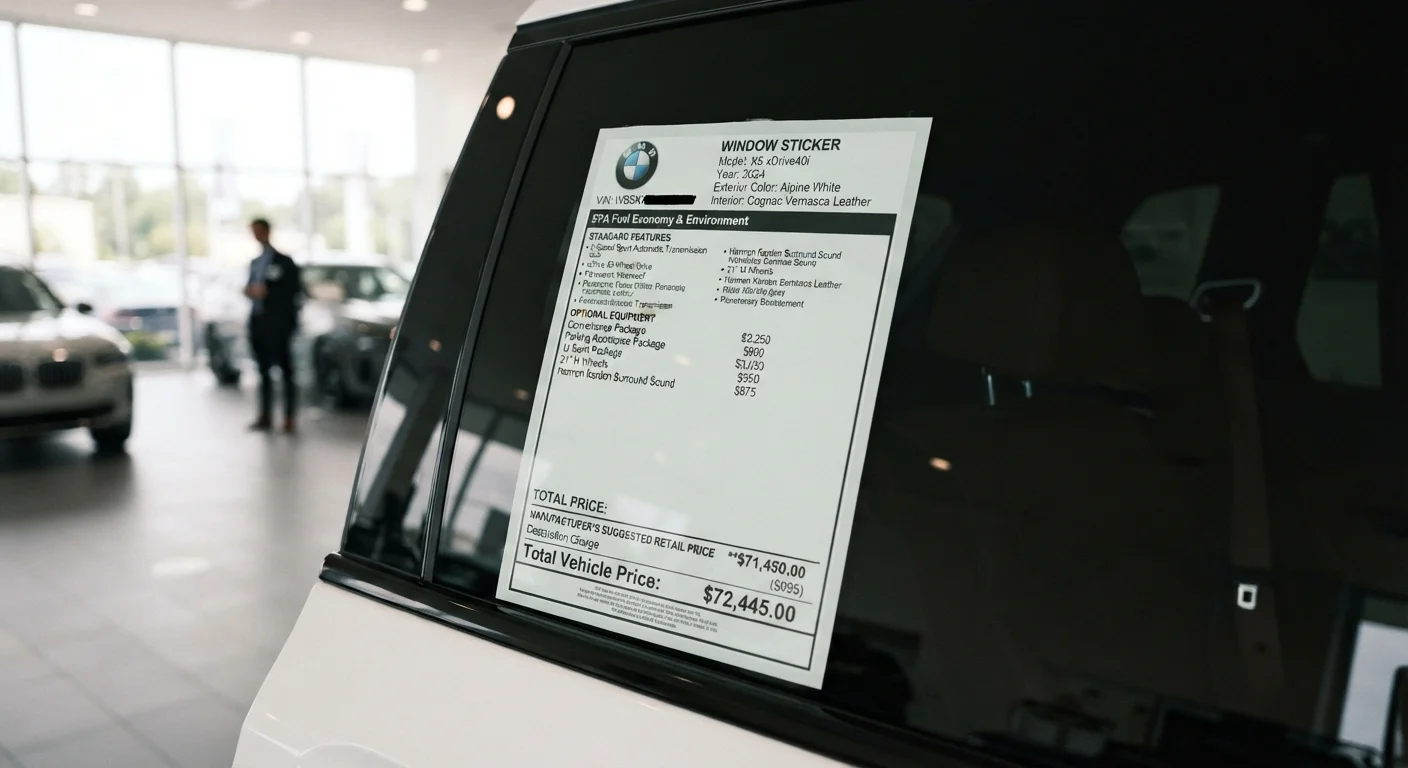
Every new car sold in the United States must display a Monroney sticker - the official window label mandated by the Automobile Information Disclosure Act of 1958. Named after Senator Mike Monroney, who championed the legislation, it gives buyers standardized pricing and specification data before they negotiate. Removing it before sale is illegal. Understanding it is one of the most practical things you can do before stepping into a dealership.
| Legal Requirement | Mandated by the Automobile Information Disclosure Act of 1958 |
| Who Sets the Base Price | The vehicle manufacturer |
| Destination Charge | Non-negotiable; set by the manufacturer |
| Fuel Economy Data Source | U.S. Environmental Protection Agency (EPA) |
| Dealer Add-Ons | Appear on a separate addendum sticker; often negotiable |
| MSRP vs. Sale Price | MSRP is a suggestion; actual price depends on market and negotiation |
Think of the sticker as a structured document with several distinct sections. Each line serves a specific purpose, and confusing them is one of the most common ways buyers leave money on the table - or misunderstand what they're actually paying for. See our pre-purchase checklist for additional steps to take before signing any deal.
Breaking Down Every Section
Here's what each part of the sticker actually means:
Base Price (MSRP)
The Manufacturer's Suggested Retail Price covers the vehicle in its base configuration - the standard engine, transmission, and features the automaker includes as standard. This is the number most advertisements lead with, and it rarely reflects what you'll actually pay.
Optional Packages and Add-Ons
Below the base price, you'll find a list of factory-installed options - things like a sunroof package, upgraded audio, or advanced safety technology. Each line item shows the option name and its added cost. These additions are set by the manufacturer and are typically harder to negotiate away than dealer add-ons.
Destination and Delivery Charge
This is a non-negotiable, federally standardized charge that covers transporting the vehicle from the factory to the dealership. It's the same for every buyer of that model regardless of where the dealership is located. Do not confuse it with dealer documentation or prep fees, which are separate and sometimes negotiable.
Total MSRP
This line adds up the base price, all factory options, and the destination charge. It is the manufacturer's suggested price - not the dealer's asking price, and not the final transaction price. Dealers may sell above or below this figure depending on market conditions.
Fuel Economy Label
The EPA fuel economy estimates - city, highway, and combined mpg (or MPGe for electrics) - appear prominently. These are standardized estimates based on laboratory testing cycles. Real-world results vary depending on driving habits, climate, and road conditions. The label also includes an estimated annual fuel cost based on federal assumptions about fuel prices and mileage, which may or may not reflect your situation.
Standard Equipment
A summary of what comes included in the base price: safety systems, infotainment features, seating material, and mechanical specifications. Cross-referencing this with how to read spec sheets critically can help you compare trims on equal terms.
Monroney Sticker
The federally required window label on every new vehicle, displaying manufacturer pricing, standard equipment, options, and EPA fuel economy data. Removing it before sale is prohibited by law.
MSRP
Manufacturer's Suggested Retail Price - the price the automaker recommends the vehicle be sold for. It is a suggestion, not a fixed price; actual transaction prices may differ.
Destination Charge
A standardized fee set by the manufacturer to cover shipping the vehicle from the production facility to the dealership. It is the same for all buyers of that model and is not negotiable.
Addendum Sticker
A supplemental label added by the dealer - not the manufacturer - listing accessories or services added after delivery. These items are separate from the official Monroney and are often negotiable.
EPA Fuel Economy Estimate
Standardized city, highway, and combined fuel efficiency figures produced through federally regulated testing. Real-world results vary based on individual driving behavior and conditions.
Factory Option
A feature or package installed by the manufacturer before the vehicle leaves the factory, listed on the Monroney with an additional cost above the base MSRP.
Dealer-Added Items (Watch This Section Carefully)
Some stickers include a supplemental addendum sticker - usually a different color or paper - listing items the dealer added after delivery. These are separate from the Monroney and are often highly negotiable or removable. Common examples include paint sealant, fabric protection, and nitrogen-filled tires. These add-ons can inflate the sticker price significantly. Hidden costs like these are a classic way the real purchase price drifts above what buyers expect.
Using the Sticker to Negotiate Smarter
The Monroney sticker gives you a factual baseline - use it as one. Before negotiating, know the difference between what the manufacturer set (base MSRP, options, destination) and what the dealer added. Manufacturer pricing is consistent; dealer additions are where flexibility typically exists.
MSRP Is Not the Dealer's Asking Price
Dealers are free to price vehicles above or below MSRP based on supply, demand, and local market conditions. In high-demand situations, some dealers add a 'market adjustment' above MSRP - this is legal but separate from the manufacturer's pricing. Always ask for an out-the-door price that includes all fees before comparing offers.
Keep in mind that market conditions affect transaction prices. High-demand vehicles may sell above MSRP; slower-moving models often sell below it. The sticker tells you what's on the car - your research on actual transaction data tells you what it's worth in your market. Once you've decoded the sticker, review our auto insurance guide to understand the coverage decisions you'll need to make before you drive off the lot.