

Key Takeaways
- The purchase price is rarely the total price - ongoing costs often exceed the upfront amount.
- Energy consumption, replacement parts, and required accessories are common hidden cost drivers.
- Comparing TCO rather than sticker price leads to more accurate budget planning.
- Low-quality products frequently cost more over time due to shorter lifespans and higher repair rates.
- Understanding ownership costs helps you avoid decision regret after a purchase.
Total Cost of Ownership
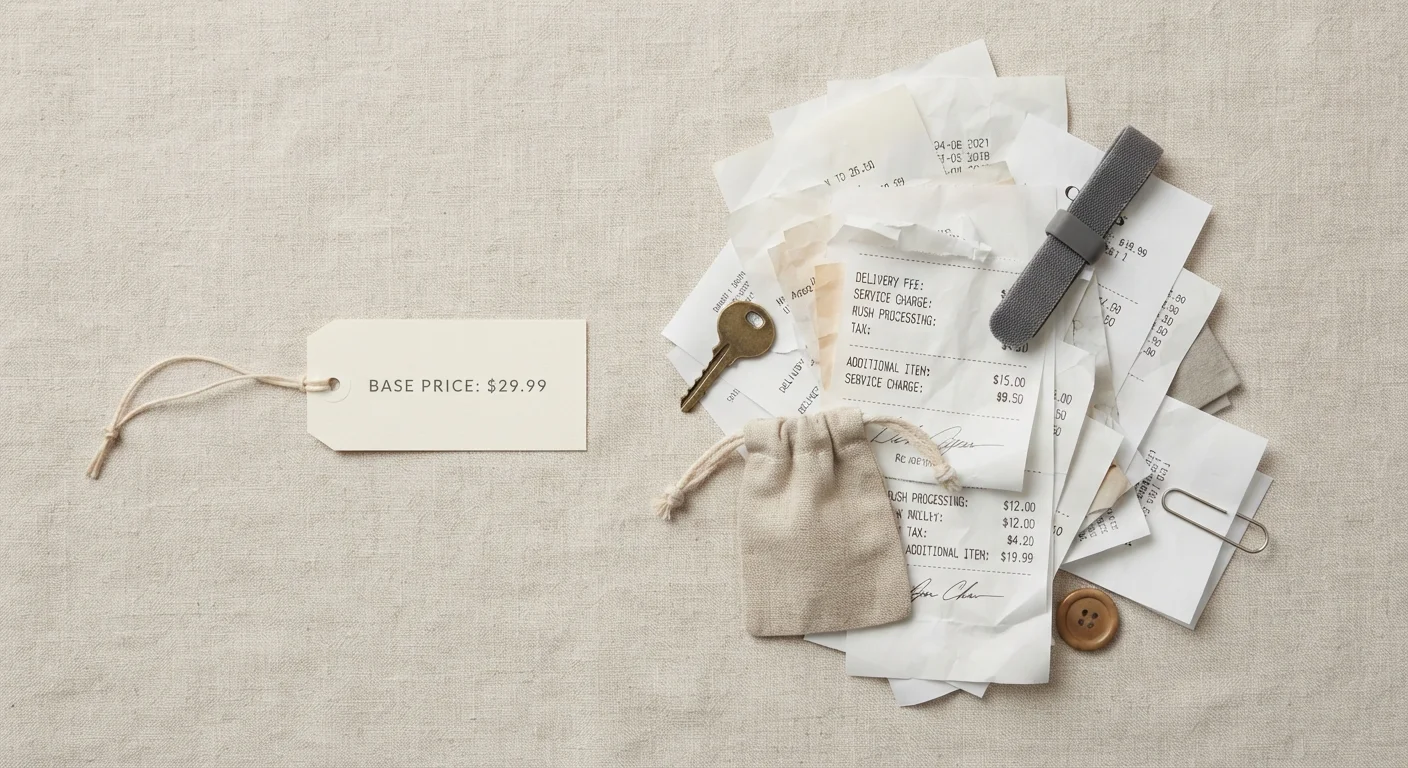
Total cost of ownership (TCO) is the full amount you spend on a product over its useful life - not just what you paid at checkout. It includes recurring costs like energy use, consumables, repairs, and required accessories that don't appear on the price tag. A product with a low sticker price can carry a much higher TCO than a pricier alternative.
TCO analysis originated in enterprise IT procurement but applies equally to consumer purchases. It accounts for acquisition cost, operating costs, maintenance, and end-of-life disposal or replacement.
Why Sticker Price Is a Misleading Starting Point
When shoppers compare products online, price is usually the first filter they apply - and understandably so. But the number displayed at checkout captures only a fraction of what you'll actually spend. Manufacturers and retailers set prices to win the sale; they have little incentive to advertise the ongoing costs that follow it.
This gap between purchase price and true cost affects nearly every product category. Understanding it isn't about distrust - it's about doing the math that the listing page doesn't do for you. For a deeper look at how price and value diverge as concepts, see Price vs. Value: Two Concepts Shoppers Often Confuse.
2-3×
How much TCO can exceed purchase price for some appliances
Energy and maintenance costs over a product's lifespan frequently multiply the original sticker price, particularly for appliances with poor efficiency ratings or high consumable requirements.
~30%
Of printer revenue attributed to ink and toner sales
Industry analysts have long noted that consumable supplies - not hardware - represent a disproportionate share of printer-related revenue, illustrating the built-in cost structure of some low-priced products.
1 in 3
Shoppers who report post-purchase regret on major buys
Consumer surveys consistently find that a significant share of buyers wish they had researched long-term costs more carefully before committing to a major purchase.
The Main Categories of Hidden Product Costs
Energy and Operating Costs
Appliances, electronics, and tools all consume energy, and usage costs accumulate across years of operation. A refrigerator or air conditioner with a lower purchase price but a poor energy efficiency rating can cost substantially more to run annually than a more efficient model. Energy ratings provided by programs like ENERGY STAR offer a starting comparison point, though actual costs depend on local utility rates and usage patterns.
Consumables and Proprietary Parts
Some products are intentionally designed around recurring purchases. Printer ink cartridges, vacuum filters, water filtration replacements, and brand-specific pods are all examples where the initial product cost is secondary to the ongoing supply spend. Before purchasing, it's worth identifying whether consumables are proprietary - meaning only one supplier sells them - or whether generic alternatives are available.
Accessories That Aren't Optional
Products are sometimes sold without components that are practically necessary for normal use. Cables, mounting hardware, carrying cases, and software licenses can add meaningfully to the real cost. Reading the full product specifications - not just the feature highlights - usually reveals what's included and what isn't.
Maintenance and Repairs
Cheaper construction often means shorter intervals between repairs or earlier replacement. A product that fails in two years and costs half as much upfront may not be a better deal than one built to last six. Warranty terms and the availability of repair services or parts are useful proxies for expected durability.
Check Consumable Costs Before You Commit
Before purchasing any product that uses replaceable parts - filters, cartridges, batteries, pods - search for the replacement part cost and availability separately. If parts are proprietary or hard to find, factor that into your total cost estimate. A few minutes of research can prevent years of overspending on supplies.
How to Compare Products on True Cost
The most practical approach is a simple per-year cost estimate. Take the purchase price, add projected annual operating and maintenance costs, and divide by the expected lifespan. This converts dissimilar products into a comparable unit - annual spend - that reflects real-world outlay rather than shelf price.
For major purchases like appliances or vehicles, this calculation is particularly valuable. Auto purchases are one of the clearest examples: the window sticker is only the entry point, with insurance, fuel, and maintenance shaping the actual ownership cost. Decoding a Car Window Sticker walks through how to read every line before you negotiate.
The same logic applies to home projects. Renovation budgets routinely underestimate what things actually cost - a pattern explored in detail in The Hidden Costs That Derail Home Renovation Budgets. For broader strategies on spending with this kind of clarity, the Smarter Budgeting hub offers practical frameworks.
Making Ownership Cost Work for Your Budget
Shifting your comparison framework from purchase price to total ownership cost doesn't require complex spreadsheets. A few targeted questions before any significant purchase - What does it cost to run annually? What will I need to buy to use it? How long is it reasonably expected to last? - are enough to surface the costs that matter most.
This approach also reduces decision regret. Shoppers who feel burned by a cheap product that quickly failed or cost more than expected often made their decision on incomplete information. Asking the right questions upfront is a more reliable path to satisfaction than relying on the price tag alone.
Hidden costs aren't limited to products, either. Travel budgets face the same dynamic - resort fees, baggage charges, and currency conversion costs can dramatically change what a trip actually costs versus what it appeared to cost when booked. Hidden Costs That Quietly Inflate a Travel Budget covers the most common travel-specific surprises.
TCO Varies by Usage Pattern
Total cost of ownership estimates depend heavily on how much and how intensively you use a product. A printer used daily has a very different TCO profile than one used occasionally. When evaluating any TCO estimate - yours or one cited in a review - consider whether the assumed usage level matches your actual habits.