

Key Takeaways
- Most renovation projects exceed initial budgets due to overlooked or underestimated cost categories.
- Structural discoveries, permit fees, and temporary living costs are among the most frequently missed expenses.
- Building a contingency reserve of 15-20% into every renovation budget is standard professional practice.
- Skipping permits can result in fines, required demolition, and complications when selling your home.
- Material waste, delivery fees, and disposal costs can add meaningful dollars to a project's total.
Why Renovation Budgets Go Wrong Before Work Even Starts
Most renovation budgets are built around the costs homeowners can see: materials, labor quotes, and appliances. The expenses that derail projects are almost always the ones that weren't on the list to begin with. Understanding why these gaps appear is the first step toward closing them.
Early planning conversations tend to focus on the exciting decisions - tile choices, cabinet styles, fixture finishes. The less visible infrastructure of a renovation (permits, waste removal, temporary housing, structural remediation) gets deferred or forgotten. By the time those costs materialize, the budget has little room to absorb them.
This isn't a sign of inexperience. Even experienced homeowners are caught off guard regularly, because renovation costs are genuinely difficult to predict in full until walls are open and work is underway. The goal isn't a perfect budget; it's a budget honest enough to handle imperfection. For a deeper look at how renovation decisions affect long-term value, see our guide to renovation ROI myths.
~80%
Renovation projects that exceed initial budget
Industry surveys consistently find the large majority of home renovation projects end up costing more than homeowners originally planned.
15-20%
Recommended contingency reserve
Most professional contractors and renovation consultants advise homeowners to set aside 15-20% above quoted costs to absorb unexpected expenses.
$3,000-$10,000+
Typical cost range for hidden structural repairs
Remediation costs for discoveries like mold, water damage, or outdated wiring found during demo vary widely but frequently run into the thousands of dollars.
The Most Common Hidden Costs - And How to Plan for Them
The mistakes below represent the categories most frequently missing from homeowner renovation budgets. None are obscure or unusual - they appear on nearly every project of meaningful scope.
Setting a budget without a contingency reserve.
Why it happens: Homeowners often plan to a fixed number and assume contractors' quotes will hold. Quotes are estimates, not guarantees, and conditions behind walls or under floors are unknowable until work begins.
Forgetting permit fees and inspection costs.
Why it happens: Permits feel bureaucratic and easy to overlook during early planning, and some contractors don't include them in initial quotes.
Ignoring the cost of temporary accommodations or storage.
Why it happens: Homeowners assume they can live around a renovation, underestimating how disruptive kitchen, bathroom, or HVAC work truly is.
Underestimating material waste, delivery fees, and disposal costs.
Why it happens: Online material calculators give minimum quantities, and quoted prices rarely include freight, overage, or haul-away of debris.
Assuming the quoted labor rate covers every task in the project.
Why it happens: Scope creep is extremely common - small decisions made during construction (moving an outlet, adjusting a doorway) generate change orders that carry their own labor and materials charges.
Overlooking finishing costs - hardware, fixtures, and paint.
Why it happens: Attention during planning focuses on major items like cabinetry and appliances. Smaller finish items feel minor individually but accumulate quickly.
Permits Are Not Optional
Many structural, electrical, plumbing, and HVAC changes require a building permit under local codes. Working without one can result in fines, mandatory removal of completed work, and serious complications during a future home sale. Always verify permit requirements with your local building department before work begins. See our guide to renovation permit requirements for a detailed breakdown.
Permit costs, in particular, tend to surprise homeowners who receive contractor quotes that exclude them. Always ask in writing whether permit fees are part of the bid. Similarly, kitchen renovations are especially prone to scope creep because so many trades - plumbing, electrical, carpentry - intersect in one room.
Don't Underestimate Structural Discoveries
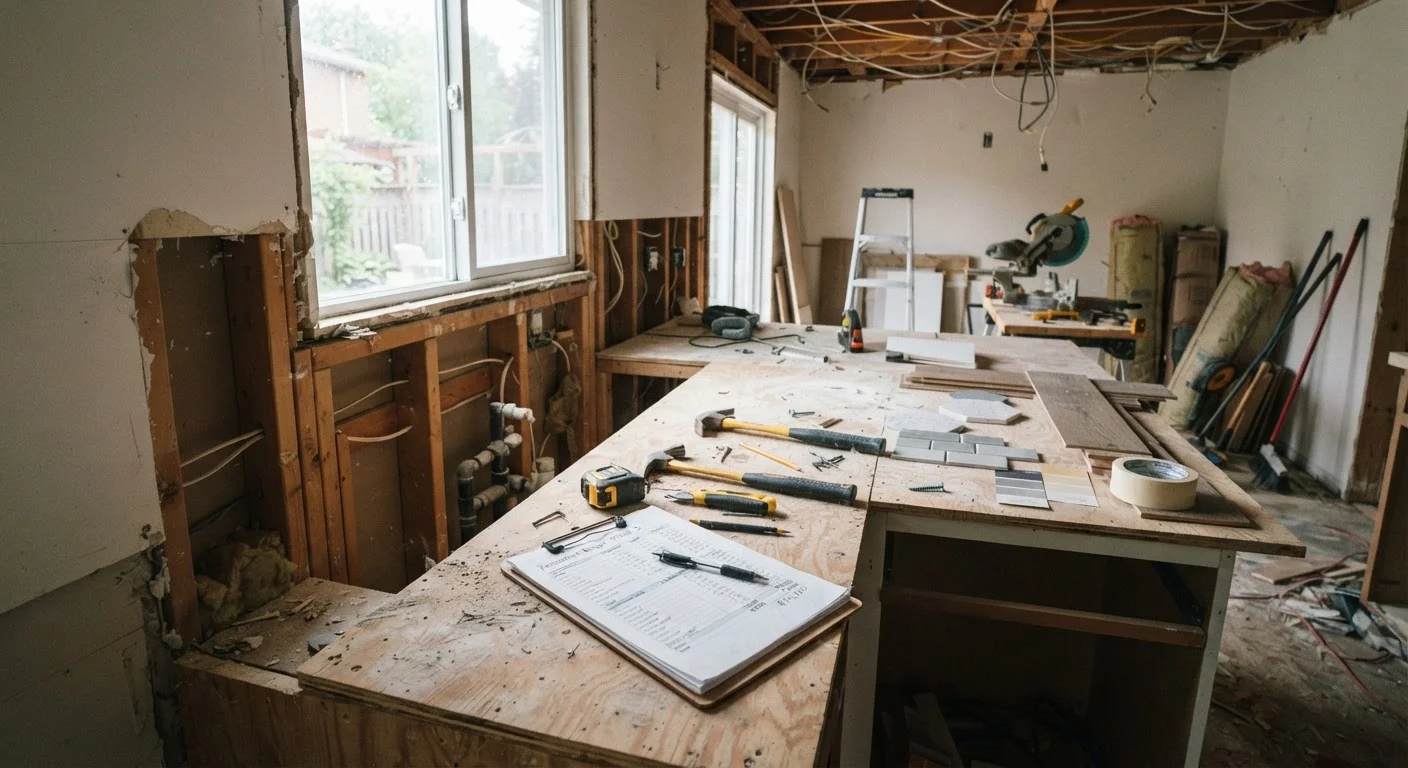
Opening walls or floors frequently reveals problems invisible during planning - mold, outdated wiring, water-damaged framing, or inadequate insulation. These issues must be remediated before finishing work can proceed, and remediation costs are rarely small. Budget conservatively and assume at least one significant discovery on any project involving demo work.
Keeping a close eye on your overall financial plan throughout a renovation is essential. Resources on budgeting basics and smarter budgeting strategies can help you build tracking habits that hold across a multi-month project.
The information in this article is for general educational purposes. Costs vary significantly by region, project scope, and local market conditions. Consult licensed contractors and your local building department for guidance specific to your project.