

Key Takeaways
- A brief squeal in the morning is usually harmless; persistent or grinding noise is not.
- Worn brake pads are the most common cause of squealing and should be inspected promptly.
- Ignoring brake noise can lead to rotor damage, significantly increasing repair costs.
- A pulling sensation or soft pedal alongside noise signals an urgent safety concern.
What Brake Noises Are Actually Telling You
Brakes communicate through sound, and not every noise is a crisis - but every noise deserves attention. Understanding the difference between a minor quirk and a serious warning can save you money and, more importantly, keep you safe.
A light squeal on the first few stops of the morning, especially after rain or overnight humidity, is typically surface rust burning off the rotors. That's normal and usually disappears within a minute of driving. What's not normal is a squeal that persists throughout your drive, a grinding or growling noise when braking, or any metallic scraping sound.
Here's a quick breakdown of common brake sounds:
- High-pitched squeal (consistent): Worn brake pads. Most pads have a small metal wear indicator that squeals when the friction material runs low - that's its job.
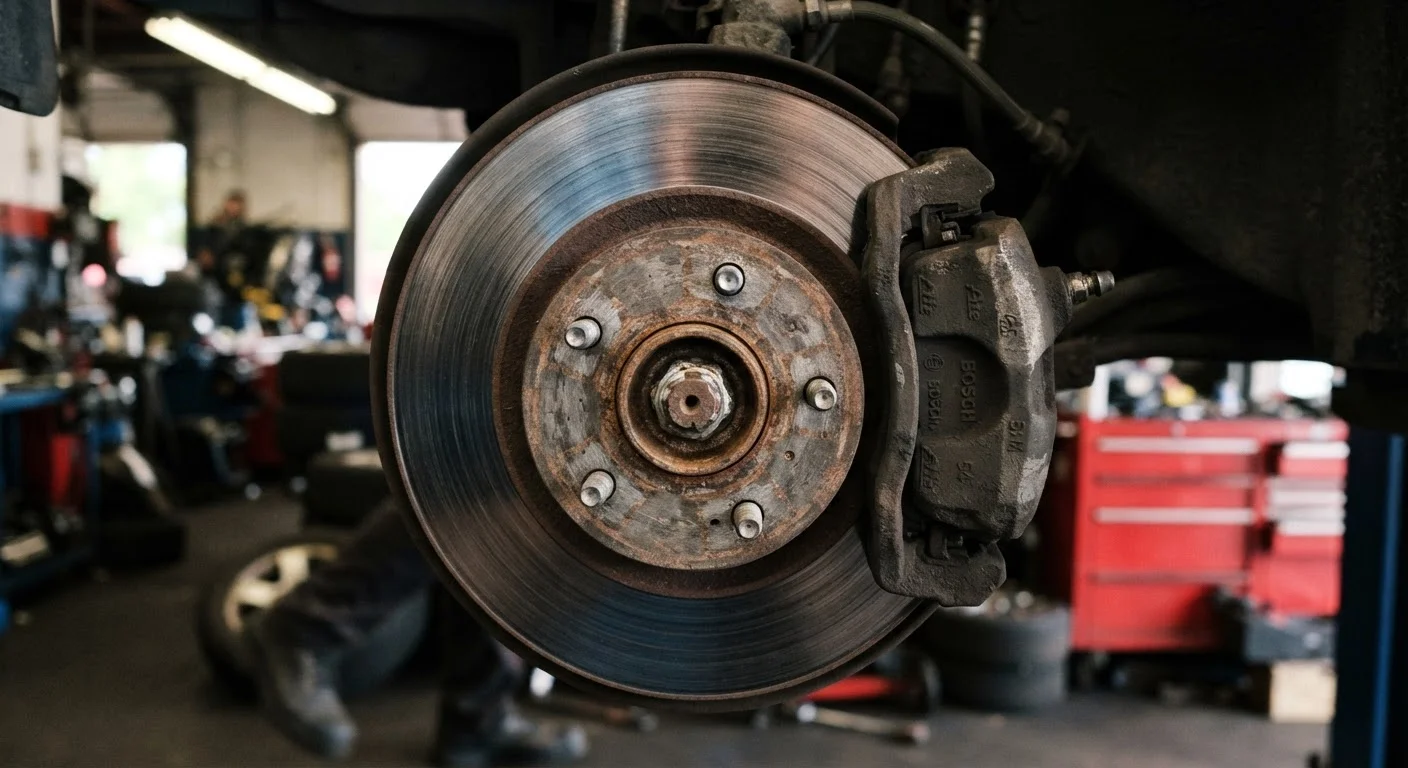
- Grinding or growling: Metal-on-metal contact. The pad material is gone, and the metal backing plate is now contacting the rotor directly.
- Scraping or rubbing at low speed: Could be debris (a small stone trapped in the caliper) or a seized caliper dragging against the rotor.
- Clicking or clunking when braking: Loose brake hardware - anti-rattle clips or caliper bolts that have worked loose over time.
If your brake warning light is also illuminated, don't wait - see our guide to dashboard warning lights for what that signal means and when it demands immediate action.
Common Mistakes Drivers Make With Brake Noise
Brake problems rarely appear without warning. The mistakes below are how minor, inexpensive issues become dangerous, costly ones.
Waiting for the noise to go away on its own.
Why it happens: Drivers often hope an intermittent noise is a fluke, especially if the vehicle still seems to stop normally.
Assuming quiet brakes mean safe brakes after the noise stops.
Why it happens: Once the pad material is completely gone, the grinding noise can sometimes reduce as metal wears smooth - misleading drivers into thinking the problem resolved itself.
Ignoring brake noise because the car recently passed inspection.
Why it happens: A state inspection checks brake components at a point in time. Pads can wear significantly in the months that follow, particularly in stop-and-go driving or hilly terrain.
Topping up brake fluid without investigating why the level dropped.
Why it happens: Low fluid is visible and easy to address, so drivers add fluid without checking whether the drop signals a leak or simply reflects normal pad wear.
~$150-$300
Typical brake pad replacement cost (per axle)
Industry repair estimates consistently show rotor replacement adds $200-$400 or more per axle on top of pad costs when metal-on-metal damage occurs.
3-7 mm
New brake pad friction material thickness
Most mechanics recommend inspection when pad thickness falls below 3 mm and replacement before it reaches 2 mm or less.
When You Cannot Afford to Wait
Some brake symptoms indicate an urgent safety risk that goes beyond a simple pad replacement. Pull over safely and arrange a tow or roadside inspection if you notice any of the following alongside brake noise:
- The vehicle pulls sharply to one side when braking - this can indicate a seized caliper or uneven pad wear affecting steering control.
- The brake pedal feels spongy, soft, or sinks toward the floor - a possible sign of air in the brake lines or a fluid leak.
- You smell burning near a wheel after driving - a dragging caliper can overheat the rotor and, in extreme cases, cause brake fade.
- Braking distances feel noticeably longer than usual.
Don't Diagnose Brakes by Sound Alone
Sound can help you identify a likely problem, but brake systems are complex and interconnected. A squeal that sounds like a worn-pad indicator could also stem from glazed rotors, a stuck caliper, or contaminated brake fluid. Always have a professional inspect the full system rather than replacing parts based on noise alone.
Even if your car passes a visual check, brakes are a hydraulic system with components that are not always visible without disassembly. A qualified mechanic can assess pad thickness, rotor condition, caliper function, and brake fluid quality in one inspection - work worth scheduling before a small noise becomes a safety incident.
Consistent brake maintenance also fits into the broader picture of vehicle upkeep. Our article on what happens when you skip routine services explains how deferred maintenance compounds over time.