
Why DIY Electrical Work Goes Wrong - and What to Leave to a Licensed Electrician

Key Takeaways
- Most electrical mistakes stem from underestimating hidden complexity, not lack of effort.
- Unpermitted electrical work can void homeowner's insurance and create serious liability at resale.
- Tasks like panel work, new circuits, and service upgrades require a licensed electrician in most US jurisdictions.
- Turning off a breaker does not make all wiring in a wall safe to touch.
- A licensed electrician brings code knowledge, testing equipment, and legal accountability that a homeowner cannot replicate.
Why Electrical DIY Carries Unique Risks
Electrical work is unlike most home improvement tasks. A poorly hung door is an inconvenience. A wiring error can cause a house fire weeks or months after the work is complete - long after everything appears to be functioning normally. According to the U.S. Fire Administration, electrical fires cause thousands of residential injuries and fatalities each year, and a significant portion originate from faulty wiring and amateur installations.
What makes electricity particularly unforgiving is that mistakes are often invisible. Connections that look correct may be loose, undersized, or improperly grounded. Those faults don't announce themselves immediately - they build heat over time inside walls until something fails. That delayed consequence is one reason electrical DIY demands a different standard of caution than, say, painting a room or replacing a faucet.
Understanding where the risks concentrate - and which tasks cross a clear professional threshold - is the most useful thing any homeowner can do before picking up a screwdriver near a panel or outlet box.
Common Mistakes Homeowners Make With Electrical Work
Most electrical errors aren't the result of recklessness - they come from reasonable assumptions that happen to be wrong. Here are the mistakes we see most consistently, along with why they happen and how to avoid them.
Assuming the breaker off means the circuit is safe to work on without testing.
Why it happens: It's a logical assumption - turn off the power, work on the wires. But homes sometimes have multi-wire branch circuits or wiring configurations where turning off one breaker doesn't de-energize everything in the box.
Using the wrong wire gauge for the circuit's amperage.
Why it happens: Wire sizing isn't intuitive, and the consequences of undersizing aren't immediate. A 15-amp wire on a 20-amp circuit may work fine for years before heat buildup causes insulation failure.
Making wire connections outside of a covered, accessible junction box.
Why it happens: It's tempting to splice wires inside a wall cavity to avoid the visible box, especially during renovation. Homeowners often don't realize this is a code violation with serious implications.
Overloading a circuit by adding outlets or fixtures beyond its designed capacity.
Why it happens: Adding one more outlet to an existing circuit seems harmless, but homeowners rarely calculate the total load already on that circuit and what the new addition will draw.
Installing the wrong type of outlet for the location.
Why it happens: Standard outlets look the same to most homeowners, but NEC requirements specify GFCI (ground-fault circuit interrupter) or AFCI (arc-fault circuit interrupter) protection in kitchens, bathrooms, garages, outdoors, and other locations.
When you're weighing any DIY project, it helps to apply the same principle used in auto repair: separate the tasks that carry genuine risk from those that don't. Our guide to DIY vs. mechanic decisions explores that line of reasoning in a different context, but the underlying logic translates directly to home electrical work.
What the Permit Process Actually Protects
Many homeowners skip permits to save time or money, assuming a small job doesn't warrant the paperwork. This is one of the most consequential assumptions in home improvement. In most US jurisdictions, any new circuit, panel modification, or service upgrade requires a permit - and for good reason.
Skipping a Permit Can Void Your Insurance
If a fire or injury occurs and an investigation reveals unpermitted electrical work, your homeowner's insurance provider may deny the claim. This is not a rare edge case - it is a documented outcome that has left homeowners facing six-figure losses. Before starting any electrical work beyond basic fixture swaps, contact your local building department to confirm what requires a permit.
A permit triggers an inspection by a local code official who verifies the work meets the National Electrical Code (NEC) and any local amendments. That inspection is not bureaucratic overhead - it's the mechanism that catches dangerous work before it's buried behind drywall. Without it, you have no independent verification that anything was done correctly.
The downstream consequences are real. Unpermitted electrical work can complicate or void homeowner's insurance claims. It can delay or derail a home sale when inspectors flag it during due diligence. And in some cases, it exposes homeowners to legal liability if a fire or injury occurs. Our breakdown of renovation permit requirements explains which projects typically trigger permit obligations and what the real consequences of skipping the process look like.
Tasks That Belong to a Licensed Electrician
Certain electrical tasks are regulated, permit-required, or simply too high-stakes for an unlicensed homeowner to perform safely - regardless of skill level or YouTube tutorials watched. These include:
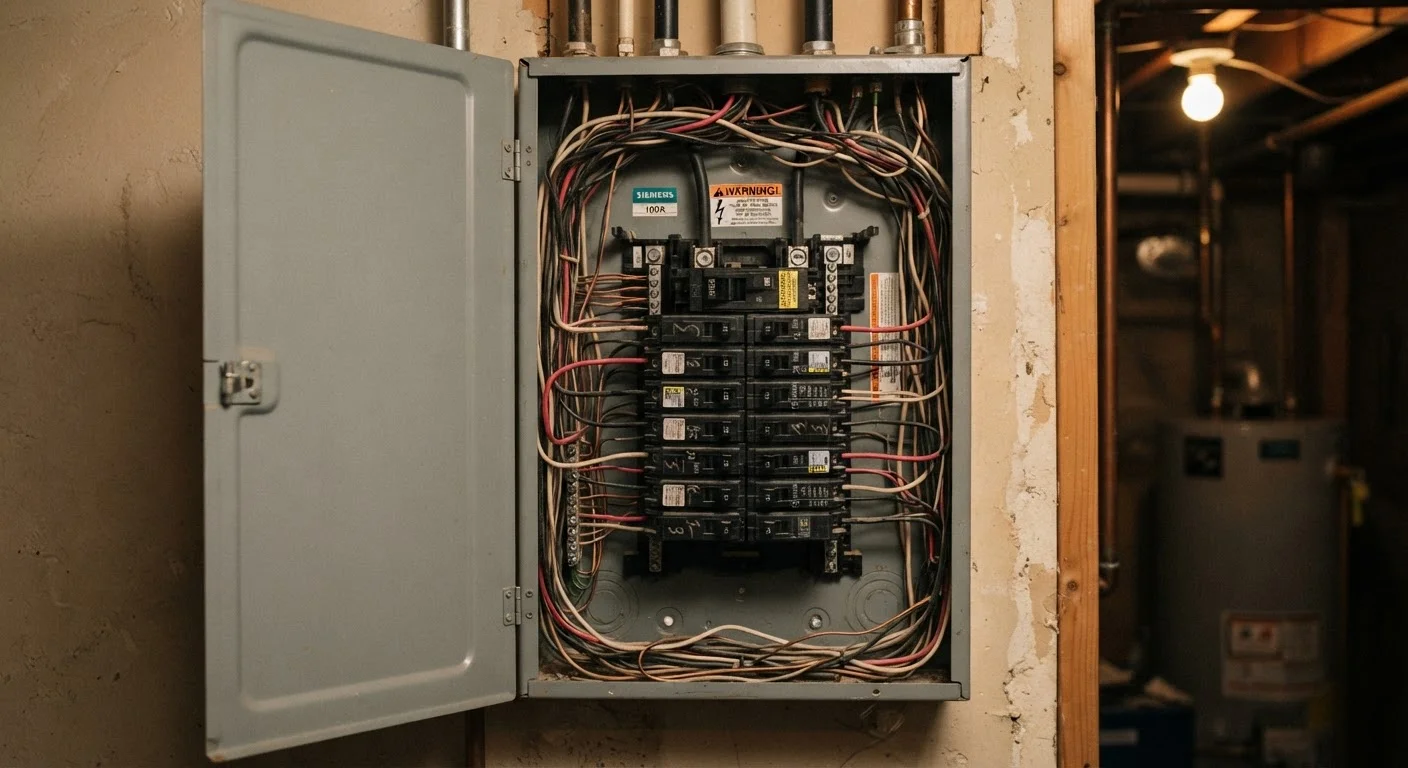
- Service panel work - Upgrading, replacing, or modifying a main electrical panel. The service entrance wires feeding the panel are energized even when the main breaker is off and cannot be de-energized without the utility company's involvement.
- New circuit installation - Running a dedicated circuit for a kitchen appliance, EV charger, or home office requires correct wire sizing, breaker selection, and arc-fault or ground-fault protection depending on location.
- Service upgrades - Moving from 100-amp to 200-amp service involves the utility company, permit coordination, and licensed work at the meter.
- Knob-and-tube or aluminum wiring modifications - Older wiring systems require specialized knowledge to modify safely and legally.
- Outdoor and pool wiring - These environments introduce moisture, burial depth requirements, and conduit specifications that are tightly regulated.
If you're ready to bring in a professional, start with a thorough vetting process. Our guide to hiring and vetting a contractor walks through what to verify - from licensing and insurance to written quotes and red flags - before any work begins.
~51,000
Home electrical fires reported annually in the US
The U.S. Fire Administration estimates approximately 51,000 home electrical fires occur each year, resulting in nearly 500 deaths and over $1.3 billion in property damage.
~40%
Electrical fires attributed to wiring and related equipment
According to the National Fire Protection Association, wiring and related equipment consistently accounts for a large share of residential electrical fire incidents nationwide.
This article is for general informational purposes only. Electrical work requirements vary by jurisdiction. Always verify local code requirements and consult a licensed electrician before undertaking any electrical project in your home.