

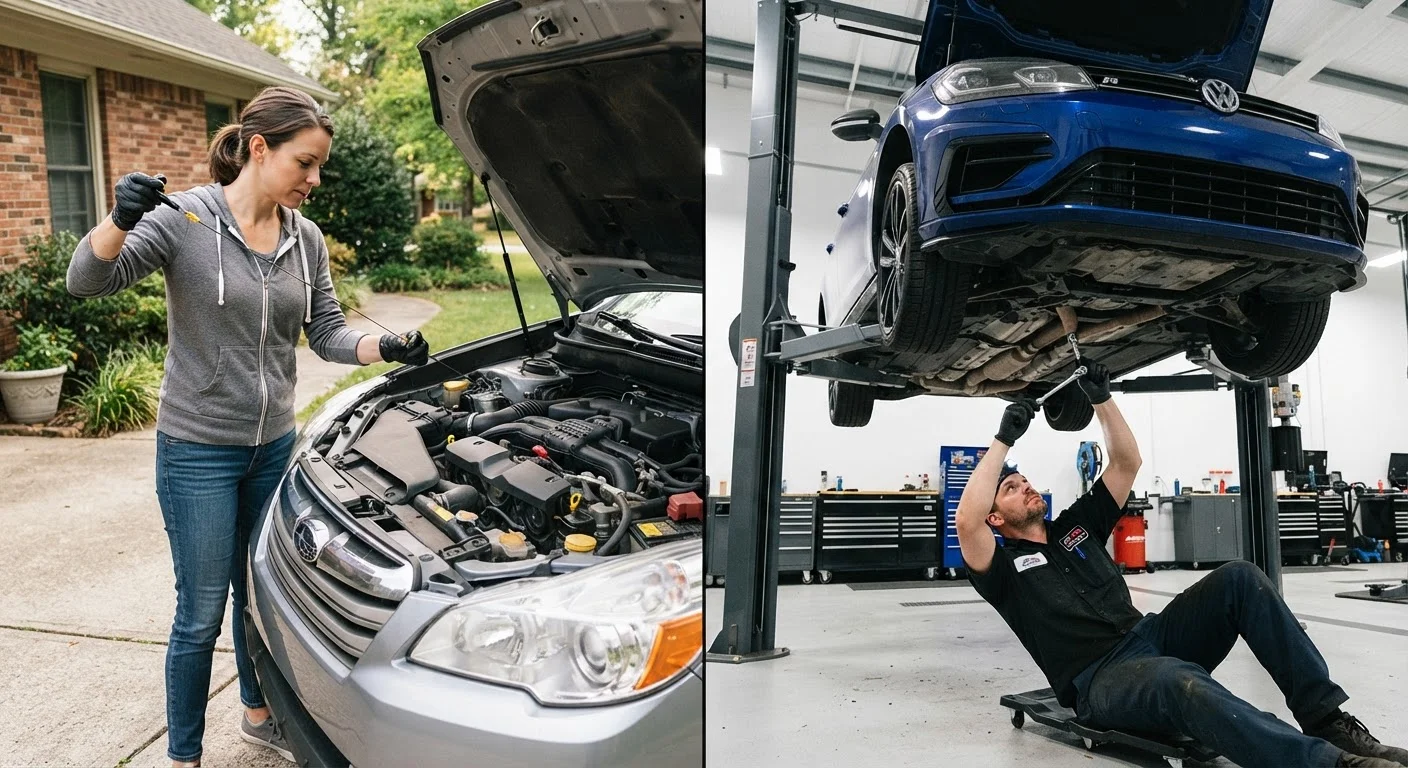
Key Takeaways
- Simple checks like air filters, wiper blades, and fluid top-offs are safe for most drivers to handle at home.
- Brake system work, suspension repairs, and anything involving airbags should be left to a qualified mechanic.
- Using the wrong tools or skipping torque specs on critical components can turn a minor repair into a costly failure.
- Your owner's manual is the most reliable guide for your specific vehicle's maintenance requirements.
- DIY saves money on labor but not if a mistake requires professional correction afterward.
Our Verdict
DIY maintenance is genuinely worthwhile for routine, low-risk tasks that don't require specialized tools or precise safety calibration. But for anything touching brakes, steering, suspension, or advanced electronics, a qualified mechanic is the right call - not because drivers aren't capable, but because the consequences of an error are too serious to risk.
| Best for | Recommended |
|---|---|
| Drivers comfortable with basic tools and routine upkeep | DIY |
| Safety-critical systems and complex diagnostics | Mechanic |
| Newer vehicles with advanced electronics or warranty considerations | Mechanic |
| Older vehicles with straightforward, accessible components | DIY (with proper guidance) |
Where the DIY Line Actually Falls
The appeal of handling your own car maintenance is real - labor costs at a shop can easily exceed the cost of parts by a wide margin. But enthusiasm for DIY needs to be matched by an honest assessment of the task at hand. Not every job is created equal, and the stakes vary dramatically depending on what system you're touching.
A good rule of thumb: if a mistake could compromise your ability to steer, stop, or control the vehicle, the job belongs with a professional. If it's a consumable or visible external component, most mechanically curious drivers can handle it safely with the right information. Be sure to cross-check any procedure against your common car maintenance myths - some popular DIY habits actually cause more harm than good.
Start With Your Owner's Manual
Before searching online for a repair procedure, open your owner's manual. It lists maintenance intervals, fluid specifications, and component locations specific to your vehicle's model year and trim. For tasks not covered there, look for manufacturer-approved repair documentation rather than relying solely on general guides.
Jobs Most Drivers Can Safely Handle
These tasks are low-risk, require minimal tools, and are well-documented in most owner's manuals:
- Engine air filter replacement: Usually a clip or screw-fastened box. No special tools needed, and a dirty filter is easy to identify visually.
- Wiper blade replacement: Straightforward swap with no mechanical risk. Blade sizes are listed in the owner's manual or at any auto parts store.
- Cabin air filter: Typically located behind the glove box. Consult your manual for location - it's usually a five-minute job.
- Fluid checks and top-offs: Engine oil, coolant reservoir, windshield washer fluid, and power steering fluid (where applicable) can all be checked visually. For a full breakdown of what each fluid does, see the complete guide to car fluids.
- Battery terminal cleaning: Disconnect the negative terminal first, clean corrosion with a baking soda solution, reconnect. Note that some vehicles reset electronic settings when the battery is disconnected.
- Light bulb replacement: Exterior bulbs on many vehicles are accessible without tools, though some modern designs require partial disassembly - check first.
Tasks That Belong in a Professional's Hands
Some jobs look approachable but carry serious risk if done incorrectly. This isn't about doubting your ability - it's about understanding where an honest mistake has outsized consequences.
Don't Mistake Familiarity for Expertise
Having watched a repair being done - or done it once before - isn't the same as having the knowledge to do it safely every time. Brakes, steering, and suspension components have tight tolerances and specific torque requirements. If you're unsure at any point during a job, stop and consult a qualified mechanic. Completing a repair incorrectly is almost always more expensive than having a professional do it from the start.
- Brake pads and rotors: While brake pad replacement is commonly listed as a DIY job, incorrect installation - wrong torque on caliper bolts, uneven rotor seating, or contaminated brake fluid - can cause brake fade or failure. Unless you have prior hands-on experience, this warrants professional attention.
- Wheel bearing replacement: Requires a hydraulic press and precise fit. An improperly seated bearing can fail at speed.
- Timing belt or chain service: Incorrect timing causes severe engine damage. The tolerance for error is essentially zero.
- Suspension components: Ball joints, tie rod ends, and control arm bushings affect steering geometry. Errors here affect vehicle handling in unpredictable ways.
- Airbag system work: Any work near airbag components requires specialized training and tools. Accidental deployment causes serious injury.
- Transmission and clutch repairs: Complex, expensive, and highly sensitive to assembly precision.
Neglecting these systems is equally risky - see what happens when maintenance is skipped for a clearer picture of how deferred repairs compound over time.
How to Decide: A Practical Framework
Before starting any job, ask yourself four questions:
- Do I have the right tools? A torque wrench, jack stands (not just a floor jack), and model-specific hardware matter. Improvising on safety-critical fasteners is not acceptable.
- Is there a clear, vehicle-specific procedure? Generic YouTube tutorials vary in quality. Cross-reference with your owner's manual or a repair database specific to your make and model.
- What's the consequence of getting it wrong? A misaligned wiper blade is an inconvenience. A misaligned brake caliper is a safety hazard.
- Does this job affect my warranty or required inspections? Some repairs on newer vehicles must be performed by a certified technician to preserve warranty coverage. Certain states also require licensed shops for emissions-related repairs.
| Task | DIY Feasibility | Risk if Done Incorrectly | Tools Required | |
|---|---|---|---|---|
| Engine air filter | High | Low - reduced engine efficiency | None or screwdriver | |
| Wiper blades | High | Low - poor visibility | None | |
| Fluid top-offs | High (checks) / Medium (changes) | Low to medium depending on fluid | Funnel, gloves | |
| Brake pads & rotors | Low-Medium | High - brake failure risk | Torque wrench, jack stands, C-clamp | |
| Timing belt/chain | Low | Very high - engine damage | Specialist tools, factory manual | |
| Suspension components | Low | High - handling instability | Press, alignment equipment |
This framework applies equally to home repairs - much like knowing when to call a licensed electrician, the key is honest self-assessment before you start, not after something goes wrong.