

Key Takeaways
- Most fluid checks take under five minutes and require no tools.
- Low or degraded brake fluid can compromise stopping ability - treat it as urgent.
- Engine oil condition matters as much as quantity; dark, gritty oil needs attention.
- Coolant protects against both overheating and freezing - check it year-round.
- Many costly repairs trace back to neglected fluid levels or intervals.
- Your owner's manual is the most reliable source for fluid specs and service intervals.
Why Car Fluids Matter More Than Most Drivers Realize
A modern vehicle relies on at least six different fluids to operate safely. Each one performs a distinct job - lubricating moving parts, transferring heat, transmitting force, or keeping your view clear. When any one of them runs low or degrades, the consequences range from reduced performance to catastrophic mechanical failure.
The good news: monitoring most fluids is something any driver can do at home, parked in a driveway, in a few minutes. You don't need mechanical expertise - just a basic understanding of what you're looking at and why it matters. If you're new to vehicle ownership, our guide for new drivers covers the broader maintenance habits that protect your investment from day one.
~40%
Engine failures linked to lubrication issues
Industry estimates consistently attribute a large share of engine damage to oil-related problems, including low levels and extended change intervals.
2-5 years
Typical coolant flush interval
Most manufacturers recommend a full cooling system flush within this range, though the exact interval depends on vehicle model and coolant type.
Every 2 years
General brake fluid change guideline
Many manufacturers and brake system engineers recommend renewing brake fluid on a two-year cycle due to moisture absorption, regardless of mileage.
Engine Oil: The Fluid You Can't Ignore
Engine oil lubricates hundreds of metal components moving at high speed inside your engine. Without it, those parts grind against each other - damage that can total an engine within minutes. Oil also carries heat away from components and suspends microscopic contaminants until your filter catches them.
How to check it: Park on level ground with the engine off and cooled. Pull the dipstick, wipe it clean, reinsert it fully, then pull it again. The oil level should fall between the two marks. Also check the color: fresh oil is amber; dark brown or black oil with a gritty texture has degraded and should be changed.
What to watch for: A persistent burning smell, blue-tinted exhaust smoke, or the oil pressure warning light are all signs that need immediate attention. See our dashboard warning light guide to understand which alerts demand action right away.
Check your oil when the engine is cold - not immediately after driving. A five-minute wait after a short trip gives a more accurate reading on the dipstick.
Oil migrates down from the upper engine when the vehicle sits; checking too soon after running can give a falsely low reading and lead to unnecessary top-ups.
Keep a small flashlight in your glove box specifically for engine bay checks. Fluid reservoirs are often tucked in corners where ambient light doesn't reach.
Misreading a fluid level due to poor visibility is a common cause of both over- and under-filling, each of which can cause its own problems.
For change intervals, follow your owner's manual - not blanket rules. The old "every 3,000 miles" guideline is outdated for most modern vehicles. Our article on car maintenance myths explains why that and other common rules of thumb can actually cost you money.
Coolant: Keeping Temperatures in Check
Coolant (also called antifreeze) circulates through your engine and radiator to regulate operating temperature. It prevents overheating in summer and freezing of engine passages in winter. A 50/50 mix of coolant concentrate and distilled water is the standard formulation for most vehicles.
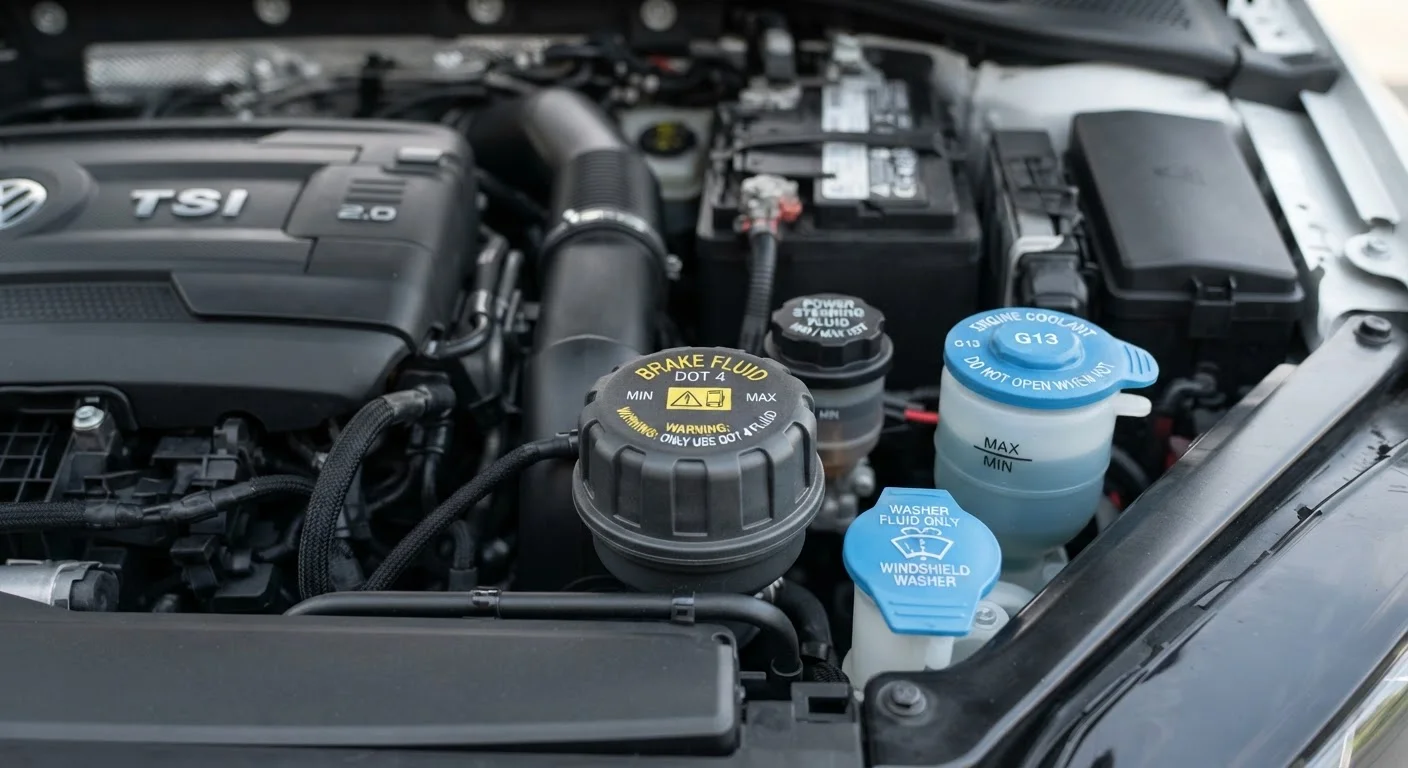
How to check it: Locate the translucent coolant reservoir - usually marked with a thermometer or wave symbol. Check the level against the MIN/MAX markings on the side. Never open the radiator cap on a hot engine - pressurized coolant can cause serious burns.
Never Open a Hot Radiator Cap
Coolant systems operate under pressure. Opening the radiator cap while the engine is hot can cause boiling fluid to eject forcefully, causing serious burns. Always wait at least 30 minutes after driving before opening any coolant system component.
Coolant color varies by type (green, orange, pink, blue), and mixing types can cause chemical reactions that degrade your cooling system. Always use the type specified in your owner's manual. Most manufacturers recommend a full coolant flush every two to five years, though your manual will give the precise interval for your vehicle.
Brake Fluid: Small Volume, Critical Role
Brake fluid transmits the force from your foot on the pedal to the brake calipers at each wheel. It operates under high pressure and extreme heat. Because brake fluid is hygroscopic - meaning it absorbs moisture from the air over time - it degrades even without visible leaks. As water content rises, the fluid's boiling point drops, which can cause brake fade under hard use.
How to check it: The brake fluid reservoir sits on top of the master cylinder, typically near the firewall on the driver's side. The level should be between MIN and MAX. Dark, cloudy fluid is a sign it's time for a change regardless of mileage.
Brake Fluid Degradation Is Invisible
Unlike oil or coolant, brake fluid can lose critical performance properties without any visible warning - no leak, no dashboard light, no obvious symptom. Because it absorbs moisture over time, a fluid that looks full may still be dangerously degraded. Follow the manufacturer's replacement interval, not just the level indicator.
Brake fluid changes are generally recommended every two years or per manufacturer guidance. This is one job where a DIY vs. mechanic assessment is worth doing carefully - bleeding brakes incorrectly can introduce air into the lines and reduce braking effectiveness.
Transmission, Power Steering, and Windshield Washer Fluid
Transmission fluid lubricates gears and, in automatic transmissions, also serves as a hydraulic fluid. Many modern sealed transmissions don't have a dipstick; if yours does, check it with the engine warm and running. Transmission fluid should be reddish and translucent - dark, burnt-smelling fluid signals a service is overdue.
Power steering fluid enables hydraulic assist when turning the wheel. Many newer vehicles use electric power steering and have no fluid at all. If your car has a reservoir, it typically sits near the front of the engine bay. Low levels often indicate a leak, which warrants a mechanic's inspection.
Windshield washer fluid is the least critical on this list but still matters for visibility in rain, snow, or when road spray coats your windshield. Use a premixed washer solution rated for your climate - plain water can freeze in the reservoir and damage the pump. Never substitute household glass cleaner, which can damage wiper blades and seals.
Build a Monthly Fluid Check Habit
Set a recurring reminder on your phone for the first day of each month. A five-minute check of oil, coolant, brake fluid, and washer fluid is enough to catch the vast majority of issues early. Keep paper towels and a small flashlight in the trunk to make it easy.
How to Read Warning Signs Before They Become Repairs
Fluids don't disappear silently - they leave clues. Puddles under your parked car, unusual smells, changes in steering or braking feel, and dashboard lights are all signals worth investigating promptly. The color of a puddle can help narrow down the source: bright green or orange typically points to coolant; reddish fluid near the front suggests transmission or power steering fluid; dark oily patches usually indicate an engine oil leak.
Building a simple habit of a monthly visual check - walk around the car, glance under it, peek at your dashboard - catches most issues before they escalate. Pair that with a quick fluid level check every time you fill up with gas, and you'll catch the majority of problems early.
For a complete picture of what your vehicle is trying to tell you, the dashboard warning lights guide is a practical companion to this one. And if you're ever unsure whether a task is within your skill level, our DIY vs. mechanic guide draws a clear line between what's safe to handle yourself and what's better left to a professional.
“Preventive maintenance - including regular fluid checks - is one of the most cost-effective things a vehicle owner can do. Most major mechanical failures don't happen without warning; they follow a series of ignored signals.”
— ASE (Automotive Service Excellence), National automotive technician certification organization
This article is for general informational purposes only. Always consult a qualified mechanic for diagnosis, repairs, or any maintenance task that involves safety-critical systems such as brakes or steering.