

| Most common starting point | Decluttering before organizing |
| Object-based method example | KonMari (sort by category) |
| Space-based method example | Zone-based storage (sort by location) |
| Key friction-reduction principle | Store items where they are used |
| Container Method core rule | Items must fit the container; don't expand the container |
| Prime real estate rule | Most-used items at eye level and within easy reach |
Why Organization Terminology Matters
Scroll through any home organization article or social media feed and you'll encounter a stream of terms - capsule closet, negative space, friction points - used as though they're self-explanatory. They're not always. When you don't share a vocabulary with the method you're trying to follow, the whole project feels harder than it needs to be.
This reference covers the most commonly used home organization concepts and methods in plain language. Think of it as a lookup tool: find a term you've encountered, understand what it actually means, and decide whether it belongs in your approach. For a deeper look at how organizing differs from decluttering - two processes that are often confused - see our guide on decluttering vs. organizing.
KonMari Method
An object-based organization approach that involves sorting possessions by category and keeping only items that are genuinely useful or meaningful. Categories are handled in a set sequence, finishing each completely before moving on.
Zone-Based Storage
A space-based system that divides a room into functional areas and assigns items to the zone where they're most often used. It reduces friction by making items easy to access in context.
Container Method
An approach that uses physical containers to define the maximum space a category of items may occupy. If a category outgrows its container, items are removed rather than the container expanded.
Friction Point
Any aspect of a space or routine that makes a desired behavior harder to complete. In organization, reducing friction means arranging things so that putting them away is as easy as taking them out.
Negative Space
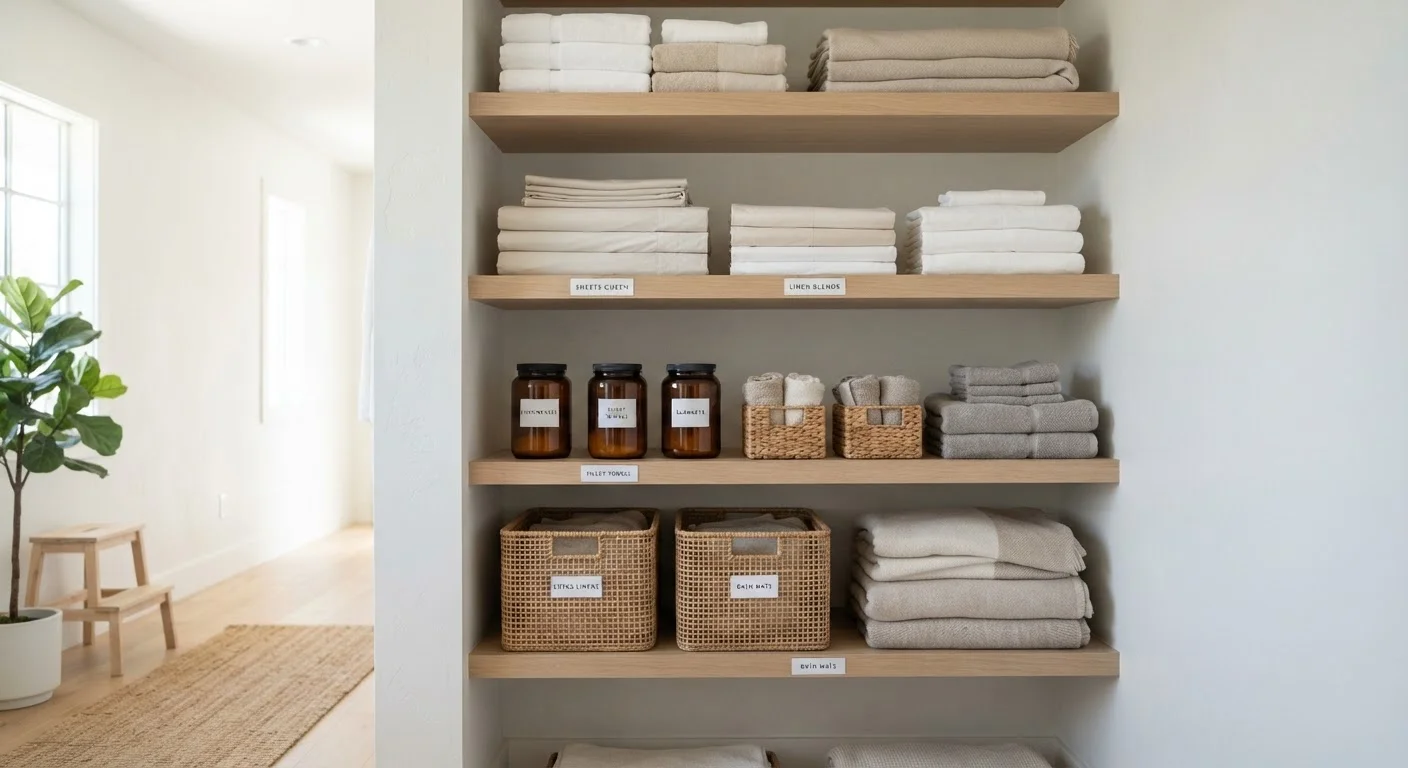
Deliberate empty space left in a room, on a shelf, or in a drawer. Negative space makes environments feel less cluttered and is an intentional choice, not a sign of underuse.
Prime Real Estate
The most accessible storage locations in a given space - eye-level shelves, front-of-cabinet positions, and countertop surfaces. High-frequency items should occupy these spots.
Döstädning
A Swedish term meaning 'death cleaning.' It refers to the gradual, deliberate process of reducing possessions over time so that loved ones are not burdened with sorting through excessive belongings.
Decision Fatigue
A state of mental exhaustion caused by making too many choices. Good organization reduces daily decisions - particularly about where things belong - helping preserve cognitive energy.
Core Methods and Frameworks Explained
Most home organization systems fall into one of two camps: object-based methods (which start by evaluating what you own) and space-based methods (which start by mapping where things should live). Understanding which camp a method belongs to helps you choose the right starting point for your home.
| Most common starting point | Decluttering before organizing |
| Object-based method example | KonMari (sort by category) |
| Space-based method example | Zone-based storage (sort by location) |
| Key friction-reduction principle | Store items where they are used |
| Container Method core rule | Items must fit the container; don't expand the container |
| Prime real estate rule | Most-used items at eye level and within easy reach |
The KonMari Method
Developed by organizing consultant Marie Kondo, this approach asks you to handle every item you own and keep only what you feel serves your life. Items are sorted by category - clothing, books, papers, miscellaneous items, and sentimental objects - rather than by room. The defining question is whether an object is genuinely useful or meaningful to you. The method emphasizes handling categories completely before moving on, rather than tidying room by room.
Zone-Based Storage
Zone-based organization divides a home or room into functional areas, then assigns categories of items to the zone where they're most used. The kitchen, for example, might be divided into a prep zone, a cooking zone, and a coffee station. Items live where they're used rather than where there happens to be space. This approach reduces friction - the small inconveniences that make routines harder to maintain.
The Container Method
This approach treats storage containers as boundaries, not solutions. You first decide how much space a category of items is allowed to occupy (one shelf, one bin, one drawer), then edit the items to fit that space. If items overflow the container, something leaves - not the container gets bigger. It's a practical tool for limiting gradual accumulation over time, and it pairs naturally with habits like the one-in-one-out rule covered in our clutter-prevention habits guide.
Swedish Death Cleaning (Döstädning)
A practice associated with Swedish culture, this method involves gradually and deliberately reducing possessions - not with a morbid focus, but with consideration for the people who will eventually manage your home. The goal is to keep only what adds genuine value to daily life and to avoid burdening others with sorting through excessive belongings later. It's often practiced by older adults but is applicable at any age.
Key Terms You'll Encounter
Beyond named methods, a handful of concepts appear repeatedly across organization guides. Knowing what they mean helps you apply advice more accurately.
- Negative space: Intentional empty space in a room or on a shelf. Rather than filling every gap, negative space gives the eye somewhere to rest and makes spaces feel calmer and easier to maintain.
- Friction point: Any feature of your space or routine that makes a habit harder to perform. A recycling bin stored in an inconvenient location creates a friction point that leads to clutter. Reducing friction is a core goal of practical organization.
- Decision fatigue: The mental exhaustion that comes from making too many choices in a row. Organization systems that reduce daily decisions - knowing exactly where everything lives - help preserve mental energy for more important choices.
- Capsule wardrobe: A curated, smaller collection of clothing items that work well together and cover most of a person's needs. The aim is versatility and intentionality rather than volume.
- Flat filing: A storage method for papers where documents are stored horizontally in labeled folders or trays rather than vertically in binders. Often used in home offices to make retrieval faster.
- Prime real estate: In storage terms, the most accessible spots in a space - eye-level shelves, front-of-drawer positions, countertop surfaces. Items you use most often should occupy prime real estate; rarely used items go elsewhere.
Many popular beliefs about organization actually complicate the process rather than simplifying it. Our look at common organization myths unpacks several that are worth reconsidering.
Organization and Productivity Systems Overlap
Many home organization concepts - particularly around decision fatigue and friction reduction - have direct counterparts in workplace productivity frameworks. If you work from home or manage a home office, you may find value in reviewing both sets of tools together. See a practical reference guide to common productivity frameworks for definitions of GTD, time blocking, and related methods.