

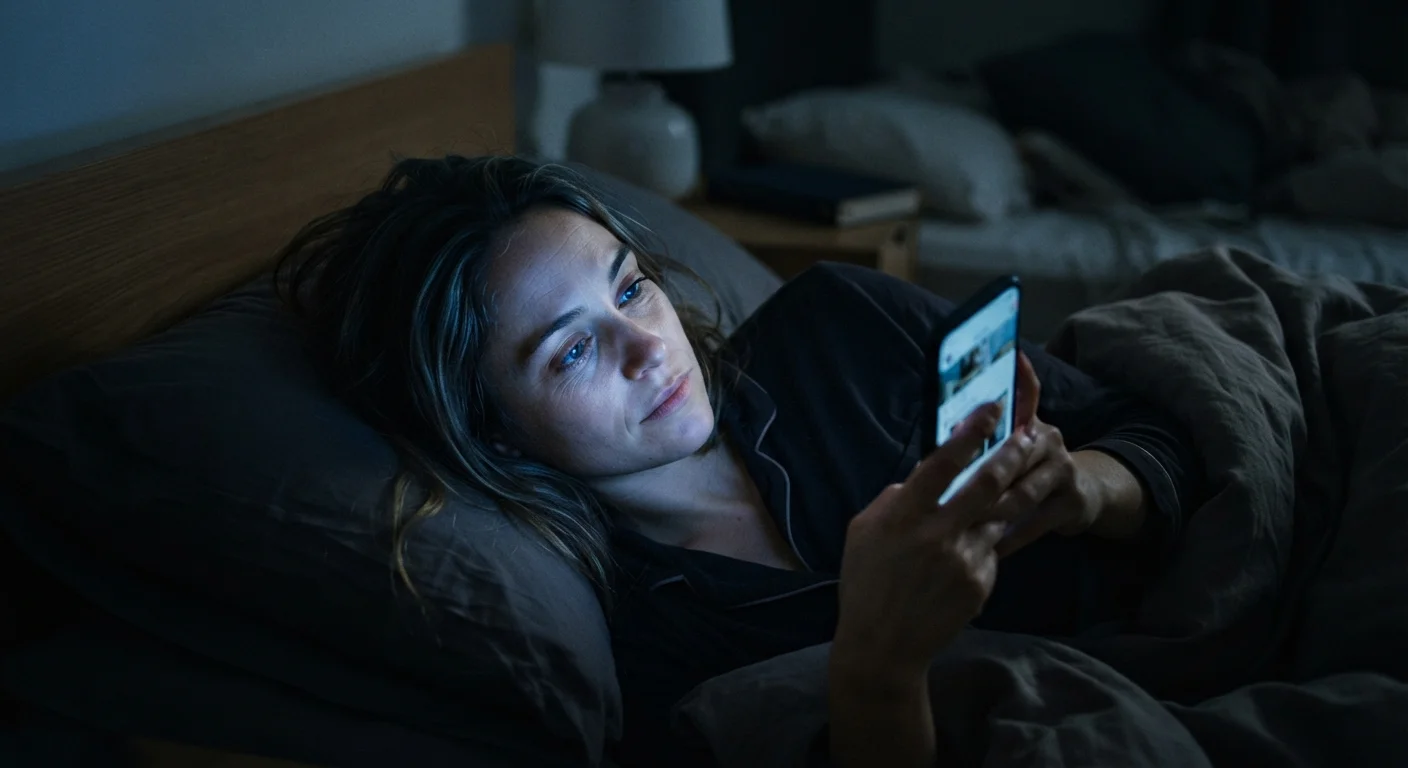
Key Takeaways
- Blue light from screens does suppress melatonin, but its effect size in real-world conditions is often modest.
- The content you consume before bed - not just the light - significantly shapes how quickly you fall asleep.
- Cutting all screens before bed isn't always necessary; timing, duration, and content matter more.
- Consistent sleep and wake times remain the most evidence-backed lever for improving sleep quality.
- Screen time concerns are legitimate but frequently overstated; context and individual variation matter.
Why the Screen-Sleep Debate Refuses to Die
Few health topics generate as much parental anxiety - and adult guilt - as screen time before bed. The popular narrative is simple: screens emit blue light, blue light suppresses melatonin, and suppressed melatonin ruins sleep. But sleep science rarely rewards simple stories. The research on screens and sleep is genuinely mixed, and the blanket advice to power off all devices an hour before bed oversimplifies what is actually a nuanced interaction between light, content, stress, and individual biology.
This article works through the most common claims about screens and sleep, separates what research solidly supports from what remains contested, and gives you a more accurate framework for managing your own evening habits. For a deeper look at what sleep quality actually involves, see our guide to sleep quality vs. duration.
Myth
Blue light from screens is the primary reason screens harm sleep.
Fact
Blue light is one contributing factor, but its real-world effect size is smaller than often claimed, and content-driven arousal is at least as significant.
Blue light does suppress melatonin - this is well established. However, many lab studies demonstrating this effect use light levels considerably brighter than a typical smartphone held at reading distance. A 2021 analysis in Sleep Medicine Reviews concluded that screen blue light alone is unlikely to cause major sleep disruption in typical use conditions. The cognitive stimulation from engaging content - checking news, responding to messages, competitive gaming - contributes to delayed sleep onset through a separate, often larger pathway.
Myth
Blue-light-blocking glasses or night mode settings will fix screen-related sleep problems.
Fact
These tools may offer a modest benefit for light-sensitive individuals, but they do not address the behavioral and arousal effects of stimulating content.
Blue-light filters reduce one input to the problem. But if you are reading upsetting news, scrolling high-stimulation social media feeds, or engaged in an emotionally activating conversation, filtering the wavelength of light will not lower your physiological arousal or quiet a busy mind. The tools are not useless - lowering brightness in the evening is a sensible low-effort step - but treating them as a complete solution misrepresents how sleep onset actually works.
Myth
Any screen use within an hour of bedtime will worsen your sleep.
Fact
Low-stimulation screen use - calm video, passive e-reading, ambient audio - does not consistently delay sleep onset in research on typical adult populations.
The blanket one-hour-no-screens rule is a simplified heuristic, not a precise research finding. Studies comparing different types of pre-sleep screen use find meaningful differences based on content type and individual sensitivity. For many adults, light passive screen use does not measurably affect how quickly they fall asleep or how restorative their sleep is. The rule is a reasonable default for people who haven't identified their own patterns, but it isn't a universal biological law.
Myth
Children and teenagers are affected by screens at night in the same way adults are.
Fact
Adolescents have a naturally delayed circadian phase and may be more sensitive to evening light exposure than adults, making the concern more acute for this age group.
Adolescent biology involves a genuine phase shift - teenagers are biologically inclined toward later sleep and wake times. This, combined with evidence suggesting greater melatonin sensitivity to evening light in younger people, means the research picture is not the same across age groups. Guidance appropriate for a 35-year-old adult reading on a tablet does not automatically apply to a 14-year-old's late-night phone use. Parents and caregivers of children and adolescents should consult a pediatric healthcare provider for age-appropriate recommendations.
What the Evidence Actually Supports
The clearest finding in the literature is that highly stimulating content - anxiety-inducing news, competitive gaming, emotionally charged social media - measurably raises arousal and delays sleep onset, independent of light. This is a behavioral and cognitive effect, not a photonic one, and it is harder to engineer away with a filter app.
~30%
Adults reporting insufficient sleep regularly
CDC surveillance data has consistently found roughly 1 in 3 U.S. adults reports getting less than the recommended 7 hours of sleep per night.
1-3 hrs
Estimated nightly sleep displaced by media use
Research published in Sleep Medicine suggests late-night media consumption is among the most common behavioral contributors to self-reported short sleep duration in adults.
A second well-supported concern is displacement: late-night screen use frequently replaces sleep rather than occurring within a fixed window. If scrolling pushes your actual lights-out time 45 minutes later night after night, cumulative sleep debt is the real problem - not melatonin suppression. This connects directly to why sleep timing regularity is so protective; our overview of sleep and physical recovery covers the biological reasons consistency matters.
Displacement Is the Underrated Problem
The most consistent harm attributed to evening screen use is not melatonin suppression - it is that screens reliably replace sleep time. When scrolling routinely pushes your actual sleep onset 30 to 60 minutes later, the cumulative effect over a week can add up to a full night's lost sleep. Addressing this behavioral displacement - through a consistent target bedtime, not just a screen filter - is the highest-leverage change most adults can make.
What the evidence does not strongly support is the idea that a few minutes of passive e-reader use or low-intensity video will meaningfully derail an otherwise healthy sleeper. Controlled lab studies often use light intensities far higher than typical consumer devices, which limits how directly those results apply to everyday life.
Practical Adjustments Worth Making
Rather than a rigid screen ban, consider a more targeted approach based on what the research actually points to:
- Wind down the content, not just the device. Switch to low-stimulation material - a calm podcast, a non-thriller e-book, ambient video - in the 30 to 60 minutes before bed. The emotional register of what you watch matters at least as much as the light it emits.
- Protect your sleep window first. If screens are cutting into your total sleep time, that is the primary problem to solve. A consistent wake time anchors your circadian rhythm more reliably than any app or blue-light filter.
- Use device features selectively. Night mode and reduced brightness are low-effort steps worth taking, even if their direct sleep benefit is modest - they remove one variable without requiring you to abandon the habit entirely.
- Notice your own patterns. Sleep is highly individual. If you consistently fall asleep easily after reading on a tablet, you may not be as sensitive to that specific exposure. If you routinely lie awake after scrolling social media, that pattern is worth acting on.
For those whose evening screen habits reflect broader attention or scheduling challenges, our article on attention management may offer useful framing.
This article is for general informational purposes only and does not constitute medical advice. If you are experiencing persistent sleep difficulties, consult a qualified healthcare professional.