
Debt Avalanche and Debt Snowball: Choosing a Payoff Method That Fits Your Situation

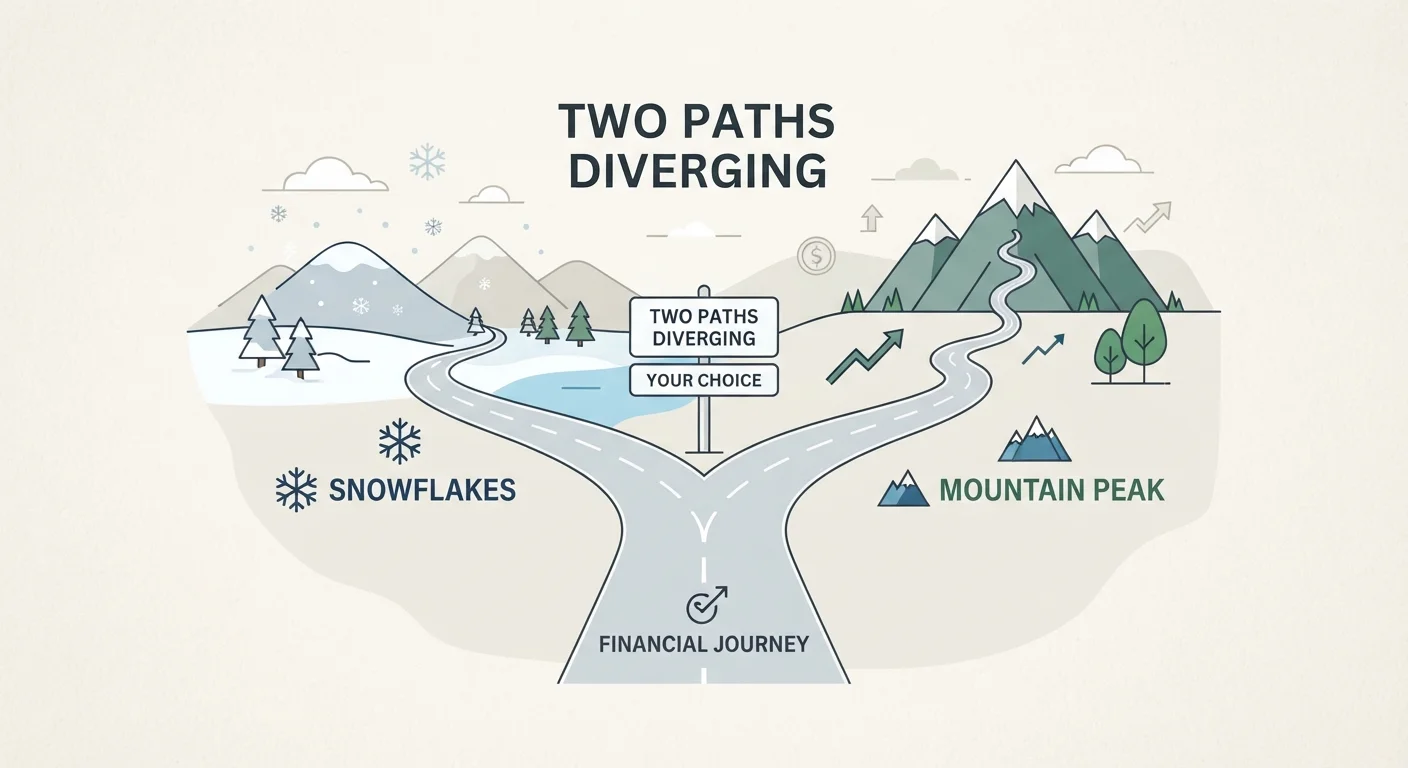
Key Takeaways
- Debt avalanche targets your highest-interest debt first, reducing total interest paid over time.
- Debt snowball eliminates your smallest balances first, creating psychological momentum.
- Neither method is universally superior - the right choice depends on your financial situation and personality.
- Both strategies require making minimum payments on all debts while directing extra funds to one target debt.
- Consistency matters more than which method you choose - a plan you stick to outperforms one you abandon.
Option A
Debt Avalanche
The mathematically efficient, interest-minimizing approach.
Best for: People who are motivated by long-term savings and want to minimize total interest paid over time.
Option B
Debt Snowball
The psychologically rewarding, momentum-building approach.
Best for: People who need early wins to stay motivated and are more likely to stick with a plan that delivers visible progress quickly.
If your highest-interest debt also has a manageable balance
Debt Avalanche
When the high-rate debt isn't overwhelming in size, avalanche lets you knock it out quickly while saving significantly on interest.
If you've struggled to maintain motivation in past payoff attempts
Debt Snowball
Early, tangible wins from eliminating small balances can build the habit and confidence needed to see a longer payoff plan through.
If you carry several high-interest balances of similar size
Debt Avalanche
With comparable balances, avalanche produces meaningful interest savings without sacrificing too much early-payoff momentum.
If your debt list includes many small, scattered accounts
Debt Snowball
Clearing multiple small balances quickly reduces the number of accounts you manage, simplifying your financial picture.
If you want a middle-ground approach
Debt Snowball
Some people use snowball to eliminate one or two small debts for momentum, then switch to avalanche for the remaining higher-interest balances.
How Each Method Works
Both debt payoff strategies follow the same foundational rule: make the minimum payment on every debt each month, then direct any additional funds toward one target debt. The difference lies in how you rank which debt gets that extra payment first.
Debt Avalanche ranks your debts by interest rate, highest to lowest. You attack the most expensive debt first - the one costing you the most in interest - regardless of its balance. Once that debt is eliminated, you roll its entire payment into the next highest-rate debt, and so on. This approach reduces the total interest you pay over the life of your debts. For a deeper look at how interest rates and APR affect what you owe, see our borrower's glossary.
Debt Snowball ranks debts by balance, smallest to largest. You throw every available dollar at the smallest balance first while paying minimums elsewhere. When that balance hits zero, you feel a concrete win - and redirect that payment to the next-smallest debt. The name reflects how payments accumulate and grow as each account is closed.
| Criterion | Debt Avalanche | Debt Snowball |
|---|---|---|
| Payoff order | Highest interest rate first | Smallest balance first |
| Total interest paid | Lower over time | Potentially higher |
| Time to first debt eliminated | Longer (if high-rate debt is large) | Shorter (targets smallest first) |
| Psychological motivation | Requires patience | Early wins build momentum |
| Best suited for | Disciplined, math-oriented planners | Those who need visible progress |
| Complexity | Low - rank by APR | Low - rank by balance |
The Real Tradeoff: Interest Savings vs. Behavioral Momentum
The avalanche method is mathematically optimal in most scenarios. By neutralizing high-interest debt first, you stop the most costly compounding early. Over time, this can translate into meaningful savings - potentially hundreds or thousands of dollars, depending on your balances and rates. However, if your highest-rate debt also carries a large balance, it may take months before you see your first account reach zero. For some people, that wait is discouraging.
The snowball method trades some interest efficiency for psychological reinforcement. Behavioral research consistently shows that small wins activate motivation and build habits. Paying off a $400 medical bill or a $600 store card creates a sense of progress that can be powerful enough to keep someone on track through a multi-year payoff plan. The cost is that lower-priority (but high-rate) debts continue accumulating interest in the background.
~$1,000+
Potential interest savings with avalanche on typical consumer debt
Savings vary widely based on balances, rates, and extra payment amounts; individual results will differ significantly.
3-5
Average number of debt accounts held by US households carrying revolving debt
Federal Reserve consumer finance data indicates many households manage multiple simultaneous credit obligations.
Neither approach is wrong. The method that keeps you engaged and making consistent extra payments will always outperform the theoretically superior method you abandon after three months. If you're new to managing debt overall, our foundational credit and debt guide covers the core principles worth understanding before choosing a strategy.
Choosing Based on Your Situation
A few practical factors can help you decide which method fits your circumstances:
- Your debt mix: If your highest-interest debt is also among your smallest balances, avalanche and snowball converge - you get both the savings and the quick win. If high-rate debts are also your largest, the methods diverge significantly.
- Your track record: Have you attempted debt payoff plans before and lost momentum? The snowball's early wins may be more valuable to you than the avalanche's long-term savings.
- Your income stability: If your budget is tight and unpredictable, reducing the number of monthly obligations quickly (snowball) can provide flexibility faster.
- Your timeline: If you have a clear deadline - such as planning a major financial move within a few years - avalanche's interest savings may matter more within that window.
It's also worth knowing that debt payoff isn't your only option for managing multiple accounts. Debt consolidation is a separate approach that can simplify repayment, though it comes with its own considerations. And as your financial life evolves, debt priorities shift at different life stages - the right strategy at 30 may look different at 50.
Hybrid Approaches Are Valid
Some people use a hybrid strategy: pay off one or two small balances first for a quick motivational boost, then switch to avalanche ordering for the remaining debts. There's no rule requiring you to commit to one method for the entire payoff journey. What matters is that you have a clear, consistent plan and revisit it if your income or debt mix changes significantly.
Whatever method you choose, embedding it within a broader budget is essential. Budgeting Basics offers straightforward frameworks for tracking spending and carving out consistent extra payments each month.
This article is for general informational and educational purposes only and does not constitute personalized financial or legal advice. Consult a qualified financial professional for guidance specific to your situation.