

| Non-discretionary examples | Rent/mortgage, utilities, groceries, health insurance, minimum debt payments |
| Discretionary examples | Dining out, streaming services, vacations, gym memberships, new clothing beyond necessity |
| Common budget allocation (50/30/20 rule) | 50% needs, 30% wants, 20% savings/debt (General personal finance framework; individual circumstances vary) |
| Where most budget flexibility exists | Discretionary categories - not non-discretionary |
| First step in any budget review | Separate all expenses into non-discretionary and discretionary before allocating |
The Core Distinction
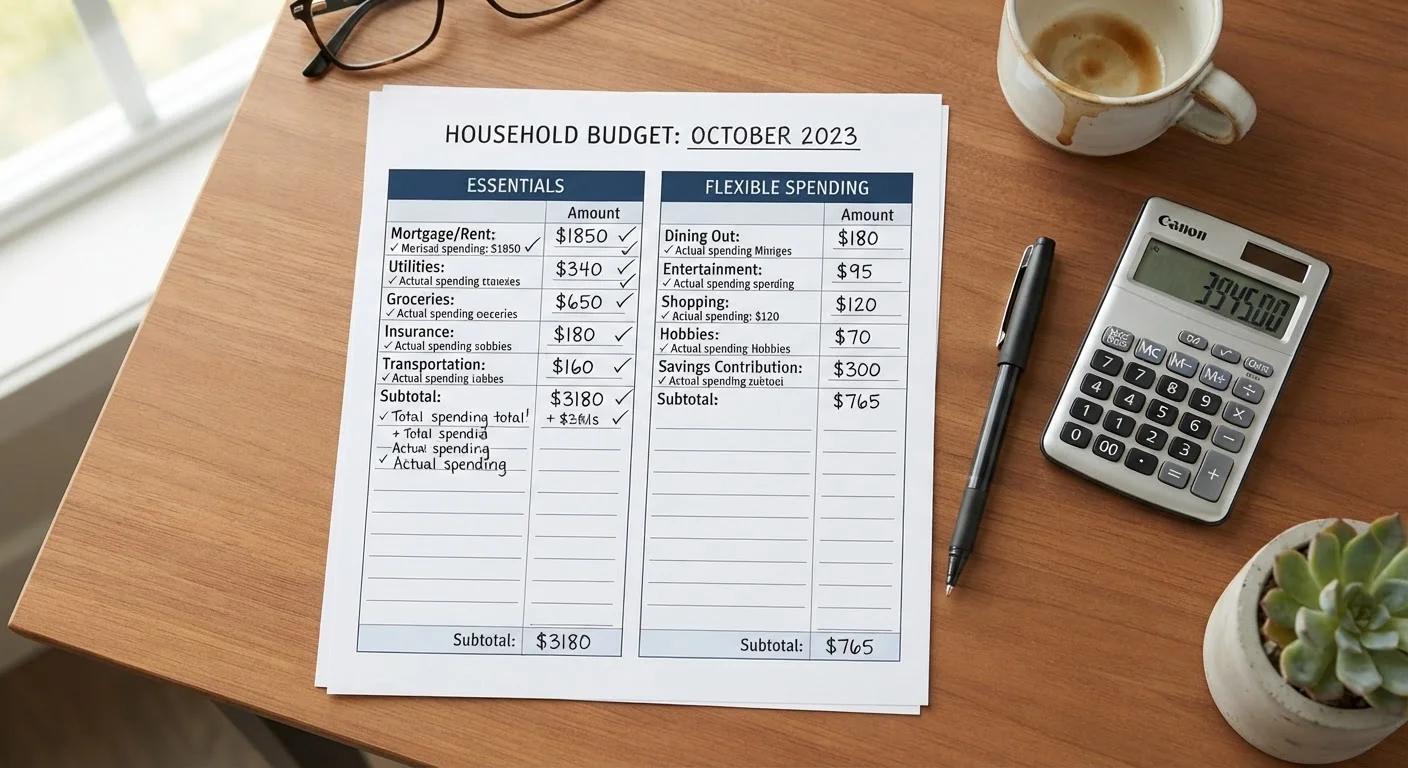
Non-discretionary spending covers expenses you must pay to maintain basic living - housing, utilities, groceries, insurance premiums, minimum debt payments, and transportation to work. These costs exist regardless of your preferences. Discretionary spending covers everything you choose to buy beyond those essentials: dining out, streaming subscriptions, travel, hobbies, and clothing beyond basic needs.
The boundary between these two categories isn't always obvious. Groceries are non-discretionary; a premium meal kit upgrade is discretionary. Internet service is increasingly treated as essential; a faster plan than you actually need crosses into discretionary territory. See how discretionary spending often hides in plain sight for a closer look at edge cases.
| Non-discretionary examples | Rent/mortgage, utilities, groceries, health insurance, minimum debt payments |
| Discretionary examples | Dining out, streaming services, vacations, gym memberships, new clothing beyond necessity |
| Common budget allocation (50/30/20 rule) | 50% needs, 30% wants, 20% savings/debt (General personal finance framework; individual circumstances vary) |
| Where most budget flexibility exists | Discretionary categories - not non-discretionary |
| First step in any budget review | Separate all expenses into non-discretionary and discretionary before allocating |
Why the Distinction Matters in Practice
When income drops or a financial goal demands more runway, non-discretionary expenses are largely untouchable in the short term - you still need to pay rent and keep the lights on. Discretionary spending is where real budget flexibility lives. That's why every structured budget method - from zero-based to the 50/30/20 approach - begins by separating these two categories before allocating anything.
It also matters for how you respond to variable months. If your grocery bill rises because of a price increase, that's a non-discretionary pressure that may require cutting elsewhere. If your restaurant spending rises, that's a discretionary signal you can act on directly. Fixed vs. variable expenses adds another useful layer - some non-discretionary costs are fixed (rent), while others vary month to month (utilities).
Non-discretionary spending
Expenses required to maintain basic living standards, such as rent, utilities, groceries, and insurance. These costs cannot easily be paused or eliminated without significant consequences.
Discretionary spending
Optional expenditures that go beyond basic necessities - dining out, entertainment, travel, and lifestyle upgrades. These are the most flexible line items in any budget.
Discretionary income
The money remaining after all non-discretionary expenses and taxes have been paid. It represents the maximum pool available for discretionary spending and savings.
Budget drift
The gradual, often unnoticed increase in discretionary spending over time. It typically occurs through small recurring purchases that individually seem insignificant but accumulate meaningfully.
Zero-based budgeting
A method where every dollar of income is assigned a purpose - covering expenses, savings, or spending - so that income minus all allocations equals zero. It requires categorising all costs as essential or optional.
Applying the Framework to Real Spending
Start any budget review by listing every expense from the last 30 to 60 days, then label each one: non-discretionary or discretionary. Don't guess - use actual bank and card statements. Expenses that feel essential but could realistically be paused for a month are likely discretionary.
From there, you can make deliberate trade-offs. Reducing one discretionary category - say, subscriptions - doesn't require sacrificing another, like weekend activities. It just requires a conscious choice. For broader context on how these decisions connect to your overall financial picture, the Budgeting Basics hub offers structured frameworks. For travel specifically, travel budgeting from scratch shows how to treat a trip as a temporary discretionary category with its own sub-budget.
Edge Cases Are Common - and Normal
Many expenses sit in a grey zone between essential and optional. A smartphone plan may be non-discretionary for someone who works remotely; a premium data tier is discretionary. The key question to ask: could I pause or downgrade this for one month without serious harm? If yes, it's likely discretionary, at least partially. Key budgeting terms can help clarify related concepts when the lines blur.
The goal isn't to eliminate discretionary spending - it's to ensure it's intentional. Spending on things that genuinely matter to you is a reasonable financial outcome. Spending on things you barely notice is where most budget drift happens. For a deeper look at how to weigh these choices, see needs, wants, and financial priorities.
This article is for general informational purposes only and does not constitute personalised financial advice. Consult a qualified financial professional for guidance specific to your situation.