

Key Takeaways
- Portugal's lesser-known regions deliver rich history, dramatic landscapes, and far fewer crowds than Lisbon or Porto.
- Each interior or southern region has a distinct character - from dark-sky wilderness to Moorish-influenced plains.
- Seasonal conditions vary significantly by region, so researching timing before booking makes a real difference.
- Slower itineraries suit these destinations particularly well, allowing deeper engagement with local culture and landscape.
- Entry requirements, local transport, and road conditions are worth verifying through official sources before travel.
The Case for Going Beyond the Obvious
Portugal's headline cities earn their reputation - but they've also become genuinely crowded. The country's interior and southern hinterlands tell a different story: medieval fortified towns perched on granite outcrops, vast cork forests stretching to the horizon, villages where the main square still functions as the social center of daily life. These are places where the tourism infrastructure is thinner but the experience is often richer.
For travelers who want to understand a destination before committing to a flight and a hotel, this guide breaks down what each region actually offers - geography, character, and what kind of traveler it suits. If you're drawn to depth over density, it's worth reading about what slow travel actually involves before planning these stops, since that mindset fits Portugal's interior particularly well.
Crowds and Seasonality Vary Sharply
Lesser-known doesn't always mean uncrowded year-round. Gerês, for instance, draws significant domestic visitors in summer, and Alentejo's festival calendar can fill small towns quickly. Understanding what a destination's seasons actually mean helps set realistic expectations rather than simply assuming any given window will be quieter or cheaper.
Portugal's Hidden Regions at a Glance
Alentejo: Big Skies and Slow Plains
Alentejo covers roughly a third of Portugal's landmass but holds only about 5% of the population - which tells you almost everything about what it feels like to travel there. Rolling plains, cork oak and olive groves, and whitewashed towns with blue-tile trim define the visual landscape. Évora, a UNESCO World Heritage city, anchors the region with Roman ruins, a medieval cathedral, and an unusually well-preserved historic center compact enough to walk in an afternoon.
Beyond Évora, smaller towns like Mértola - with Moorish architectural traces and a riverside setting - and the walled village of Monsaraz reward visitors willing to slow down. Alentejo wine, bread culture, and pork-based cooking are genuinely distinct from the rest of the country. Summers are intense (regularly above 40°C inland), making spring and autumn the most comfortable windows for exploring on foot.
Alentejo covers a third of Portugal's land, yet feels almost entirely uncrowded - especially outside summer.
Beira Interior: Fortified Villages and Granite Highlands
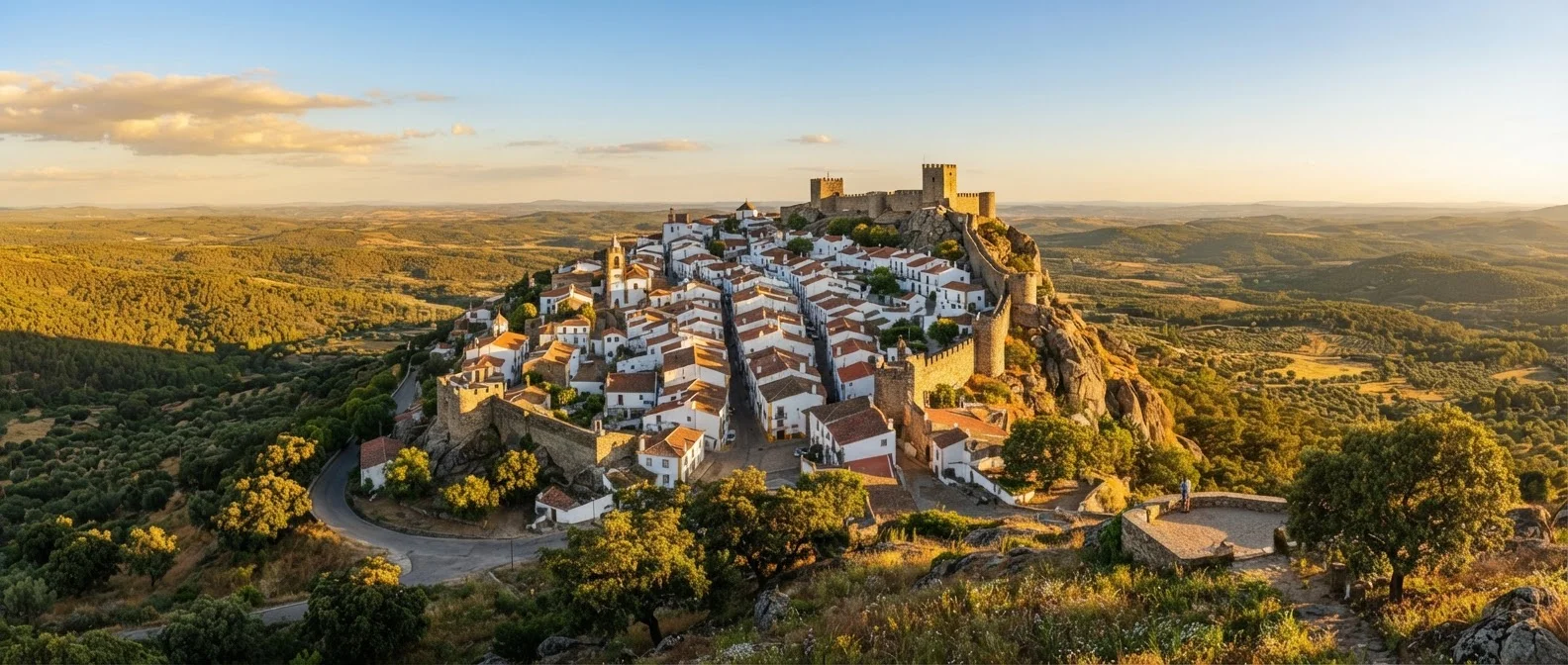
Running along Portugal's eastern border with Spain, Beira Interior is defined by a string of historic fortified towns - Sortelha, Monsanto, Idanha-a-Velha - that sit largely intact and largely overlooked. Monsanto in particular, built into and around enormous granite boulders, is one of the more visually arresting settlements in all of Iberia.
The region's terrain shifts from the Serra da Estrela (mainland Portugal's highest mountain range, where a small ski area operates in winter) down to gentler river valleys. Serra da Estrela also produces Portugal's only native protected-designation cheese, making it a genuine food destination alongside its hiking credentials. Roads in the area are often narrow and winding; that's part of the appeal, but drivers should plan routes carefully.
Monsanto, built directly into massive granite boulders, is one of Iberia's most visually striking villages.
Peneda-Gerês: Portugal's Only National Park
In the northwestern corner of the country, Peneda-Gerês is Portugal's sole national park - and it punches well above its size. Ancient roman roads, pre-Romanesque churches, and dolmens from the Neolithic period sit within a landscape of rivers, waterfalls, and granite peaks. The park supports wolves, golden eagles, and the Garrano pony, a semi-wild native breed.
Hiking here ranges from short interpretive trails to multi-day routes connecting remote villages. The park also borders Spanish Galicia's Baixa Limia-Serra do Xurés protected area, creating a cross-border wilderness that gives the landscape unusual scale. Gerês gets real rain - it's one of the wettest parts of the Iberian Peninsula - so waterproof gear matters regardless of season.
Peneda-Gerês holds Roman roads, prehistoric dolmens, and wild ponies within Portugal's only national park.
Alentejo Litoral and Costa Vicentina: The Wild Atlantic Coast
While the Algarve's southern coast gets most of the beach attention, the Atlantic-facing coastline stretching through Alentejo Litoral and Costa Vicentina - part of the Southwest Alentejo and Vicentine Coast Natural Park - is one of the most protected and least developed stretches of shoreline in Western Europe. Cliffs, sea stacks, migrating birds, and surf beaches that can run for kilometers without a hotel in sight characterize the experience here.
The town of Vila Nova de Milfontes is a manageable base with enough infrastructure to be comfortable without feeling overbuilt. Sagres, at the southwestern tip, combines dramatic cliff scenery with historical weight as a departure point for Portuguese Age of Discovery voyages. Sea conditions are powerful and should always be respected; swimming areas and surf conditions vary significantly by season and location.
Costa Vicentina is one of the least developed Atlantic coastlines in Western Europe - largely protected by national park status.
Douro Valley: Beyond the Wine Lodges
Most international visitors who reach the Douro do so on a river cruise or a day trip from Porto - which means they experience the valley's broad strokes without its texture. Staying in the valley itself, in villages along the river's terraced slopes, gives access to a working agricultural landscape that is also a UNESCO World Heritage site.
The schist (shale) villages of Provesende and São João da Pesqueira have retained architectural character that development pressure in more accessible areas has eroded. Quinta visits, harvest participation in autumn, and the quieter stretches of road through the eastern Douro Superior - where the landscape becomes more austere and the crowds thin further - reward travelers willing to venture past the obvious stops. Temperatures in summer are high; spring and autumn remain the most popular and generally most comfortable windows.
Staying inside the Douro Valley rather than day-tripping reveals a working, terraced agricultural landscape most visitors only glimpse.
Research Local Transport Before You Arrive
Rural Portugal's public transport is limited and infrequent outside major towns. In regions like Beira Interior or the eastern Alentejo, a rental car is often the only practical way to reach smaller villages and natural areas. If you're combining multiple regions, plan driving routes in advance and check road types - some scenic routes are narrow, unpaved, or seasonally affected by weather.
Timing your visit to any of these regions matters more than many travelers expect. Portugal's interior experiences dramatic seasonal swings - scorching summers in Alentejo, wet winters in the Douro valley, spring wildflower seasons that are genuinely spectacular in Gerês. Understanding shoulder season trade-offs helps you weigh the real advantages of visiting outside peak months rather than just assuming off-peak means better.
Planning a Route That Actually Works
Most of these regions sit 90 minutes to three hours from Lisbon or Porto by car. Renting a vehicle gives you flexibility that public transport can't match in rural Portugal - but road quality, signage, and fuel availability vary across areas like Gerês or eastern Alentejo, so it's worth researching locally before you go. Always verify current entry requirements, road conditions, and any park access rules through official Portuguese tourism or government sources rather than relying on third-party summaries.
For those combining any of these inland stops with coastal segments - particularly around the Algarve or Setúbal - knowing what to actually research before you arrive will help you make the most of limited time in each place. And if a cruise port stop is part of your trip, understanding how Mediterranean port logistics actually work is a practical primer worth reading ahead of time.
This article provides general travel information only. Conditions, accessibility, entry requirements, and local regulations may change. Always verify current details through official government and tourism sources before traveling.