

Key Takeaways
- Official accessibility ratings rarely capture real conditions - firsthand traveler accounts are more reliable.
- Specific written questions to hotels and airlines before booking save significant on-trip friction.
- Mobility, vision, hearing, and chronic illness needs require distinct planning strategies.
- Cobblestones, heat, and crowd density affect accessibility even in destinations marketed as accessible.
- Organised tours with accessibility specialists can reduce research burden without eliminating independence.
- Contingency time built into every itinerary is the single most protective planning decision you can make.
Why Accessible Travel Still Requires Extra Homework
Accessibility standards have improved across many parts of the world - but improvement is neither uniform nor reliably documented. A hotel may advertise a "wheelchair-accessible room" that technically complies with a local code while still having a bathroom door too narrow for a standard wheelchair. A transit system may have elevators that are out of service a meaningful percentage of the time. A cruise terminal may be fully ramped while the tender boats connecting it to port are not.
This gap between what's advertised and what's actually navigable is the central challenge of accessible travel planning. It explains why experienced travelers with disabilities routinely say the most valuable research tool isn't a hotel website - it's a forum post from another traveler who was there last month.
26%
U.S. adults living with some form of disability
According to CDC data, roughly 1 in 4 U.S. adults has a disability - a figure that underscores how large the accessible travel audience actually is.
~$58B
Annual U.S. accessible travel market estimate
The Open Doors Organization has estimated the accessible travel market in the U.S. at tens of billions of dollars annually, reflecting significant and largely underserved demand.
Understanding the specific type of accessibility need also matters enormously. Planning for low vision is a fundamentally different exercise than planning for a manual wheelchair, a power chair, or a condition that creates invisible but significant limitations like fatigue or chronic pain. The frameworks for travelling with a chronic illness that apply to an episodic condition overlap only partially with the strategies that serve someone with a stable but permanent mobility impairment.
What Travelers With Disabilities Say Actually Works
Across disability travel communities - online forums, advocacy groups, and peer networks - a few strategies come up consistently as genuinely useful rather than theoretically helpful.
- Call, don't just click. Emailing a hotel or airline yields boilerplate responses. Calling and asking specific, concrete questions - "Does the roll-in shower have a fold-down bench?" "Is there a lip at the entrance to the room?" "What is the exact door width?" - tends to surface accurate information faster.
- Seek peer-verified information. Communities like disability travel blogs and forums contain candid, firsthand assessments of airports, cities, cruise lines, and tour operators that no official source replicates.
- Request documentation of accommodations in writing. Whatever you're promised - airport wheelchair assistance, an accessible cabin, a ground-floor room - get it confirmed in writing before travel. Verbal assurances are often lost between booking and arrival.
When contacting a hotel, ask for the specific room number of the accessible room and request photos of the bathroom and entrance - not just a description. Properties that balk at this request are a warning sign.
Accessible room configurations vary enormously even within the same property. Seeing the actual space eliminates the most common source of on-arrival disappointment.
If you use a power wheelchair, contact your airline's special assistance desk directly - not the general booking line - to confirm battery specifications at least two weeks before departure.
Power wheelchair approval depends on battery type and watt-hour ratings; policies differ by airline and are enforced at the gate, where corrections are nearly impossible.
Travelers also consistently highlight the value of destination-specific knowledge. The research you do before arriving matters doubly when navigating a place with accessibility constraints - local transport norms, weather conditions, and the density of tourist crowds all shape what's actually manageable on a given day.
Researching a Destination's Real Accessibility
Not all "accessible" destinations are equally accessible for all needs. Several dimensions are worth investigating specifically:
- Terrain and infrastructure
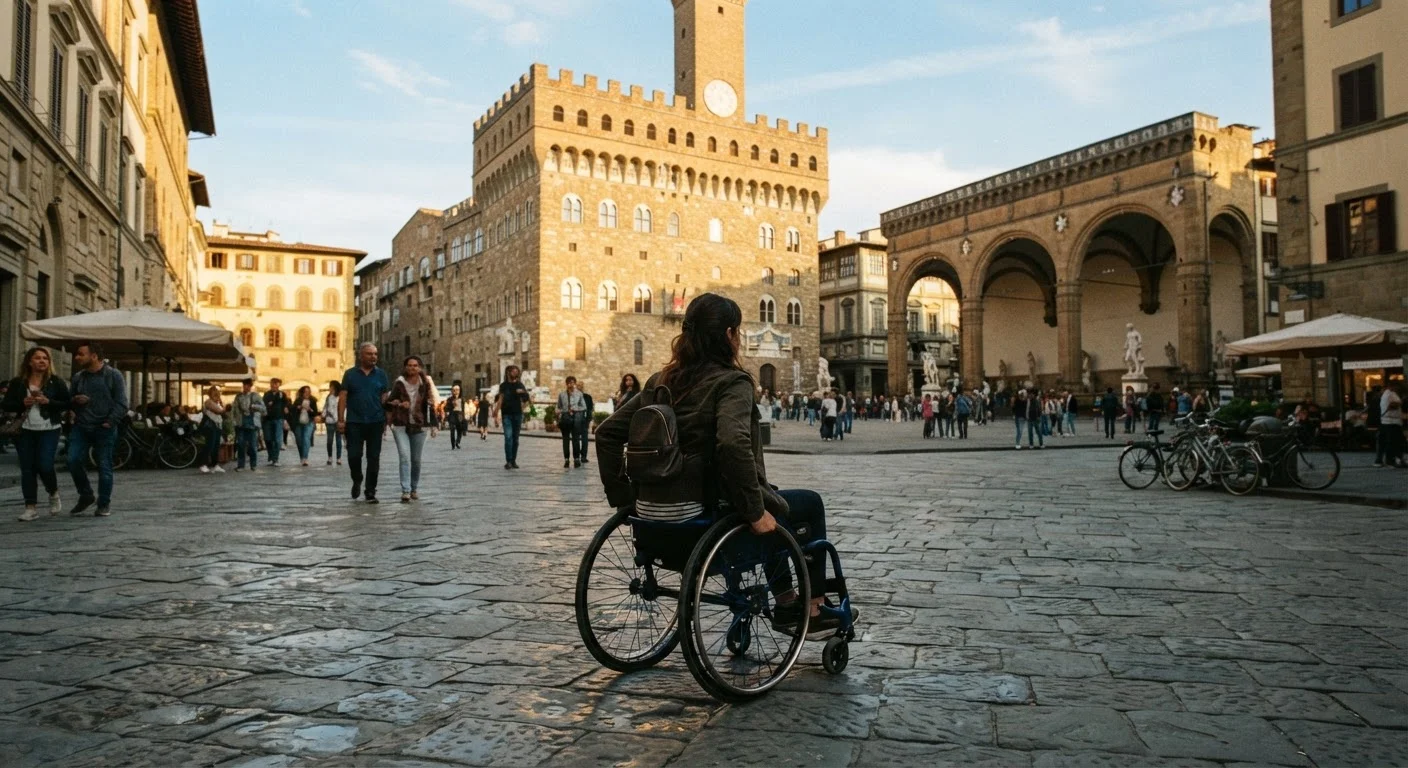
- Cobblestone streets, steep hills, sand beaches, and unpaved paths all appear in cities rated highly for accessibility. European capitals praised for public transit accessibility often still have historic old towns that are genuinely difficult for wheelchair users. Understanding the micro-geography of where you'll actually spend time is more useful than country-level ratings.
- Climate and heat
- High temperatures affect power wheelchair battery performance and create significant physical strain for people managing certain chronic conditions. This is a practical planning variable, not a minor footnote.
- Tourism infrastructure maturity
- Popular tourist destinations tend to have more developed accessibility infrastructure than off-the-beaten-path ones. As the reality of visiting developing-world destinations often illustrates, infrastructure assumptions based on Western travel norms frequently don't transfer.
"Accessible" Claims Vary Widely by Region
Accessibility standards differ significantly between countries - and even between properties within the same city. A room certified as accessible under one country's building code may not meet the practical needs of a wheelchair user, someone with low vision, or a traveler with chronic fatigue. Always verify specifics directly rather than relying on certification labels alone.
Official national tourism websites often present accessibility information at a promotional level. Cross-reference with disability-specific travel resources and recent firsthand accounts before drawing conclusions about a destination's practical navigability.
Transport, Accommodation, and On-the-Ground Reality
These three elements collectively determine whether a trip is manageable or exhausting - and each has common failure points.
Air Travel
Request all assistance at booking, not at check-in. Aisle chairs, wheelchair storage, and airport assistance are allocated in advance; last-minute requests are harder to fulfill reliably. Check your airline's specific policies for power wheelchairs, including battery type restrictions, well before travel day.
Accommodation
"Accessible room" is not a standardised term globally. Always verify: door widths, bathroom configuration, bed height, proximity to elevator, and whether the building entrance itself has a step. Small boutique hotels and older properties in historic districts are higher-risk than purpose-built accessible accommodation.
Local Transport
Metro systems vary dramatically in elevator coverage and reliability. Bus systems may be nominally accessible but practically difficult. Taxis and rideshare vehicles with ramp or transfer options exist in many cities but require advance booking. Research the specific lines or routes you'll need, not just the system's general rating.
Book Accessible Transport Before Accommodation
In many cities, accessible taxis, adapted vehicles, or paratransit services have limited availability and require advance booking of 24-72 hours or more. Confirming ground transport first prevents situations where your hotel is technically accessible but effectively unreachable. Build your accommodation search around transport hubs once you've confirmed what's available.
Organised Tours vs. Independent Travel for Accessibility
Both approaches have genuine advantages for travelers with disabilities, and the right choice depends on the nature of the access need and the traveler's comfort with uncertainty.
Specialty accessible tour operators handle logistics that would otherwise require hours of individual research - vetted accessible accommodation, adapted vehicles, itineraries paced for varied energy levels, and guides with disability-specific training. For first-time travel to an unfamiliar destination, or for travelers managing complex medical equipment, this can dramatically reduce friction.
Independent travel offers flexibility that structured tours can't always match: the ability to rest when needed, change plans without affecting a group, and pace a day around real-time conditions rather than a fixed schedule. The trade-offs between solo planning and organised tours apply here with extra weight - the cost of an inflexible itinerary is higher when a traveler's needs vary day to day.
Many experienced accessible travelers land on a hybrid: a structured framework (pre-booked accessible transport and accommodation) with unscheduled time built in for flexibility.
“The most important thing I've learned is that 'accessible' is an adjective with a thousand definitions. You have to ask what it means for your specific body, your specific equipment, on that specific day.”
— Imani Barbarin, Disability activist and public speaker on disability culture and access
Building a Trip That Accounts for the Unexpected
The planning principle that accessible travelers return to most often is margin: more time between connections, more flexibility in the daily schedule, more backup options identified in advance. This isn't pessimism - it's the same risk management that experienced travelers of any kind use, applied with greater intentionality.
Practical margin-building looks like:
- Layovers of at least 90 minutes when wheelchair assistance is involved (longer at large or complex airports)
- One lower-intensity day for every two to three high-activity days
- A short list of accessible alternatives for each major activity - in case the primary option falls through
- Travel insurance that explicitly covers trip interruption related to disability-specific needs, not just general medical emergencies
The shift in planning philosophy that family travel demands has an accessible-travel parallel: both require moving from "how much can we fit in?" to "what does a sustainable day actually look like for our group?" The trip planning resources that help any traveler build smarter itineraries are especially valuable here, as is the broader destination guides library for understanding what specific places actually involve on the ground.
This article provides general travel planning information. Accessibility conditions vary by destination, provider, and individual need. Always verify specific accommodations directly with providers before booking, and consult official government and health resources for entry requirements, safety advisories, and any medical or mobility-related considerations relevant to your circumstances.