

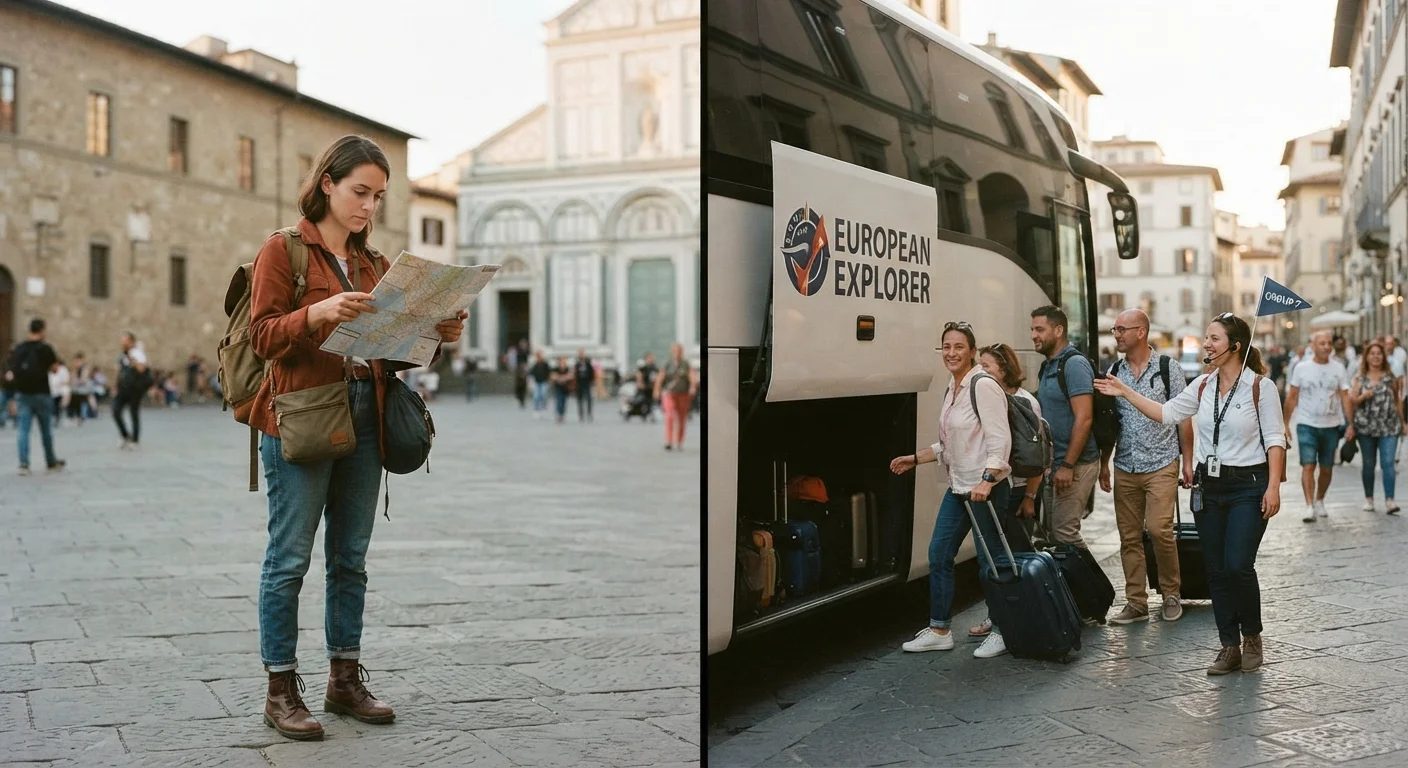
Key Takeaways
- Solo trip planning demands more upfront research but delivers near-total control over pace, route, and budget.
- Organised tours handle logistics for you but require accepting a fixed schedule and group dynamic.
- Neither approach is universally better - the right fit depends on your destination, experience level, and travel style.
- Hybrid options exist: partially guided itineraries can bridge the gap between full independence and full structure.
- Cost comparisons between the two approaches are rarely straightforward - context matters significantly.
Our Verdict
Solo trip planning suits travelers who want genuine flexibility and are comfortable managing logistics independently. Organised tours work best when structure, access, or safety considerations make self-planning impractical or less rewarding. For many travelers, the answer isn't binary - a mix of independent and guided elements often produces the most satisfying trip.
| Best for | Recommended |
|---|---|
| Travelers who want full control over pace, route, and daily decisions | Solo trip planning |
| First-time visitors to complex or logistically demanding destinations | Organised tours |
| Those seeking built-in social connection without coordinating a group | Organised tours |
| Experienced travelers visiting destinations with good independent infrastructure | Solo trip planning |
What Solo Trip Planning Actually Requires
Planning a trip independently means taking ownership of every decision - transportation, accommodation, entry requirements, daily pacing, contingency plans, and more. That's genuinely freeing, but it's also genuinely demanding, especially for destinations with complex logistics.
The planning load varies enormously by destination. A self-directed week in a well-documented city with strong transit infrastructure is manageable even for relatively inexperienced travelers. A multi-country itinerary through regions with inconsistent transport, visa-on-arrival requirements, or limited English signage is a different project altogether. For a realistic sense of what multi-destination self-planning involves, see our guide to long-haul multi-country trips.
Key elements solo planners handle themselves include:
- Research and itinerary building - sourcing reliable information, sequencing destinations sensibly, and building in realistic travel time
- Booking management - flights, accommodation, ground transport, and any timed-entry sites, often across multiple platforms
- Contingency thinking - what happens if a connection is missed, a booking falls through, or a region becomes inaccessible
- Entry and safety verification - visas, vaccinations, and advisories must be checked with official government and provider sources before travel; conditions can change
The payoff is real: you move at your own pace, spend time where it interests you, adjust on the fly, and aren't constrained by anyone else's priorities. How much you pre-book within a self-planned trip is a separate and meaningful decision in itself.
Build In Structured Research Time
Even experienced independent travelers underestimate how long solid pre-trip research takes. Set aside dedicated sessions for itinerary sequencing, entry requirement verification, and contingency planning rather than leaving it to accumulated browsing. Official government travel advisories and embassy websites are the authoritative sources for visa and safety information - check them close to your departure date, not just when you book.
What Organised Tours Actually Involve
Joining an organised tour means handing significant logistical control to a tour operator in exchange for a pre-built experience. The spectrum here is wide - small-group adventure tours, large coach itineraries, luxury escorted journeys, and cruise formats all operate differently, but share certain structural features.
What's typically included: transportation between destinations, guided access to key sites, accommodation selection, and a pre-determined daily schedule. What's typically not included: the ability to linger somewhere longer than planned, skip activities that don't appeal, or deviate from the route.
| Solo Trip Planning | Organised Tours | |
|---|---|---|
| Flexibility | High - adjust anytime | Low - fixed schedule |
| Upfront planning effort | High - self-managed research | Low - operator handles logistics |
| Cost predictability | Variable - depends on choices | High - price set in advance |
| Access to remote/specialist sites | Often limited without guides | Frequently included |
| Social dynamic | Self-determined | Group format, mixed strangers |
| Suits first-time destination visitors | Requires more preparation | Generally well-suited |
| Risk if something goes wrong | Falls to the traveler | Operator typically manages |
Tours can unlock access that's genuinely difficult to arrange independently - remote trekking regions, sites that require official guides, or experiences that depend on local relationships a tour operator has cultivated over years. They also remove the decision fatigue of daily logistics, which some travelers find liberating rather than limiting.
The group dynamic is worth considering seriously. Travelling with strangers in a structured format can be enriching - and it can also be frustrating if pacing or interests diverge. If social connection is part of what you're looking for, these trip formats for solo travelers offer alternatives worth exploring alongside the tour option.
Cost, Control, and the Trade-offs That Actually Matter
Cost is frequently cited as a differentiator, but straightforward comparisons are misleading. A self-planned trip can be cheaper when you're flexible and experienced; it can also be more expensive when you factor in booking errors, inefficient routing, or entry to sites a tour would have included. Tours carry operator margins, but they also carry volume pricing on accommodation and transport that independent travelers rarely access.
~15-25%
Typical operator margin on guided tour pricing
Tour pricing commonly includes an operator margin of 15-25% above base costs, according to general industry estimates - but volume accommodation and transport rates often partially offset this for travelers.
2-3x
More planning hours for first-time complex destinations
Travel planning forums and independent traveler surveys consistently suggest first-time visitors to logistically complex destinations spend significantly more hours planning than those joining guided tours to the same region.
The more honest framing is control versus convenience. Solo planning maximises your ability to shape the experience to your actual preferences. Organised tours maximise your protection against logistical failure and your access to structured expertise.
Travelers who tend to do well with self-planning: those who enjoy the research process, have previous travel experience in similar contexts, and are comfortable problem-solving when things go sideways. Travelers who tend to do well with organised tours: those visiting a destination for the first time where local knowledge adds significant value, those with limited time who want to cover ground efficiently, and those for whom accessibility considerations make independent logistics harder to manage. Accessibility in travel is a real planning variable that organised tours sometimes address more reliably than self-planned itineraries - though not universally.
Understanding which travel style genuinely fits your personality is often the most useful starting point before committing to either format.