

Key Takeaways
- Gap insurance covers the difference between your car's actual cash value and your remaining loan or lease balance after a total loss.
- New vehicles lose value rapidly - sometimes 15-20% in the first year - making early loan periods the highest-risk window.
- Gap coverage is generally most relevant for drivers who made a small down payment, financed over a long term, or leased a vehicle.
- It only pays out when the vehicle is declared a total loss by your insurer, not for partial damage or repairs.
- Gap insurance is available through insurers, dealerships, and lenders - but pricing and terms vary, so compare carefully.
- Once your loan balance falls below the vehicle's market value, gap coverage is no longer necessary.
Gap Insurance
Gap insurance - short for Guaranteed Asset Protection - is an optional type of auto coverage that pays the difference between what your car is worth at the time of a total loss and what you still owe on your loan or lease. Standard collision or comprehensive insurance only reimburses the vehicle's current market value, which may be significantly less than your remaining balance. Gap coverage bridges that shortfall so you're not left paying out of pocket for a car you can no longer drive.
Gap insurance does not cover mechanical repairs, personal property, or situations where the vehicle is not declared a total loss. It activates only after your primary collision or comprehensive claim has been settled.
The Problem Gap Insurance Is Designed to Solve
The moment you drive a new car off the lot, its value starts dropping. Depreciation is sharpest in the first few years - a vehicle that cost $35,000 new might be worth closer to $27,000 just 18 months later. If you financed that purchase with a modest down payment spread over a 60- or 72-month loan, your remaining loan balance can easily exceed what the car is worth at any given point.
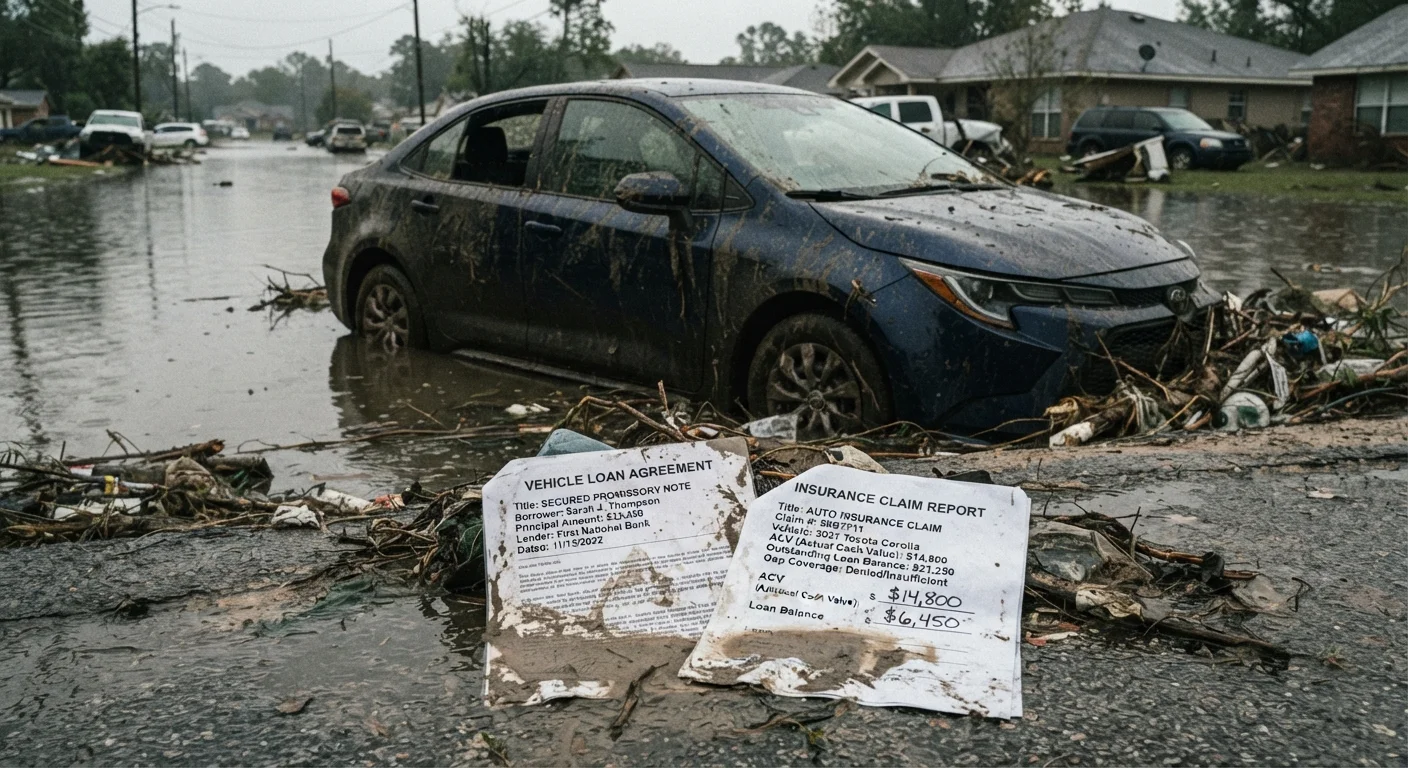
This creates a real financial exposure. If your car is totaled in a collision or stolen, your collision or comprehensive policy reimburses you for the vehicle's actual cash value (ACV) - its depreciated market value at the time of the loss. If that payout is $27,000 but you still owe $32,000, you're on the hook for the $5,000 difference. Gap insurance is designed to cover exactly that shortfall.
For a broader introduction to how auto insurance coverage types work together, see our auto insurance overview.
~20%
Typical first-year depreciation for new vehicles
Industry estimates from automotive valuation sources suggest new cars commonly lose around 15-20% of value in their first year of ownership.
~43%
Average loan term of 72+ months among new car buyers
Data from automotive finance tracking firms has consistently shown a significant share of US new vehicle buyers opting for loan terms of six years or longer.
What Gap Insurance Does and Doesn't Cover
Gap insurance pays the difference between your insurer's ACV settlement and your outstanding loan or lease balance - but only in specific circumstances. Understanding the limits is just as important as understanding what it covers.
Gap insurance typically covers:
- The difference between ACV payout and loan balance after a declared total loss
- Total loss events from collisions, theft, fire, flood, or other covered perils
- Both financed and leased vehicles
Gap insurance generally does not cover:
- Partial damage or repairs - only total loss situations
- Your collision or comprehensive deductible (unless a separate waiver is added)
- Extended warranties, credit insurance, or other loan add-ons rolled into your balance
- Missed loan payments, late fees, or negative equity carried over from a previous vehicle
Gap Coverage Requires an Active Primary Policy
Gap insurance does not function on its own. It only pays after your collision or comprehensive insurer has processed the total loss claim and issued an ACV settlement. If you don't carry collision or comprehensive coverage, there's no underlying claim for gap insurance to supplement. Make sure your foundational coverage is in place first.
To understand how the underlying claim that triggers gap coverage works, it helps to know how collision and comprehensive coverage each pay out in practice.
Who Should Seriously Consider Gap Insurance
Gap insurance is not universally necessary. It's most valuable when there's a meaningful chance your loan balance will outpace your vehicle's value - a condition known as being underwater or upside down on your loan. Several common scenarios create this situation:
- Small or no down payment: Less equity at the start means you're underwater longer.
- Long loan terms (60-84 months): Lower monthly payments come at the cost of slower equity buildup.
- Leased vehicles: Leases rarely require a substantial upfront payment, so the gap risk can persist throughout the lease term.
- High-depreciation vehicles: Some makes and models lose value faster than others.
- Negative equity rolled into a new loan: If you owed more than your trade-in was worth and folded that balance into your new financing, you start the loan already underwater.
Drivers who put 20% or more down on a short-term loan - say, 36 months - typically reach a point relatively quickly where the loan balance falls below ACV. For them, gap insurance may only be worth carrying for the first year or two, if at all.
Track Your Loan Balance Against Vehicle Value
Use a free vehicle valuation tool to check your car's current market value every six months and compare it to your loan statement. Once your loan balance drops below the vehicle's ACV, gap insurance is no longer providing meaningful protection - and you can consider canceling it to reduce your premium.
How to Buy Gap Insurance and What It Costs
Gap insurance is available from three main sources: your auto insurer, the dealership, and your lender. Each option has trade-offs.
Adding gap coverage through your existing auto insurer is typically the most straightforward and cost-effective approach. Dealership-sold gap products are often priced higher and, because they're rolled into the loan balance, you'll pay interest on them over the life of the loan - increasing their real cost significantly. Lender-offered gap products vary widely in price and coverage terms.
Annual cost through an insurer is generally modest - often in the range of a small premium addition - though actual pricing depends on your vehicle, loan terms, and insurer. If you're buying from a dealership, ask for the terms in writing and compare them against what your insurer offers before agreeing.
One practical step: check whether gap coverage through your insurer requires you to carry both collision and comprehensive coverage on the same policy, as this is a common prerequisite. For more context on how these foundational coverage types interact, see our comparison of liability, collision, and comprehensive coverage.
This article is for general informational purposes only and does not constitute personalized insurance, financial, or legal advice. Coverage terms, eligibility, and pricing vary by insurer, lender, and state. Always review your policy documents carefully and consult a licensed insurance professional for guidance specific to your situation.