

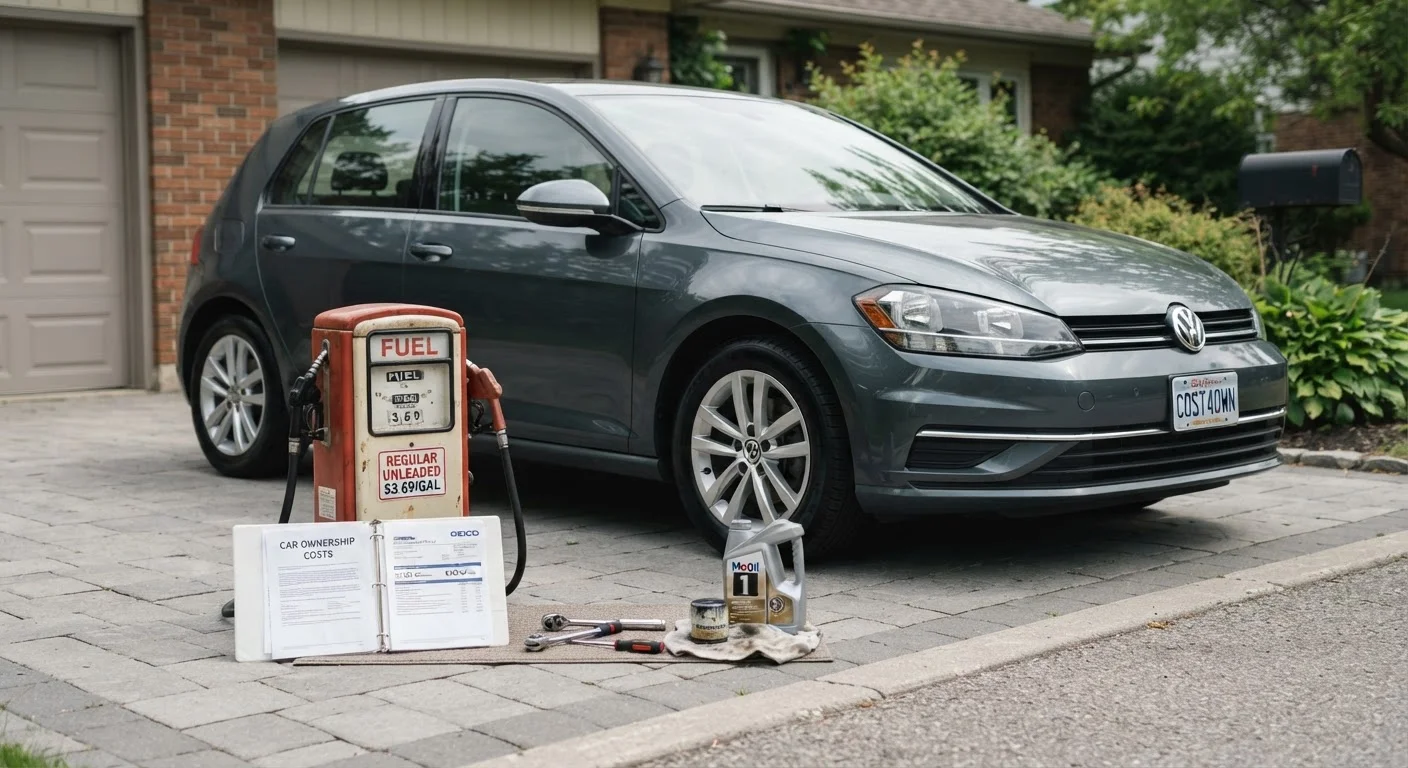
| Typical ownership cost categories | 6 major categories: depreciation, insurance, fuel, maintenance, tires, fees |
| Largest single cost factor | Depreciation (especially in the first 1-3 years) |
| Insurance varies by | Driver history, location, vehicle type, and coverage level |
| Tire replacement interval | Typically every 3-5 years depending on type and use |
| Fuel cost driver | Annual mileage × fuel price ÷ MPG rating |
| Registration fees | Vary significantly by state and municipality |
Why the Purchase Price Is Only the Starting Point
When most people budget for a vehicle, they anchor on the sticker price or monthly loan payment. That's understandable - it's the biggest number visible at the time. But the true cost of car ownership is spread across several recurring categories that can, in aggregate, exceed the original purchase price within a few years.
Understanding these costs upfront prevents sticker shock down the road. This reference breaks down each major category so you can estimate total annual cost before committing to a vehicle - not after.
For a broader look at how the purchase format affects long-term spending, see our comparison of leasing vs. buying.
| Typical ownership cost categories | 6 major categories: depreciation, insurance, fuel, maintenance, tires, fees |
| Largest single cost factor | Depreciation (especially in the first 1-3 years) |
| Insurance varies by | Driver history, location, vehicle type, and coverage level |
| Tire replacement interval | Typically every 3-5 years depending on type and use |
| Fuel cost driver | Annual mileage × fuel price ÷ MPG rating |
| Registration fees | Vary significantly by state and municipality |
The Six Core Ownership Cost Categories
Depreciation
Depreciation is typically the single largest ownership cost, yet it's invisible until you try to sell. Most vehicles lose a significant share of their value in the first few years. The rate varies by vehicle type, brand reputation, and market conditions - but it's a real cost whether you sell the car or not. If you're comparing new versus used, our new vs. used car trade-off guide covers how depreciation curves differ.
Auto Insurance
Insurance premiums depend on your driving history, location, vehicle type, and chosen coverage levels. Liability-only coverage costs less than comprehensive and collision combined, but the right level of coverage depends on your specific situation. For a plain-language explanation of coverage types, visit our auto insurance hub. Never assume the cheapest premium matches your actual coverage needs.
Fuel
Fuel cost depends on your annual mileage, local prices, and the vehicle's fuel efficiency rating. A vehicle with a lower purchase price but poor fuel economy can end up costing more annually than a pricier, more efficient model. Hybrid and electric vehicles shift some of this cost to electricity, which may be cheaper depending on local utility rates.
Maintenance and Repairs
Scheduled maintenance - oil changes, filter replacements, brake service, tire rotations - is predictable and should be budgeted annually. Repairs are less predictable and tend to increase as a vehicle ages. Our car maintenance hub provides guidance on keeping a vehicle running efficiently. High-mileage vehicles carry additional risk; if you're weighing whether to keep an aging car, the high-mileage vehicle trade-off guide outlines realistic cost considerations.
Tires
Tires are a consumable often omitted from initial budgets. Depending on driving style, road conditions, and tire type, a full set may need replacement every three to five years. All-season, performance, and winter tires carry different price points and longevity profiles.
Registration, Taxes, and Fees
Annual registration fees, property taxes (in some states), and emissions inspection fees vary widely by state and municipality. These are fixed recurring costs that don't scale with how much you drive.
Depreciation
The reduction in a vehicle's market value over time. It is a real financial cost even if you never sell, because it reduces the asset's worth.
Total Cost of Ownership (TCO)
The full financial cost of owning a vehicle over a given period, including purchase price, financing, insurance, fuel, maintenance, and fees.
Comprehensive Coverage
An auto insurance component that covers damage to your vehicle from non-collision events such as theft, weather, or falling objects. Paired with collision coverage for fuller protection.
Scheduled Maintenance
Routine service tasks specified by the vehicle manufacturer at defined mileage or time intervals, such as oil changes, filter replacements, and brake inspections.
Residual Value
The estimated market value of a vehicle at a specific future date. Relevant to both depreciation calculations and lease agreements.
Estimating Your Total Annual Cost
A straightforward approach is to annualize each category and add them together. For example:
- Depreciation: Estimate the vehicle's expected value drop over the year based on age and typical market patterns.
- Insurance: Use your actual or quoted annual premium.
- Fuel: Multiply annual miles driven by cost-per-mile based on the vehicle's MPG and local fuel price.
- Maintenance: Use manufacturer service schedules to estimate scheduled costs; add a contingency for unplanned repairs.
- Tires: Divide total tire replacement cost by the expected replacement interval in years.
- Fees: Sum your state's annual registration and any applicable taxes.
This total gives you a realistic picture of the annual financial commitment - not just the monthly payment. The same methodology applies to evaluating hidden costs across many types of purchases.
Financing Costs Add to the Total
If you finance your vehicle, interest charges are an additional ownership cost that isn't always visible in standard cost breakdowns. Over a multi-year loan, interest can add thousands to the effective purchase price. Factor your total interest paid into any ownership cost estimate.
This article is for general informational purposes only and does not constitute financial or legal advice. Costs vary significantly by location, driving habits, and individual circumstances. Consult appropriate professionals for guidance specific to your situation.