

Key Takeaways
- The 'W' in grades like 5W-30 stands for Winter, not weight - it describes cold-start flow.
- The first number indicates how the oil flows in cold temperatures; lower means thinner at startup.
- The second number describes oil thickness at normal engine operating temperature (around 212°F).
- Your owner's manual specifies the exact grade your engine was engineered for - follow it.
- Using the wrong viscosity can reduce fuel efficiency or accelerate engine wear over time.
Oil Viscosity Grade
A viscosity grade is a standardized code printed on every bottle of engine oil that describes how thick or thin the oil is - and how it behaves at different temperatures. The Society of Automotive Engineers (SAE) developed this rating system so drivers and mechanics can match an oil's flow characteristics to what a specific engine actually needs. Choosing the right grade protects engine parts from friction and wear.
Multi-grade oils (e.g., 5W-30) contain viscosity index improvers - polymer additives that reduce how much the oil thins at high temperatures - allowing a single oil to satisfy both cold-start and operating-temperature requirements.
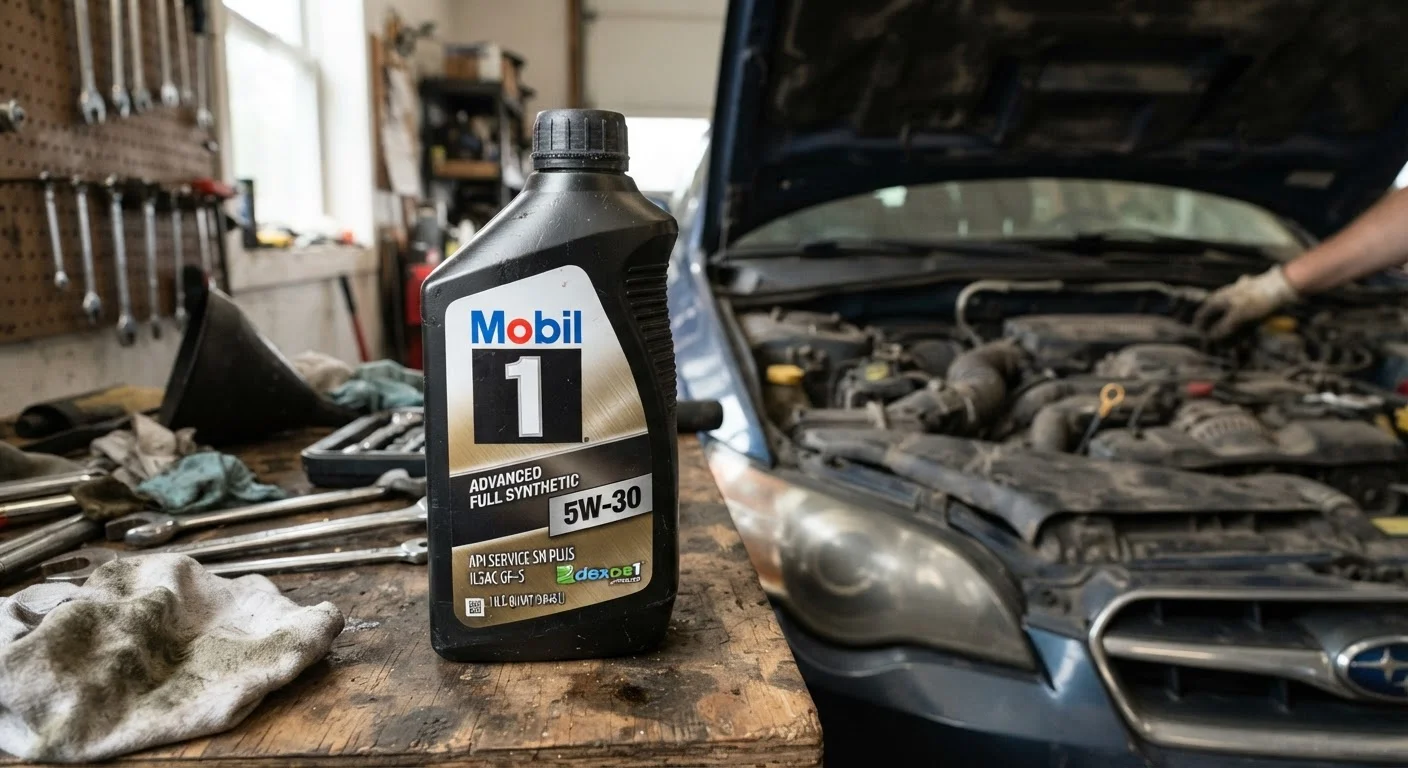
Breaking Down the Code: What 5W-30 Actually Means
Pick up almost any bottle of engine oil and you'll see a code like 5W-30, 10W-40, or 0W-20 printed prominently on the label. These aren't arbitrary marketing numbers - they're a standardized rating from the Society of Automotive Engineers (SAE) that tells you precisely how the oil behaves under different temperature conditions.
Here's how to read it:
- The number before the W - This is the oil's cold-temperature viscosity rating. "W" stands for Winter, not weight. A lower number (like 0 or 5) means the oil stays relatively fluid in cold temperatures, flowing quickly to engine components the moment you turn the key. A higher number (like 15 or 20) means the oil is thicker at low temperatures and flows more slowly at startup.
- The number after the W - This is the oil's viscosity at normal engine operating temperature, typically around 212°F (100°C). A higher number indicates a thicker oil at operating heat. So a 10W-40 is thicker at operating temperature than a 10W-30.
Together, these two numbers describe the oil's full performance range - from a cold winter morning start to a highway run on a hot summer day.
~40%
Engine wear occurring at cold startup
Engineering studies on engine wear have consistently attributed a significant share of cumulative wear to the first moments after a cold start, before oil fully circulates - underscoring why cold-temperature viscosity matters.
0W, 5W, 10W+
SAE cold-rating scale for common motor oils
The SAE viscosity classification system grades winter performance in increments; each step represents a measurable difference in how quickly oil flows to engine parts in cold conditions.
Why Viscosity Matters for Engine Health
Engine oil does several critical jobs simultaneously: it lubricates moving metal parts, reduces heat, keeps contaminants suspended, and forms a protective film on surfaces. Viscosity - how readily oil flows - determines how well it does all of those things under real-world conditions.
If oil is too thin at operating temperature, it won't maintain an adequate film between metal surfaces, accelerating wear. If it's too thick, it may not circulate fast enough during a cold start - which is when most engine wear actually occurs - and it can also reduce fuel efficiency by increasing internal drag.
This is why manufacturers engineer engines to specific clearances and specify a particular oil grade to fill them. It's not a general suggestion. It's a calculated match between hardware and lubricant.
Always Check the Owner's Manual First
Before buying oil, open your glove box. The owner's manual lists the exact SAE grade (and often an approved API service category) your engine requires. Following this spec - rather than shelf availability or price - is the simplest way to protect your engine long-term.
For a deeper look at how oil formulation affects performance beyond viscosity, see our comparison of synthetic vs. conventional oil.
How to Find the Right Grade for Your Vehicle
The single most reliable source for the correct oil viscosity grade is your vehicle's owner's manual. Manufacturers test their engines extensively and specify grades that account for the engine's tolerances, the materials used, and the expected operating environment.
Many modern vehicles also print the recommended grade directly on the oil filler cap - a quick reference when you're topping up. Some newer engines, particularly those with variable valve timing or turbochargers, require thinner oils (like 0W-20) to reach narrow internal passages quickly. Using a thicker grade in these engines can starve components of lubrication in the critical seconds after startup.
If you've acquired a used vehicle without its manual, a qualified mechanic can look up the factory specification using your VIN. Don't rely on the grade already in the engine - there's no guarantee the previous owner used the correct one.
Engine oil is just one part of your vehicle's fluid picture. For a broader view, our guide on car fluids every driver should know covers what each fluid does and when it needs attention.
Common Misconceptions Worth Clearing Up
A few widespread beliefs about oil viscosity deserve a closer look:
- "Thicker oil is always better protection." Not true. Over-thick oil can actually leave parts under-lubricated during cold starts and reduce efficiency during normal operation. Manufacturer-specified grades are calibrated for protection, not maximum thickness.
- "You should switch to a heavier grade as your engine ages." This is outdated advice that persisted from an era when engine tolerances were looser. Modern engines maintain their tolerances well into high mileage, and deviating from the specified grade is rarely the right call without a mechanic's assessment.
For more on maintenance myths that can lead drivers astray, see our piece on car maintenance myths that are quietly damaging your vehicle.
High-Mileage Oils Are a Separate Category
You may see bottles labeled "high-mileage" on store shelves. These typically contain seal conditioners and slightly different additive packages aimed at older engines, but they still carry a standard SAE viscosity grade. The grade rules still apply - a high-mileage 5W-30 should only be used where 5W-30 is specified. If you're considering a high-mileage oil, discuss it with a mechanic familiar with your vehicle.
This article is for general informational purposes. Always consult your vehicle's owner's manual or a qualified mechanic before making changes to your maintenance routine.