

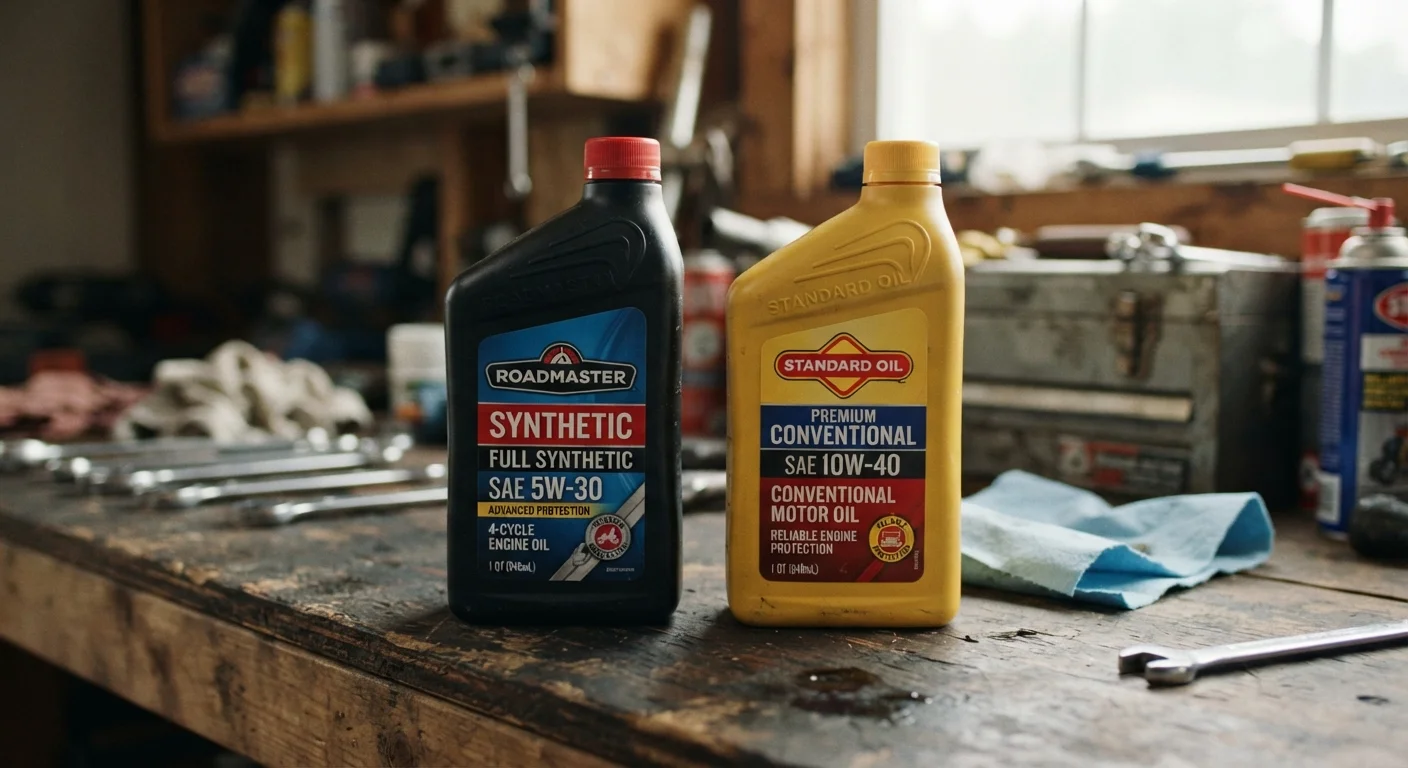
Key Takeaways
- Synthetic oil is chemically engineered, offering more consistent molecular structure than conventional oil.
- Conventional oil is refined from crude petroleum and typically costs less upfront per quart.
- Synthetic oil generally allows longer change intervals, often 7,500 to 15,000 miles depending on the vehicle.
- Your owner's manual - not habit or marketing - is the definitive guide for which oil your engine requires.
- Switching between oil types is generally safe, but always match the viscosity grade your manufacturer specifies.
- High-mileage and turbocharged engines typically benefit most from synthetic oil's protective properties.
Option A
Synthetic Motor Oil
The engineered, high-performance lubricant.
Best for: Drivers with newer vehicles, turbocharged engines, extreme climates, or longer intervals between oil changes.
Option B
Conventional Motor Oil
The time-tested, refinery-derived standard.
Best for: Owners of older, simpler engines with moderate driving patterns and straightforward maintenance schedules.
If you drive a newer vehicle or one with a turbocharged engine
Synthetic Motor Oil
Modern and turbocharged engines run hotter and are built to tighter tolerances - synthetic oil's stability and cleaner burn help protect those components more effectively.
If you own an older vehicle with a simple naturally aspirated engine
Conventional Motor Oil
Older engines designed before synthetic formulations were widespread can run reliably on conventional oil, provided you follow the manufacturer's recommended change intervals.
If you drive in extreme temperatures - very hot summers or harsh winters
Synthetic Motor Oil
Synthetic oil maintains more stable viscosity across temperature extremes, offering better cold-start protection in winter and less thermal breakdown in high heat.
If you want to reduce maintenance frequency and long-term engine wear
Synthetic Motor Oil
Longer change intervals and superior resistance to oxidation and sludge buildup mean synthetic oil can reduce cumulative wear over a vehicle's lifetime.
If you're managing a tight maintenance budget on a low-mileage older vehicle
Conventional Motor Oil
Conventional oil costs less per quart and, when changed on schedule, provides adequate protection for engines that don't operate under severe conditions.
What Makes These Two Oils Different
Both synthetic and conventional motor oils do the same fundamental job: lubricate engine components, reduce friction, carry heat away from moving parts, and help keep internal surfaces clean. The difference lies entirely in how they're made.
Conventional motor oil is refined from crude petroleum. During refining, impurities are removed, but the molecular structure remains somewhat irregular - a natural byproduct of working with a crude-derived base stock. Additives are then blended in to improve performance and slow degradation.
Synthetic motor oil is built in a laboratory. Chemists start from base chemicals and engineer uniform, precisely shaped molecules. The result is a lubricant with fewer impurities, more consistent behavior across temperature ranges, and greater resistance to breaking down under heat and stress. For a deeper look at how viscosity grades work with both oil types, see our guide on what the numbers on oil labels actually mean.
| Criterion | Synthetic Oil | Conventional Oil |
|---|---|---|
| Base stock origin | Chemically engineered molecules | Refined from crude petroleum |
| Typical change interval | 7,500-15,000 miles | 3,000-7,500 miles |
| Cold-weather performance | Flows better at low temperatures | Thickens more in cold conditions |
| Heat resistance | Higher resistance to thermal breakdown | Breaks down faster under sustained heat |
| Cost per quart | Higher upfront cost | Lower upfront cost |
| Sludge resistance | Cleaner, less sludge buildup | More prone to sludge over time |
| Turbo engine suitability | Strongly recommended | Generally not recommended |
| Older engine compatibility | Compatible, check seals on high-mileage engines | Well-suited for many older engines |
Performance Trade-offs in Real-World Driving
For most everyday driving, the gap between synthetic and conventional oil is less dramatic than marketing might suggest. However, under specific conditions, the differences become meaningful.
Cold starts are where synthetic oil earns its reputation. In low temperatures, conventional oil thickens more, meaning engine components run dry for a fraction longer at startup. Synthetic maintains its flow better, reaching critical surfaces faster. Over thousands of cold starts, this matters for long-term wear.
High heat and sustained stress - such as towing, highway driving, or turbocharged operation - also favor synthetic. Turbos spin at extremely high speeds and run at elevated temperatures even after the engine is switched off. Synthetic oil resists thermal breakdown and oxidation more effectively under these conditions.
For drivers with moderate habits - mostly highway commuting in a temperate climate with a standard naturally aspirated engine - conventional oil, changed on schedule, delivers reliable protection. The 3,000-mile oil change rule, once universal, is outdated for most modern vehicles. Our article on car maintenance myths covers why this and other habits persist despite evidence to the contrary.
7,500-15,000 mi
Typical synthetic oil change interval
Many vehicle manufacturers now specify extended intervals for synthetic oil; always confirm with your owner's manual.
2-4×
Cost premium for synthetic per quart
Synthetic oil typically costs significantly more per quart than conventional, though longer intervals can offset the difference over time.
~200,000 RPM
Turbocharger shaft spin speed
Turbochargers operate at extreme speeds and temperatures, making heat-stable synthetic oil particularly important for turbocharged engines.
Cost, Change Intervals, and What Your Manual Says
Synthetic oil typically costs more per quart than conventional - sometimes two to four times as much. However, its longer service life can narrow or eliminate that cost gap over time. Many manufacturers specify synthetic oil with change intervals of 7,500 to 15,000 miles, while conventional oil is typically changed every 3,000 to 7,500 miles depending on conditions and the vehicle.
The single most important source of guidance here is your vehicle's owner's manual. It specifies the oil type, viscosity grade (such as 5W-30 or 0W-20), and recommended change interval for your specific engine. Following those specifications is the baseline for maintaining your warranty and protecting your engine. Neither habit nor price preference should override what the manufacturer requires.
High-Mileage Engines: A Special Consideration
Vehicles with over 75,000 miles may benefit from high-mileage oil formulations, which are available in both synthetic and conventional varieties. These blends typically include seal conditioners and additional additives designed to address wear patterns common in older engines. If you're switching a high-mileage engine from conventional to full synthetic for the first time, it's worth consulting a qualified mechanic - in rare cases, worn seals that have adapted to conventional oil's properties may respond differently to synthetic formulations.
It's also worth noting that mixing synthetic and conventional oils won't damage an engine in a single instance - they are compatible. But blending them dilutes the performance advantages of synthetic and doesn't make conventional last longer. For consistent protection, stick with one type and the correct viscosity. For a full picture of all the fluids your engine depends on, see our guide to car fluids every driver should know.