

Key Takeaways
- Companion planting uses plant relationships to naturally reduce pests and support growth.
- The Three Sisters - corn, beans, and squash - is one of the oldest and best-studied companion planting systems.
- Flowers like marigolds and nasturtiums have practical pest-management roles in a vegetable garden.
- Not all plants make good neighbors; some combinations can suppress growth or compete for nutrients.
- Companion planting works in raised beds, in-ground gardens, and even containers.
Companion Planting
Companion planting is the practice of growing different plants close together because they benefit one another in some way. These benefits can include repelling pests, attracting pollinators, improving soil, or providing shade and physical support. Gardeners have used this technique for centuries to grow healthier crops with fewer inputs.
Some companion planting effects are well-documented through horticultural research, while others are based on traditional practice and observational evidence. Results can vary by climate, soil type, and plant variety.
Why Plants Benefit From Having Good Neighbors
Every garden is an ecosystem. Plants don't grow in isolation in nature - they compete, cooperate, and communicate in ways that affect the health of everything around them. Companion planting is the deliberate application of this reality to your garden layout.
The mechanisms behind companion planting fall into a few broad categories:
- Pest deterrence: Some plants produce compounds or scents that confuse or repel insects that would otherwise damage neighboring crops.
- Beneficial insect attraction: Flowering herbs and plants draw pollinators and predatory insects - like lacewings and parasitic wasps - that keep pest populations in check.
- Soil improvement: Legumes such as beans and peas fix atmospheric nitrogen into the soil through root bacteria, making that nitrogen available to nearby heavy feeders like corn or leafy greens.
- Physical support and shade: Tall plants can shelter shorter, shade-tolerant neighbors from harsh afternoon sun, while sprawling plants can suppress weeds at ground level.
Understanding which mechanism is at work in a given pairing helps you decide where and how to apply it - rather than simply following a list without context.
Research support varies by pairing
Some companion planting combinations - like marigolds reducing nematodes - have been studied in controlled horticultural trials. Others rest primarily on traditional gardening knowledge and anecdotal observation. Both types of evidence have value, but it's worth knowing the difference when deciding how much to rely on a specific pairing. Your own garden journal is one of the most useful tools you can build over time.
Classic Pairings That Consistently Perform
Some companion planting combinations have been used for so long, and observed so consistently, that they've become foundational to vegetable gardening practice.
The Three Sisters
Indigenous peoples of North America developed this planting system centuries ago. Corn provides a structure for beans to climb. Beans fix nitrogen that feeds the corn and squash. Squash spreads low across the ground, shading out weeds and retaining soil moisture. Each plant supports the others while solving its own challenges.
Tomatoes and Basil
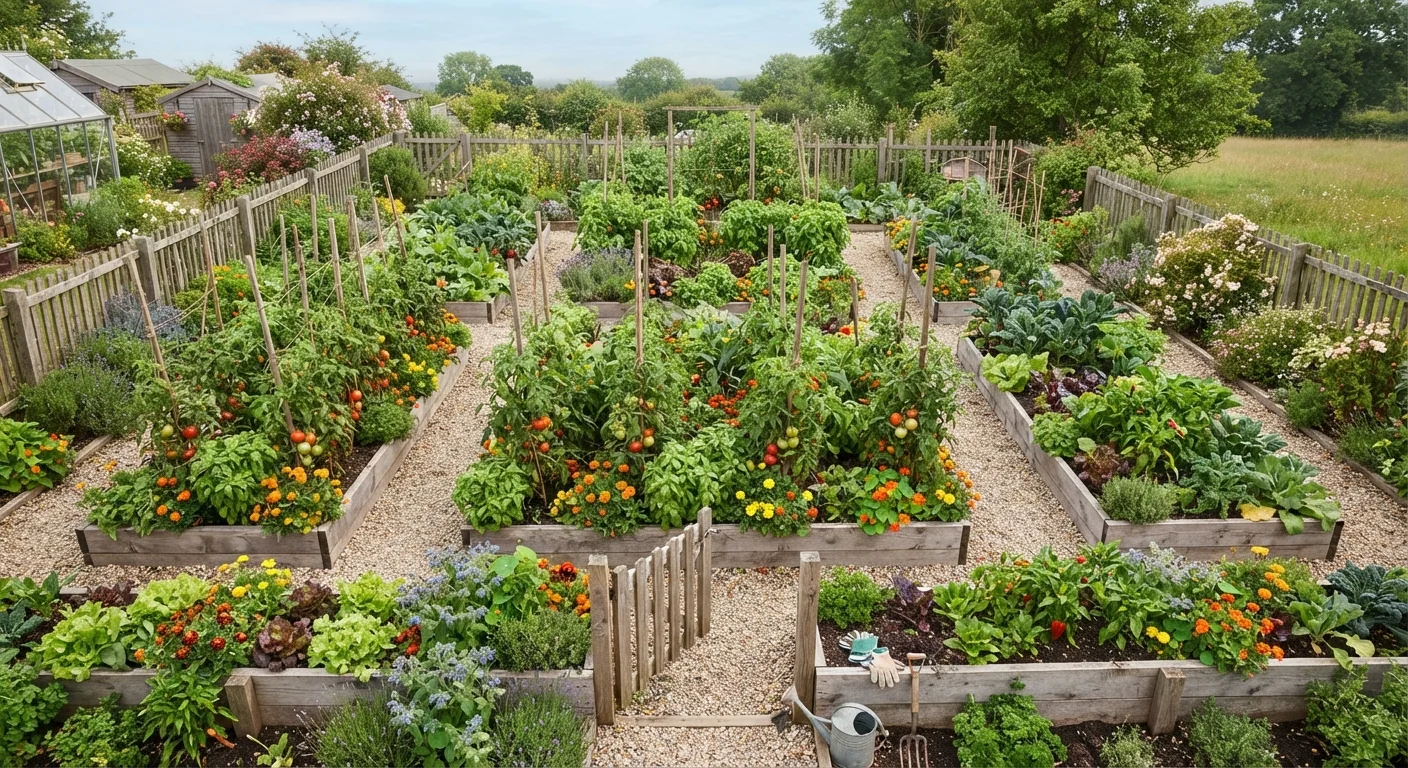
Gardeners widely report that basil planted near tomatoes repels aphids, whiteflies, and thrips. While the research is mixed, the pairing is low-risk and the basil harvest alone makes it worthwhile. Both plants prefer similar growing conditions - warm soil, full sun, consistent moisture.
Marigolds Throughout the Vegetable Garden
French marigolds (Tagetes patula) are among the most research-supported companion plants. They produce a root compound that suppresses root-knot nematodes, and their strong scent is thought to deter aphids and whiteflies. Scattering them through your beds acts as a broad-spectrum deterrent with no downside.
Nasturtiums as Trap Crops
Nasturtiums attract aphids strongly enough that they can be used deliberately as a sacrifice plant - drawing pests away from vegetables you want to protect. Plant them at the perimeter of beds and remove aphid-infested leaves regularly.
Plants That Make Poor Companions
Companion planting isn't only about beneficial pairings - knowing which plants conflict is equally important. Poor plant neighbors can suppress growth, compete aggressively for nutrients, or make each other more vulnerable to disease.
- Fennel: Most herbs are garden-friendly, but fennel is an outlier. It produces allelopathic compounds - chemicals released into the soil - that inhibit the growth of most vegetables and herbs nearby. Grow fennel in its own isolated area or in a separate container.
- Onions and beans: Alliums (onions, garlic, chives) and legumes (beans, peas) are commonly listed as incompatible. Alliums are believed to suppress the root bacteria that allow legumes to fix nitrogen.
- Brassicas and tomatoes: Brassicas such as cabbage, broccoli, and kale are typically poor companions for tomatoes and vice versa. Both groups are heavy feeders and can compete aggressively for nutrients in shared soil.
If you're starting your first garden, stick to well-documented compatible pairings and avoid the known conflicts until you have a feel for how your plants behave in your specific conditions.
How to Apply Companion Planting in Your Space
Companion planting doesn't require a complete garden redesign. The most practical approach is to work it into your existing layout thoughtfully, starting small and expanding as you learn what works in your conditions.
Map Your Beds Before You Plant
Sketch out your planting areas before the season starts. Note which plants are heavy feeders, which fix nitrogen, and which have known pest-deterrent properties. This makes it easy to spot opportunities for beneficial pairings and avoid conflicts. If you're deciding between garden styles, our comparison of raised beds versus in-ground planting can help you choose a layout that makes companion planting easier to manage.
Use Flowers as Functional Plants
Rather than separating flowers from vegetables, weave them in. Marigolds, nasturtiums, sweet alyssum, and borage all have specific pest-management or pollinator-attraction roles. They also improve the visual appeal of the garden at no extra cost.
Think in Guilds, Not Just Pairs
A guild is a community of plants that collectively support a central crop. Instead of pairing just two plants, consider the full picture: a tomato plant flanked by basil, shaded on one side by a tall pepper plant, and ringed with marigolds at the bed edge. This layered approach multiplies the benefits.
Companion planting also pairs naturally with other low-intervention strategies. If your goal is a less labor-intensive garden overall, it's worth reading about low-maintenance landscaping approaches that reduce the work required to keep pests and weeds in check.
Start with marigolds if you're unsure where to begin
French marigolds are the safest entry point into companion planting. They're compatible with nearly every vegetable, easy to grow from seed or transplant, and provide genuine pest-deterrent benefits backed by research. Plant them freely throughout any vegetable bed without worrying about conflicts.