

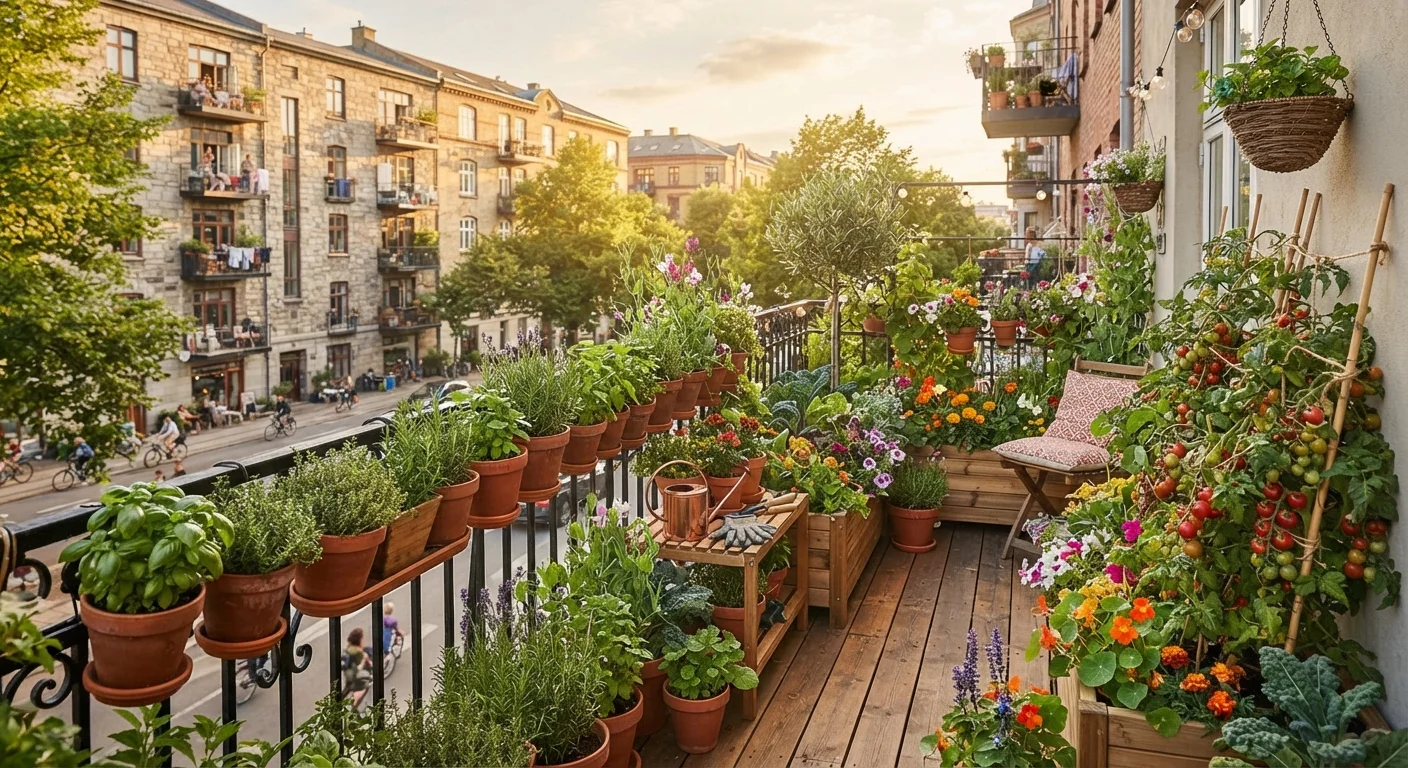
Key Takeaways
- Container size and drainage quality directly determine whether plants thrive or struggle.
- Balcony weight limits are a real structural concern - check your building's specifications before loading up.
- A quality potting mix, not garden soil, is essential for healthy container plants.
- Compact vegetable and herb varieties are specifically bred to succeed in small-space containers.
- Consistent watering and feeding matter more in containers than in ground-based gardens.
- Grouping containers by sun exposure and water needs simplifies ongoing care considerably.
What you will need
Why Containers Work Well in Small Outdoor Spaces
Container gardening offers meaningful flexibility that fixed in-ground or raised-bed approaches cannot. If you're renting, containers let you garden without altering the property - and take your plants with you when you move. If you're working with a concrete balcony or paved patio, containers are often your only option entirely. For a broader look at how container methods stack up against other approaches, see our comparison of raised beds vs. in-ground planting.
Beyond accessibility, containers give you fine-grained control over growing conditions. You choose the soil mix, drainage, and placement - and you can move things around as seasons and sun angles change. This is particularly valuable on balconies where shade from adjacent buildings can shift significantly between spring and midsummer.
The constraints are real, too. Container plants depend entirely on you for water and nutrients - there's no surrounding soil to buffer against drought or nutrient depletion. That dependency rewards consistency and planning, both of which this guide is designed to help you build.
Check Your Balcony Weight Capacity First
Balconies have structural load limits, and containers filled with wet soil can weigh significantly more than they appear. A single large planter with moist potting mix can exceed 100 lbs. Before placing multiple containers, consult your building's structural specifications or speak with a structural engineer or property manager. Exceeding load limits poses a serious safety risk.
Setting Up and Caring for Your Container Garden
The steps below walk you through selecting your space, choosing containers and soil, picking appropriate plants, and maintaining them through the season. If you're brand new to gardening in general, our first-timer's gardening roadmap covers foundational knowledge that complements this guide well.
What you will need
Gather your tools and materials before you begin:
Containers (pots, planters, window boxes)
Primary growing vessels - size and material affect drainage, weight, and moisture retention.
Quality potting mix
Provides the aerated, well-draining growing medium containers require - never substitute with in-ground garden soil.
Slow-release granular fertilizer
Feeds container plants steadily over weeks, compensating for nutrients that leach out with regular watering.
Saucers or drip trays
Catch drainage water to protect floors and railings, and to prevent staining or structural damage.
Watering can or hose with gentle nozzle
Delivers water at a controlled rate without disturbing roots or washing soil from containers.
Lightweight pot feet or risers
Elevate containers slightly to improve drainage and airflow beneath pots, reducing rot risk.
Liquid fertilizer (balanced or bloom formula)
Supplements slow-release granules during peak growing season when plants need additional feeding.
Moisture meter
Takes the guesswork out of watering by measuring soil moisture at root depth.
Assess your space for light and weight constraints
Before purchasing a single pot, spend a day observing how sunlight moves across your balcony or patio. Note how many hours of direct sun reach different zones - this determines what you can realistically grow. Most vegetables and flowering annuals need at least six hours of direct sun; herbs generally manage with four to five; leafy greens and ferns tolerate partial shade.
Simultaneously, check your building's documentation or speak with your property manager about balcony load limits. Distribute weight along the structural edges of the balcony (near the walls and railings) rather than concentrating it in the center.
Select containers suited to your plants and space
Match container size to the plant's mature root system. Shallow-rooted herbs like basil, chives, and thyme do well in 6-8 inch pots. Tomatoes, peppers, and dwarf fruit trees need containers of at least 15-20 gallons to support their root mass. Every container must have drainage holes - no exceptions.
For weight-conscious balconies, consider fabric grow bags or fiberglass planters, which are substantially lighter than terracotta or ceramic alternatives while still performing well.
Fill containers with the right growing medium
Use a high-quality potting mix - not garden soil or topsoil. For vegetables and heavy-feeding plants, choose a mix that includes compost or slow-release nutrients. For succulents or Mediterranean herbs like rosemary and lavender, use a mix with added perlite or coarse sand for sharper drainage.
Fill containers to within an inch of the rim, leaving room for watering without overflow. If you're working with very large planters, you can fill the bottom third with lightweight materials (empty plastic bottles, foam blocks) to reduce overall weight without reducing growing depth for most root systems.
Choose plants matched to your conditions
For edible gardens, compact and dwarf varieties consistently outperform standard ones in containers. Look for cherry tomatoes, bush beans, dwarf peppers, compact zucchini, and cut-and-come-again salad greens. Herbs - particularly basil, mint (keep it contained in its own pot), parsley, and chives - are among the most rewarding container plants for small spaces.
For ornamental displays, petunias, calibrachoa, marigolds, and trailing lobelia all tolerate container culture well. Mixing a thriller (tall focal plant), filler (mounding plant), and spiller (trailing plant) in a single large container creates visual impact without requiring multiple pots.
Establish a consistent watering routine
Containers dry out significantly faster than in-ground beds, especially in direct sun and warm weather. Check soil moisture daily during summer by pressing a finger an inch into the mix - water when it feels dry at that depth. Most containers in hot conditions will need watering once daily, sometimes twice for small pots in full sun.
Water thoroughly until it drains from the bottom, then empty saucers after 30 minutes to prevent root-rot conditions. Early morning watering reduces evaporation loss and helps foliage dry before cooler evening temperatures.
Feed plants regularly throughout the growing season
Nutrients leach out of containers with every watering, so container plants need more frequent feeding than in-ground counterparts. Work slow-release granular fertilizer into the potting mix at planting, then supplement with a diluted liquid fertilizer every two to three weeks during active growth.
Use a balanced formula (equal nitrogen, phosphorus, and potassium) for leafy herbs and vegetables. Switch to a lower-nitrogen, higher-phosphorus formula when flowering or fruiting plants begin to set buds, to encourage blooms and fruit rather than excessive foliage.
Group Plants by Water and Light Needs
Placing thirsty plants together and drought-tolerant ones in a separate cluster makes watering more efficient and prevents over- or under-watering individual pots. It also makes seasonal swaps easier when you rotate crops or flowers.
When the growing season winds down, don't neglect your containers - proper end-of-season care protects them through winter and sets you up for a stronger start next year. Our autumn garden shutdown guide includes a container-specific checklist. And if you'd like to stretch your growing window further into fall or start earlier in spring, extending the growing season in a temperate climate covers practical, low-cost strategies worth knowing.
Avoid Garden Soil in Containers
Standard garden soil compacts in pots, cutting off air to roots and impeding drainage. This quickly leads to root rot and poor plant performance. Always use a purpose-formulated potting mix, which is lighter and engineered to hold moisture without waterlogging.