

Key Takeaways
- Bare patches almost always have an identifiable cause that should be addressed before reseeding.
- Reseeding without fixing drainage, soil compaction, or shade problems leads to repeated failure.
- Timing your repair to the right season dramatically improves germination and establishment success.
- Foot traffic, pet urine, grubs, and fungal disease each require a different repair approach.
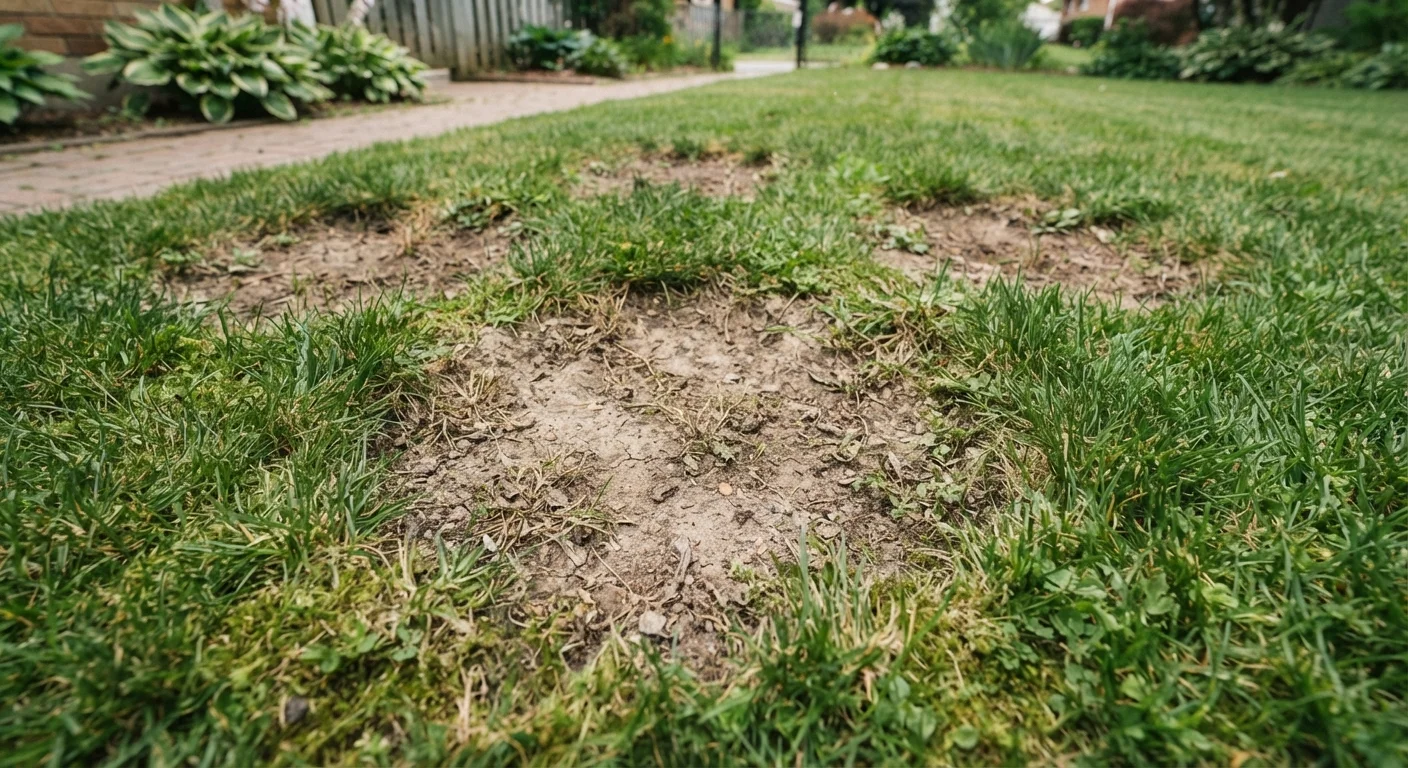
What's Actually Causing Your Bare Patches
Bare patches rarely appear without reason. Before you reach for a bag of grass seed, it's worth spending a few minutes diagnosing the underlying cause - because seeding over an unresolved problem is the single fastest way to end up with the same bare spot again by midsummer.
The most common culprits include:
- Soil compaction - Heavy foot traffic crushes soil pores, preventing roots, water, and air from penetrating. Grass thins and eventually gives up entirely.
- Pet urine - The high nitrogen concentration in dog urine burns grass, leaving round dead zones with sometimes-greener edges where diluted nitrogen acted as fertilizer.
- Fungal disease - Conditions like brown patch or dollar spot kill grass in irregular or circular patterns. Look for a ring of discolored or matted turf as a clue.
- Grubs and insects - Soil-dwelling larvae feed on grass roots just below the surface. Turf pulls up easily, like a loose rug, when root systems have been severed. If you suspect insect damage, check this guide on identifying garden pests before taking action.
- Shade and tree competition - Dense shade from trees or structures limits photosynthesis, while shallow tree roots compete aggressively for water and nutrients.
- Drought or poor drainage - Both extremes - dry hardpan and waterlogged soil - prevent healthy grass establishment and maintenance.
Matching the repair method to the actual cause is what separates a lawn that recovers from one that cycles through the same problem every season.
Common Repair Mistakes - and How to Avoid Them
Reseeding without addressing the underlying cause first.
Why it happens: When a bare patch appears, the instinct is to fill it immediately. Most homeowners don't realize the cause is still active and will kill the new grass just as it did the old.
Seeding at the wrong time of year for the grass type.
Why it happens: Many homeowners seed whenever they notice a problem, not when conditions favor germination. Cool-season grasses seeded in midsummer and warm-season grasses seeded in early spring often fail to establish.
Skipping soil preparation and seeding directly onto hard or compacted ground.
Why it happens: Loosening soil feels like extra work, and seed looks like it lands fine on hard ground. In practice, seed sitting on unbroken compacted soil loses moisture quickly and lacks the contact it needs to germinate reliably.
Watering too heavily or too infrequently during the germination window.
Why it happens: People either set a sprinkler and walk away, leading to pooling and seed washout, or they water deeply on a garden schedule that lets the top inch dry out completely between sessions - fatal for germinating seed.
Mowing new grass before it has established a root system.
Why it happens: New grass blades can look ready to mow at 2 inches, but roots are still shallow and fragile. Early mowing - especially with a heavy mower - can uproot seedlings or stress them beyond recovery.
If you want a more hands-off approach after repairs are complete, low-maintenance landscaping principles can help you choose grass types and ground covers that are naturally more resilient in problem areas.
The Repair Process That Actually Holds
~65°F
Minimum soil temperature for warm-season grass germination
Soil thermometer readings below this threshold - common in early spring - stall germination of Bermuda, zoysia, and centipede grasses regardless of air temperature.
7-21 days
Typical grass seed germination window
Germination time varies significantly by species, soil temperature, and moisture consistency - fescue germinates faster than bluegrass under identical conditions.
Once you've addressed the root cause, follow a straightforward sequence to give new grass the best chance of establishing:
- Remove dead material. Rake out dead grass, thatch, and loose debris down to bare soil. Leaving dead matter in place creates a barrier between seed and soil.
- Loosen and amend the soil. Use a garden fork or hand cultivator to break up the top 2-3 inches. Work in a thin layer of compost to improve both drainage and nutrient availability.
- Choose the right seed mix. Match the seed to your region and the specific conditions of the patch - shade-tolerant blends for low-light areas, drought-resistant varieties for dry slopes. Mixing a small amount of annual ryegrass into your blend can provide quick cover while slower perennial varieties establish.
- Seed, rake lightly, and firm. Spread seed at the rate specified on the package - more is not better. Rake lightly to work seed into the top quarter-inch of soil, then tamp gently to ensure seed-to-soil contact.
- Water consistently. Keep the seeded area lightly moist - not saturated - until germination occurs, typically 7-21 days depending on grass type and temperature. Reduce frequency but increase depth once seedlings reach about an inch tall.
- Delay mowing. Wait until new grass reaches at least 3 inches before the first mow, and never remove more than one-third of the blade height at once.
Don't Apply Herbicide Before Reseeding
Broadleaf and pre-emergent herbicides can remain active in soil for weeks to months and will inhibit or kill newly seeded grass. If you've recently treated your lawn with any herbicide, check the product label for the recommended interval before reseeding - it commonly ranges from 4 to 12 weeks depending on the product and active ingredient. When in doubt, wait longer rather than risk a failed repair.