

| Most reliable damage indicator | Damage pattern left on leaves, stems, or roots |
| First-line IPM approach | Physical removal by hand or barrier (row covers, copper tape) |
| Common soft-bodied pest treatment | Insecticidal soap or neem oil spray |
| Aphid natural predators | Ladybugs, lacewings, parasitic wasps |
| Root damage indicator | Wilting despite adequate water; grubs often found below soil line |
| Row covers: effective against | Cabbage moths, squash vine borers, cucumber beetles |
Read the Damage, Identify the Pest
Garden pests rarely announce themselves, but they always leave evidence. Before reaching for any treatment, spend a few minutes reading what the damage is actually telling you - the pattern, location, and timing point directly to the culprit.
| Most reliable damage indicator | Damage pattern left on leaves, stems, or roots |
| First-line IPM approach | Physical removal by hand or barrier (row covers, copper tape) |
| Common soft-bodied pest treatment | Insecticidal soap or neem oil spray |
| Aphid natural predators | Ladybugs, lacewings, parasitic wasps |
| Root damage indicator | Wilting despite adequate water; grubs often found below soil line |
| Row covers: effective against | Cabbage moths, squash vine borers, cucumber beetles |
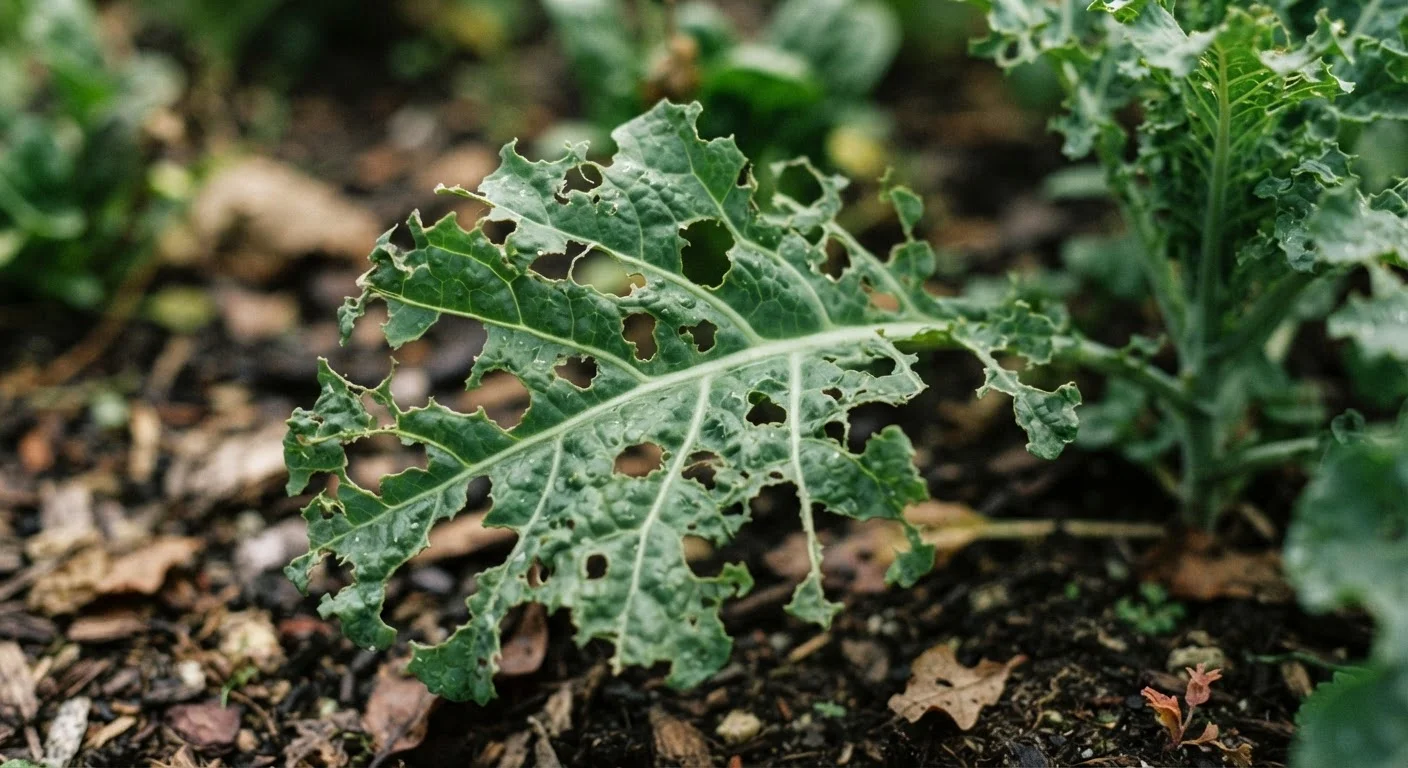
- Ragged holes in leaf centers or edges
- Usually caterpillars (larvae of moths and butterflies) or adult beetles. Check the undersides of leaves for eggs or the insects themselves, and look for frass nearby.
- Skeletonized leaves (veins intact, tissue gone)
- Characteristic of Japanese beetle adults or sawfly larvae feeding in groups. Both tend to work from the top of a plant downward.
- Silvery streaks or stippled, bleached patches
- Fine stippling with a dusty underside typically indicates spider mites; silver streaking along leaf surfaces is a signature of thrips.
- Distorted, sticky, or curled new growth
- Aphids cluster on tender new shoots, piercing the tissue and secreting a sticky residue called honeydew. A secondary sign is black sooty mold growing on the honeydew deposits.
- Wilting despite adequate water
- If roots are the problem, suspect grubs (beetle larvae) or root aphids. Gently excavate a few inches of soil near the base of an affected plant to check. See our guide to watering myths to rule out moisture stress first.
- Clean, angled cuts at soil level
- Cutworms sever seedlings overnight at the base. They are caterpillars that hide just beneath the soil during the day.
Common Culprits and Practical Responses
Once you have a likely identification, management options fall into a clear hierarchy. Start with the least disruptive method and escalate only if needed - this approach, broadly called Integrated Pest Management (IPM), protects beneficial insects and avoids unnecessary chemical use.
Before You Treat, Confirm the Pest
Misidentifying a pest leads to treatments that waste money and potentially harm beneficial insects. Take a photo of the damage and, where possible, the pest itself before choosing any management approach. Your local cooperative extension office can help with identification at no cost.
Chemical Controls and Pollinators
Even organic pesticides such as neem oil and insecticidal soap can harm bees and other pollinators when applied to open flowers. If treatment is necessary, apply in the early morning or evening when pollinators are least active, and avoid spraying blooms directly.
Aphids
A forceful spray of water from a garden hose dislodges most aphid colonies effectively. For persistent infestations, insecticidal soap applied directly to the insects is a reliable next step. Encouraging beneficial insects - by planting dill, fennel, or yarrow nearby - builds a natural control system over time. Companion planting can also deter aphids structurally by breaking up plant monocultures.
Caterpillars and Cutworms
Hand-picking is effective for low-level infestations. For caterpillars on edible crops, Bacillus thuringiensis (Bt) - a naturally occurring soil bacterium - is a widely used organic option that targets moth and butterfly larvae specifically without harming other insects. Protect new transplants from cutworms with a simple collar made from a cardboard tube pressed an inch into the soil around each stem.
Slugs and Snails
These thrive in moist conditions, so reducing excess moisture and clearing debris reduces habitat. Iron phosphate baits are considered lower-risk to wildlife and pets than older metaldehyde formulations, though all baits should be kept away from children and animals. Copper tape around raised beds creates a barrier many slugs avoid. For context on garden structures, see our comparison of raised beds and in-ground planting.
Spider Mites
Mites thrive when plants are stressed and conditions are hot and dry. Keeping plants well-watered and avoiding water-stressed conditions reduces risk. Neem oil or insecticidal soap applied to leaf undersides disrupts mite populations, but repeat applications are typically needed.
Grubs
White grubs in the soil are larvae of various beetles. Beneficial nematodes (microscopic soil organisms available from garden suppliers) applied to moist soil can reduce grub populations biologically. Healthy, deep-rooted plants tolerate low grub pressure better, so improving soil quality - including understanding what mulch does to your soil - supports plant resilience.
Prevention: Building a Less Hospitable Garden
The most effective pest management happens before an infestation establishes. Several consistent habits significantly reduce pest pressure across the whole garden season.
- Choose resilient plants: Native plants are generally better adapted to local pest pressures and support populations of predatory insects that self-regulate pest outbreaks.
- Maintain soil health: Healthy soil grows vigorous plants that resist and recover from pest damage faster. Soil pH imbalances weaken plants and make them more attractive to pests and disease.
- Rotate crops annually: Moving edible crops to different beds each year breaks cycles of soil-dwelling pests that overwinter where their food source grew the previous season.
- Remove plant debris promptly: Spent plant material left in beds over winter provides shelter and overwintering sites for many pests. A thorough autumn garden shutdown disrupts this cycle.
- Use physical barriers early: Row covers installed at planting time prevent many flying pests from ever reaching crops, eliminating the need for any chemical response.
Integrated Pest Management (IPM)
A pest control strategy that combines cultural, biological, and chemical methods in sequence, using the least disruptive approach first. The goal is long-term prevention rather than immediate eradication.
Frass
The fine granular droppings left behind by feeding insects, especially caterpillars and borers. Spotting frass near stems or on leaves is a reliable sign of an active infestation.
Beneficial insect
Any insect that helps the garden by preying on pests, pollinating plants, or decomposing organic matter. Ladybugs, lacewings, and ground beetles are common examples.
Systemic insecticide
A chemical absorbed throughout a plant's tissues, making it toxic to insects that feed on any part of it. Because it enters all plant tissue, it can also affect pollinators and should be used with caution.
Neem oil
A plant-derived oil extracted from neem tree seeds, used as a broad-spectrum organic pesticide and fungicide. It disrupts insect growth cycles and is most effective on soft-bodied insects when applied directly.
Row cover
A lightweight fabric laid over plants to create a physical barrier against insects while still allowing light and air through. It is particularly effective for protecting crops from flying pests early in the season.