

Key Takeaways
- Soil pH controls whether plants can absorb nutrients, not just whether nutrients are present.
- Most vegetables and flowers prefer a slightly acidic pH between 6.0 and 7.0.
- Simple, inexpensive test kits let you measure pH at home in minutes.
- Adding lime raises pH; adding sulfur or acidic amendments lowers it.
- pH correction takes time - retest after several weeks before amending further.
- Raised beds give you more direct control over soil pH from the start.
Soil pH
Soil pH is a measure of how acidic or alkaline your soil is, expressed on a scale from 0 to 14. A reading of 7 is neutral; below 7 is acidic, and above 7 is alkaline. Most common garden plants thrive somewhere in the slightly acidic to neutral range, typically between 6.0 and 7.0. When pH falls outside a plant's preferred range, it struggles to absorb nutrients - even when those nutrients are physically present in the soil.
pH affects the solubility of minerals like iron, manganese, phosphorus, and calcium. At extreme pH values, some nutrients become chemically locked in forms that plant roots cannot absorb, a phenomenon sometimes called nutrient lockout.
The Hidden Reason Your Garden Isn't Thriving
You water consistently. You fertilize. You pull the weeds. And still, plants look pale, stunted, or just never quite right. In many cases, the culprit isn't what you're putting in - it's what the soil is locking out.
Soil pH silently governs how well plant roots can access the nutrients already in your soil. When pH is off, even expensive fertilizer can sit chemically inaccessible in the ground. Understanding pH is one of the most practical - and often overlooked - steps toward a genuinely productive garden.
This is also worth pairing with a look at common watering mistakes that compound the problem, since poor hydration practices and wrong soil chemistry often work against each other simultaneously.
What the pH Scale Actually Tells You
The pH scale runs from 0 (most acidic) to 14 (most alkaline), with 7 as neutral. Each whole number represents a tenfold difference in acidity, so a soil at pH 5 is ten times more acidic than one at pH 6. That matters because small shifts in pH can produce noticeable changes in how nutrients behave.
6.0-7.0
Ideal pH range for most vegetables
This range is widely cited by cooperative extension services across the US as optimal for common food crops including tomatoes, peppers, and leafy greens.
4.5-5.5
pH range preferred by blueberries
Blueberries require strongly acidic soil - a preference shared by azaleas and rhododendrons - and will underperform significantly outside this range.
10×
Acidity difference per pH unit
Because pH is logarithmic, a soil at pH 5.0 is ten times more acidic than one at pH 6.0, making even small numerical shifts significant for plant health.
Most garden vegetables - tomatoes, peppers, cucumbers, lettuce - prefer a pH between 6.0 and 7.0. Acid-loving plants like blueberries and rhododendrons thrive below 6.0. Lawn grasses generally prefer 6.0 to 6.5. Knowing what you're growing helps you identify your target range before you test.
How to Test Your Soil pH
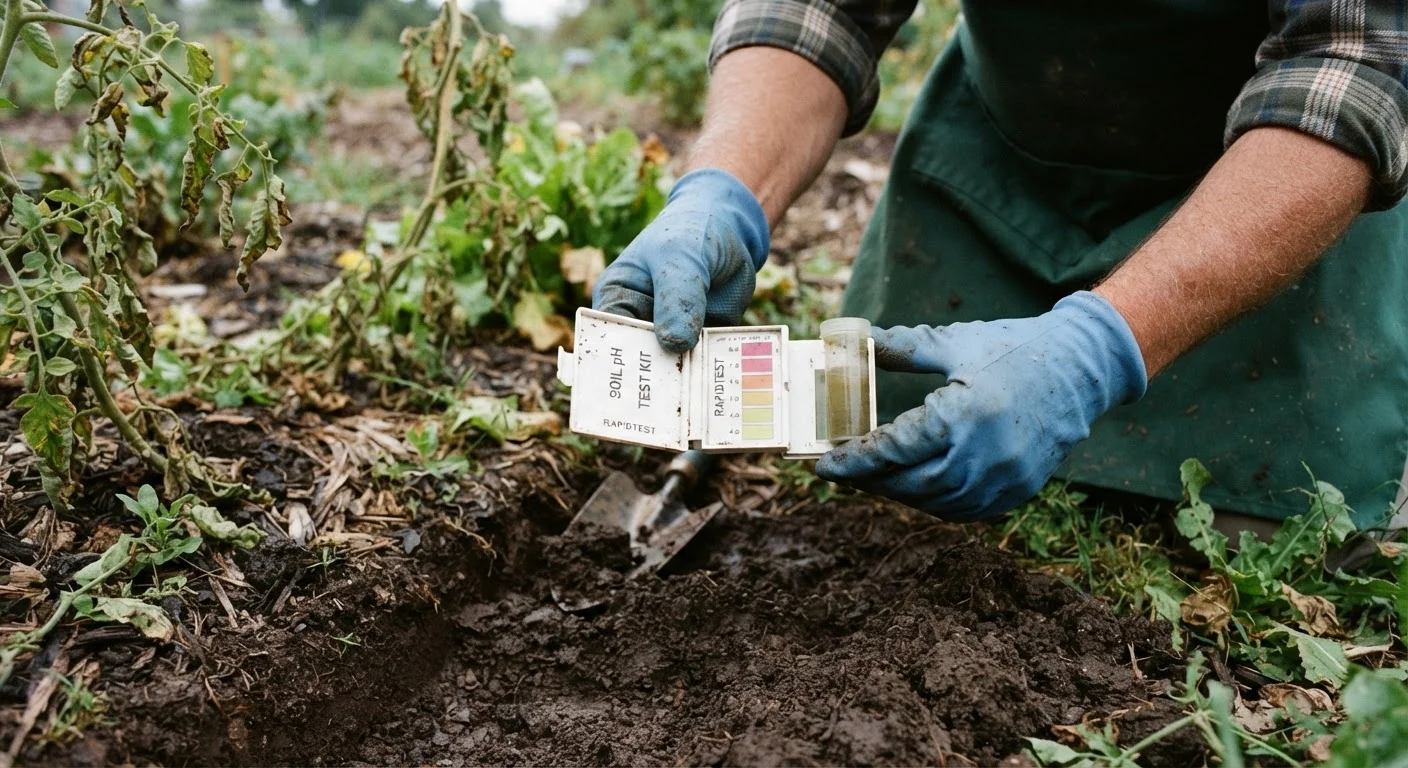
Home pH test kits are inexpensive and available at most garden centers. Basic versions use a liquid reagent and color chart; digital meters give a numerical readout in seconds. For either, collect small amounts of soil from several spots in your bed, mix them together, and test that combined sample - this averages out natural variation.
Sample from multiple spots in your bed
Soil pH can vary noticeably even within a single garden bed, especially near concrete edges, compost additions, or areas with heavy mulch. Collect five to ten small samples from across the area, mix them in a clean bucket, and test that composite sample. This gives you a more representative reading than a single spot.
For a more detailed analysis, your state's cooperative extension service typically offers mail-in soil testing at low cost. Beyond pH, these tests often report on nutrient levels and organic matter, giving you a fuller picture of what your soil actually needs.
Test in the same season you plan to amend, ideally in fall or early spring, so amendments have time to work before planting.
Correcting pH: Raising and Lowering
If your soil is too acidic (pH below your target), the standard fix is to add ground limestone. Calcitic lime raises pH and adds calcium; dolomitic lime adds both calcium and magnesium. Application rates vary by soil type and how far off your pH is - always follow the guidance on the package or your soil test report rather than guessing.
If your soil is too alkaline (pH above your target), elemental sulfur is a common amendment. Soil bacteria convert it over time, producing acidity that gradually lowers pH. Organic matter - compost, aged wood chips, pine needle mulch - also tends to buffer alkaline soils downward gently.
Neither fix is instant. Wait four to six weeks and retest before adding more. Overcorrecting is a real risk and creates its own set of problems.
Gardeners who want more direct control over soil chemistry from the outset may find value in the raised bed vs. in-ground comparison, since filling a raised bed lets you choose your starting soil and amend it precisely.
Making pH Part of Your Regular Garden Routine
pH isn't a one-time fix. Soil chemistry shifts over time due to rainfall, fertilizer use, plant uptake, and organic matter decomposition. Building a simple annual or biannual testing habit keeps you ahead of problems rather than reacting to them after plants are already struggling.
When troubleshooting a struggling plant, consider pH alongside other common culprits. Pest damage, spacing issues, and nutrient gaps all look similar at first glance. See our guide on identifying garden pests by the damage they leave to rule out other causes. And if you're planting a new bed, pairing plants with compatible pH needs can make ongoing soil management simpler from the start.
“Soil testing takes the guesswork out of gardening. Without knowing your pH, you're essentially flying blind - adding amendments that may help, hurt, or do nothing at all.”
— Cooperative Extension Soil Science Educator, University cooperative extension service, Midwest US