

| Recommended depth for organic mulch | 2-4 inches (University cooperative extension guidelines) |
| Nitrogen drawdown risk | High with fresh wood chips |
| Straw vs. hay | Straw is seed-free; hay is not |
| Inorganic mulch soil benefit | None - no decomposition or feeding |
| Mulch replenishment frequency | Annually for most organic types |
| Safe clearance from tree trunks | 2-3 inches minimum (Arboricultural guidance) |
Why Mulch Type Matters More Than Most Gardeners Realize
Mulch is one of the most versatile tools in a gardener's kit, but not all mulches do the same job. Spread the wrong type in the wrong place and you can compact soil, introduce weed seeds, or starve plants of nitrogen just when they need it most. Understanding what each material actually does - to moisture, temperature, soil biology, and weed pressure - helps you match the mulch to the task.
This reference covers the most common mulch types used by US homeowners and what each one contributes (or costs) your soil. For context on how mulch decisions interact with your planting setup, see our guide on raised beds vs. in-ground planting.
| Recommended depth for organic mulch | 2-4 inches (University cooperative extension guidelines) |
| Nitrogen drawdown risk | High with fresh wood chips |
| Straw vs. hay | Straw is seed-free; hay is not |
| Inorganic mulch soil benefit | None - no decomposition or feeding |
| Mulch replenishment frequency | Annually for most organic types |
| Safe clearance from tree trunks | 2-3 inches minimum (Arboricultural guidance) |
Organic Mulches: Soil-Building Options
Organic mulches break down over time, feeding soil microbes and gradually improving texture and fertility. Their trade-off is that they need periodic replenishment.
Wood Chips
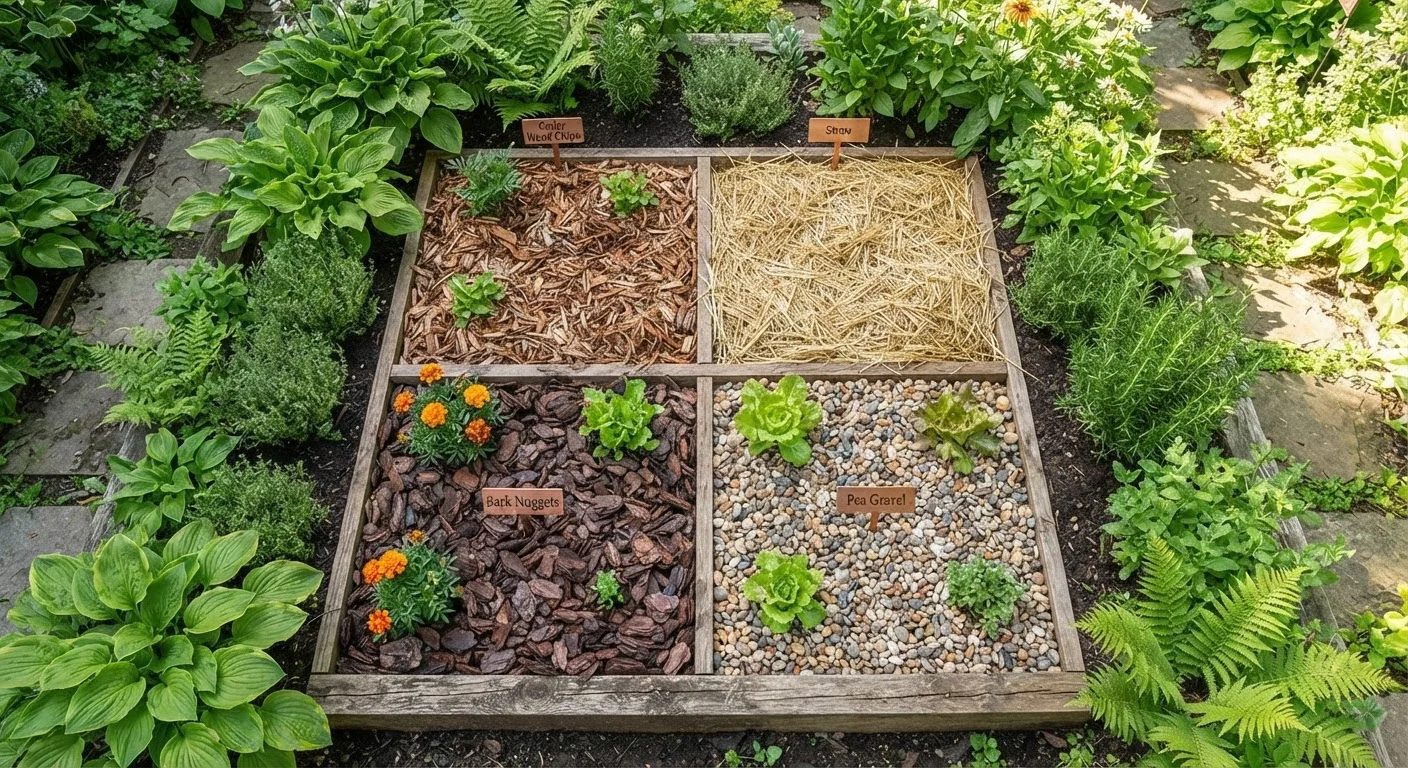
Shredded or chipped wood is among the most widely available organic mulches. Applied at 3-4 inches deep, it moderates soil temperature effectively, suppresses weeds, and retains moisture. As wood chips decompose, they support fungal communities that benefit many trees and shrubs. One important caveat: fresh wood chips temporarily tie up soil nitrogen as they break down. Keep them a few inches away from plant stems, and avoid incorporating them directly into garden soil until they are well composted.
Bark Nuggets and Shredded Bark
Bark mulch decomposes more slowly than wood chips and stays in place reasonably well. Shredded bark knits together and resists washing away on slopes. Bark nuggets are better for flat, ornamental beds. Both are low in nitrogen draw-down compared to raw wood chips but contribute fewer nutrients over time than finer organic materials.
Straw
Straw - not hay, which carries weed seeds - is a staple in vegetable gardens. It insulates soil, keeps mud off fruiting vegetables, and breaks down within a single season, adding organic matter. Because it is light and loose, it can blow around in windy areas. Confirm any purchased straw is seed-free before applying.
Compost
A 1-2 inch layer of finished compost used as mulch actively feeds the soil while suppressing light weed growth. It does not retain moisture as well as chunkier mulches, but it adds nutrients and biological activity that other mulches do not match. Pair it with a deeper layer of wood chips on top for the best of both. See also our article on organic vs. synthetic fertilisers for how compost fits into a broader feeding strategy.
Grass Clippings and Leaf Mold
Grass clippings applied thinly (no more than an inch at a time) break down quickly and return nitrogen to the soil. Thick layers mat and block water. Shredded leaves or leaf mold is one of the highest-value free mulches available - excellent for moisture retention and earthworm activity. Avoid diseased leaves.
Nitrogen drawdown
A temporary reduction in available soil nitrogen that occurs when high-carbon materials like fresh wood chips decompose. Soil microbes consume nitrogen during breakdown, making it briefly unavailable to plants.
Organic mulch
Any mulch made from once-living material - wood chips, straw, compost, leaves - that breaks down over time and contributes organic matter to the soil.
Inorganic mulch
Mulch made from mineral or synthetic materials, such as gravel, stone, or landscape fabric, that does not decompose and adds no nutrients to the soil.
Leaf mold
Partially decomposed leaves that have broken down into a crumbly, dark material. It improves soil moisture retention and supports beneficial soil organisms.
Xeric planting
A landscaping approach that selects plants adapted to low-water or drought conditions, often paired with gravel or stone mulch to reduce irrigation needs.
Inorganic Mulches: Weed Suppression Without Decomposition
Inorganic mulches do not break down, so they require no topping up and do not feed soil organisms. They suit specific situations - particularly pathways, arid landscapes, and areas where long-term weed suppression takes priority over soil improvement.
Gravel and River Rock
Stone mulches absorb and radiate heat, which can benefit drought-adapted plants and extend warmth around Mediterranean or xeric plantings. They allow fast drainage and rarely compact. The downside: they do nothing for soil biology, can raise soil temperature beyond what moisture-loving plants tolerate, and are difficult to remove if you change your mind. Gravel also sinks into soil over time, requiring a landscape fabric or liner underneath to stay effective.
Landscape Fabric
Often used beneath gravel or stone, landscape fabric blocks weed growth but degrades over several years, eventually fragmenting into the soil. It also impedes the movement of water, nutrients, and beneficial organisms into the soil over time. Most horticulturalists recommend it only for pathways or under hardscaping rather than in active planting beds.
Whatever mulch strategy you choose, moisture management remains central to plant health - a topic covered in depth in our piece on common watering myths that affect garden outcomes.
Matching Mulch to Context
No single mulch works best everywhere. Here is a practical framework:
- Vegetable beds: Straw, compost, or finely shredded leaves. Avoid thick wood chips directly around annuals.
- Trees and shrubs: Wood chips or shredded bark at 3-4 inches; keep clear of the trunk to prevent rot.
- Slopes: Shredded bark or coir mats to prevent washout.
- Pathways: Gravel, wood chips, or bark nuggets for durability underfoot.
- Arid or xeric gardens: Gravel or decomposed granite to complement low-water plants.
For those working toward a lower-maintenance outdoor space overall, mulching consistently is one of the most impactful steps you can take - it reduces watering, weeding, and soil amendments over time. Our low-maintenance landscaping guide covers how mulch fits into a broader low-effort strategy.
25-50%
Reduction in soil moisture loss with mulch
According to cooperative extension research, a 3-inch organic mulch layer can cut evaporative moisture loss significantly compared to bare soil.
4°F-6°F
Soil temperature moderation from mulch
Studies from land-grant universities suggest organic mulch can moderate summer soil temperature by several degrees, benefiting root health.