

Key Takeaways
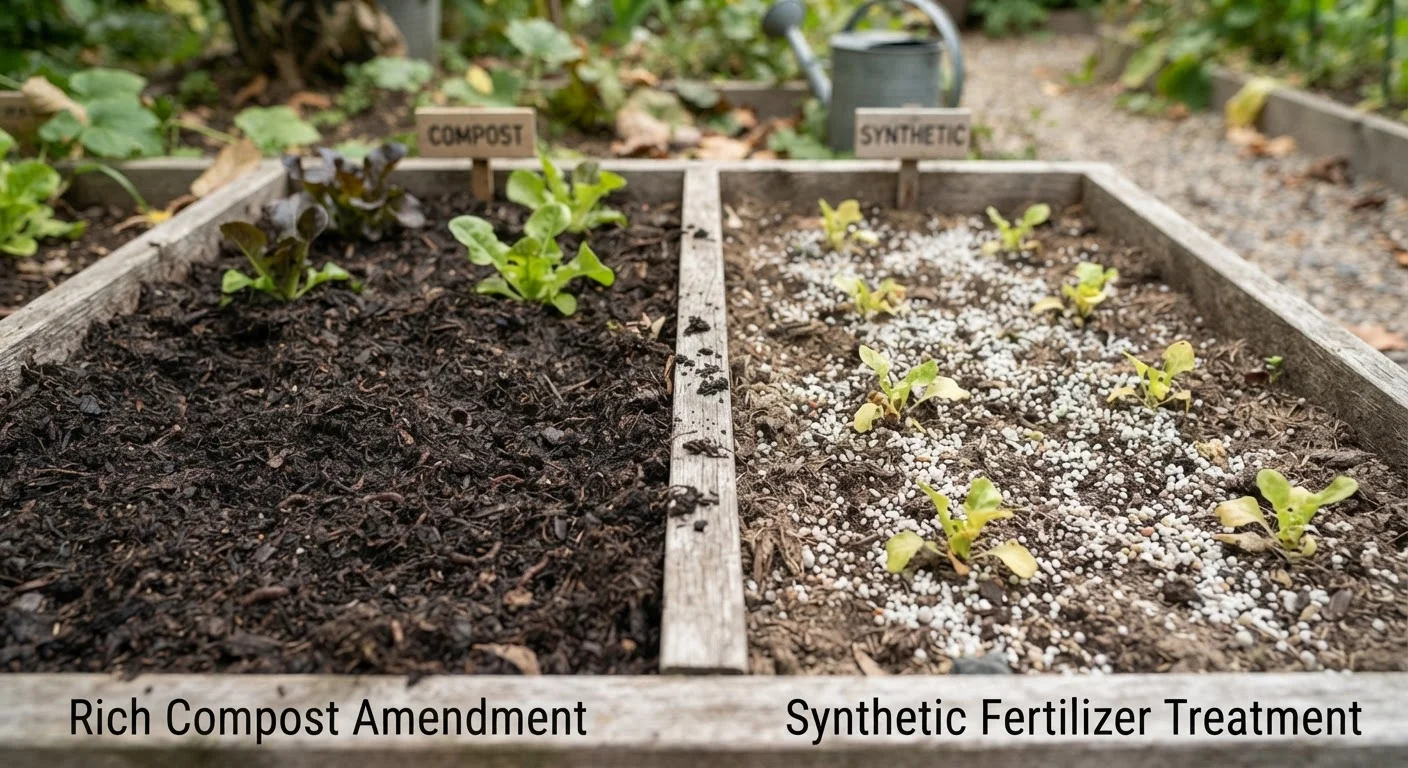
- Organic fertilizers feed soil biology slowly; synthetic fertilizers deliver nutrients to plants immediately.
- Synthetic options work faster but carry higher runoff risk if misapplied.
- Organic amendments generally improve long-term soil structure and microbial health.
- Cost, urgency, and soil condition should all factor into your fertilizer choice.
- Many gardeners use both types strategically rather than committing to one exclusively.
Our Verdict
Neither organic nor synthetic fertilizer is universally superior - each serves different garden goals and timelines. Organic options build lasting soil health but act slowly, while synthetics correct deficiencies quickly but require careful application to avoid harm. Understanding your soil's current condition and what your plants actually need is the most reliable starting point.
| Best for | Recommended |
|---|---|
| Those prioritizing long-term soil health and sustainability | Organic fertilizers |
| Gardeners needing fast correction of a specific nutrient deficiency | Synthetic fertilizers |
| New gardeners building a productive vegetable bed from scratch | Organic fertilizers |
| Those managing container plants with limited soil volume | Synthetic fertilizers (slow-release formulations) |
How Each Type of Fertilizer Works
All fertilizers supply one or more of the three primary plant nutrients: nitrogen (N), phosphorus (P), and potassium (K) - the NPK ratio printed on every product label. But the way those nutrients reach plant roots differs considerably depending on the source.
Organic fertilizers - compost, bone meal, blood meal, kelp, and similar materials - release nutrients as soil microbes break them down. This microbial process takes time, so feeding is gradual. The upside is that organic matter also feeds beneficial bacteria and fungi, improving soil structure over repeated seasons. If you're interested in making your own, our guide to home composting covers the process thoroughly.
Synthetic fertilizers are manufactured to make nutrients immediately water-soluble, so plants can absorb them through roots within days of application. They contain precise, standardized NPK concentrations and can target specific deficiencies accurately. The trade-off is that they bypass the soil food web entirely and provide no organic matter to improve texture or drainage.
Side-by-Side Comparison
The table below compares the two approaches across the criteria most relevant to home gardeners.
| Organic Fertilizers | Synthetic Fertilizers | |
|---|---|---|
| Nutrient availability | Slow - weeks to months | Fast - days after application |
| Soil health impact | Improves structure and biology | Minimal to no benefit |
| Nutrient precision | Variable; depends on source | Standardized, predictable ratios |
| Runoff risk | Lower, nutrients bound to organic matter | Higher, especially liquid formulas |
| Cost (general) | Moderate to high per volume | Often lower per nutrient unit |
| Application effort | Typically annual or seasonal | May require repeat applications |
| Best use case | Long-term soil building | Quick deficiency correction |
Your planting method can also influence which fertilizer approach makes sense. See our comparison of raised beds and in-ground planting for context on how soil volume and depth affect nutrient management.
Risks and Common Mistakes
More Fertilizer Is Not Always Better
Over-fertilizing is one of the most common garden mistakes. Excess nutrients - whether organic or synthetic - can burn roots, disrupt soil pH, and contribute to water pollution. Always follow application rate guidelines and resist the urge to add extra in hopes of faster results.
Organic fertilizers are often seen as inherently safe, but overapplication of high-nitrogen products like blood meal can still burn plants. Always follow label rates and conduct a basic soil test before amending - guessing at deficiencies wastes money and can create nutrient imbalances.
Synthetic fertilizers carry a higher risk of nutrient runoff, particularly when applied before heavy rain or on sloped ground. Excess nitrogen and phosphorus washing into waterways contribute to algae blooms and water quality problems. Slow-release synthetic formulas reduce this risk substantially compared to fast-acting liquid concentrates.
Healthy soil also supports plant resilience against pests. Our guide to identifying and managing garden pests explains how soil and plant health are connected to pest pressure.
Choosing the Right Approach for Your Garden
Start with a Soil Test
Before spending money on any fertilizer, a basic soil test reveals your current pH and nutrient levels. Many cooperative extension programs across the US offer low-cost testing. Knowing what's actually missing lets you choose the right product and rate - and avoids the common mistake of over-fertilizing with nutrients that are already sufficient.
Consider these practical factors when deciding:
- Timeframe: If plants are showing yellowing leaves mid-season, a fast-acting synthetic fertilizer addresses the problem quickly. If you're preparing beds in fall for next spring, organic compost or slow-release amendments are ideal.
- Soil condition: Compacted, depleted, or very sandy soils benefit most from organic matter, which improves structure over time. Synthetics alone won't fix poor soil texture.
- Watering method: Drip irrigation reduces runoff risk for all fertilizer types. Our comparison of drip irrigation and sprinkler systems can help you evaluate watering options.
- What you're growing: Vegetables benefit from consistent, moderate feeding. Established trees and shrubs often need very little supplemental fertilizer if the soil is healthy.
Many experienced gardeners combine both approaches - building soil biology with organic amendments each fall while using a targeted synthetic product to address a mid-season deficiency. Pairing fertilizer strategy with good mulching practice also helps retain soil moisture and moderate nutrient loss. Our overview of mulch types and their effects is a useful companion read.