

Key Takeaways
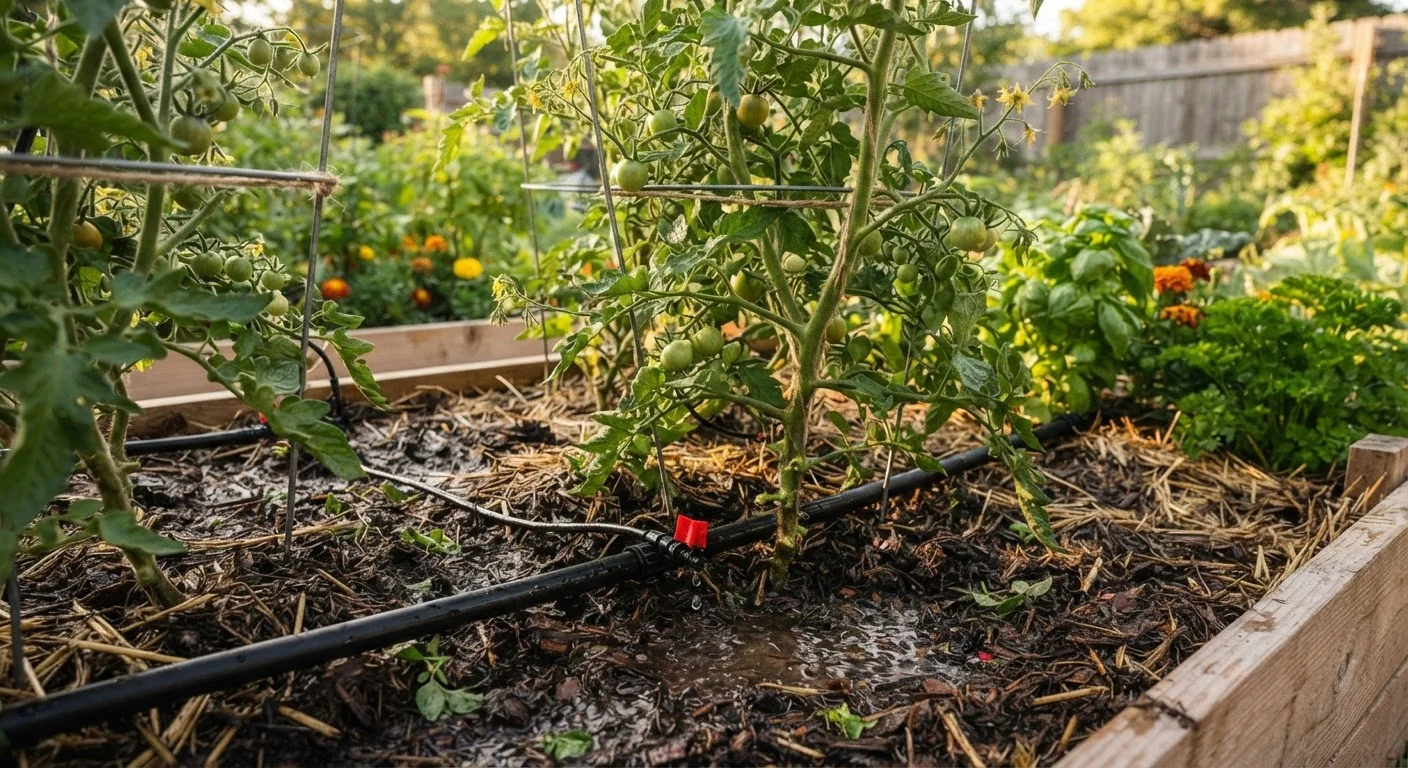
- Drip irrigation delivers water directly to plant root zones, reducing evaporation and weed growth.
- Sprinkler systems cover large areas efficiently but lose more water to evaporation and overspray.
- Drip systems typically cost less to operate over time but require more hands-on setup and maintenance.
- Sprinklers suit lawns and ground covers; drip irrigation excels in vegetable and perennial beds.
- Local water restrictions and climate should factor into your choice.
Option A
Drip Irrigation
The targeted, water-efficient approach.
Best for: Vegetable beds, fruit trees, container gardens, and drought-sensitive landscapes where precise root-zone delivery matters.
Option B
Sprinkler Systems
The broad-coverage, established standard.
Best for: Lawns, ground covers, and large open planting areas where even, wide-range coverage is more practical than precision.
If you maintain a vegetable garden or raised beds
Drip Irrigation
Targeted delivery to root zones keeps foliage dry, reducing fungal disease and delivering water exactly where plants need it.
If your priority is keeping a lawn green with minimal effort
Sprinkler Systems
Sprinklers are designed for broad, even coverage across turf - a task drip irrigation simply isn't built to handle.
If water conservation is your main concern
Drip Irrigation
Drip systems apply water slowly and directly, reducing runoff and evaporation losses compared to overhead watering.
If you want a set-and-forget system for a mixed landscape
Sprinkler Systems
A well-zoned sprinkler system with a timer is easier to program for diverse plantings across a yard with minimal manual intervention.
How Each System Works
Drip irrigation delivers water slowly through a network of flexible tubing and emitters placed at or just below soil level near individual plants. Water seeps out at low pressure over time, soaking into the root zone with little waste. Because water never touches leaves or stems, foliar diseases associated with overhead watering are much less common.
Sprinkler systems distribute water through a network of pipes connected to rotating or fixed heads that spray water upward and outward over a defined area. They mimic rain and work well for even coverage across lawns and large open beds. Most residential sprinkler systems run on a timer and can be divided into zones to manage different watering needs across the yard.
Understanding this mechanical difference is the foundation for choosing correctly. Each system is genuinely good at what it's designed to do - the mismatch comes from applying the wrong one to the wrong setting. For a deeper look at how plant and bed type should guide your decisions, see our guide to raised beds vs in-ground planting.
Efficiency, Cost, and Setup
| Criterion | Drip Irrigation | Sprinkler Systems |
|---|---|---|
| Water efficiency | High - minimal evaporation or runoff | Moderate - some loss to evaporation and wind |
| Best application | Vegetable beds, trees, containers | Lawns and large open plantings |
| Upfront cost | Lower - DIY-friendly components | Higher - often requires professional install |
| Setup complexity | Moderate - manageable for most homeowners | Higher - buried lines, permits often needed |
| Foliage wetting | None - water stays at root level | Yes - overhead spray wets leaves |
| Weed promotion | Low - soil surface stays drier | Higher - surface moisture encourages weeds |
| Seasonal maintenance | Emitter checks, line flushing | Head adjustment, winterization |
Drip irrigation components - tubing, emitters, connectors, and a basic timer - are widely available and can be installed by most homeowners over a weekend. The upfront cost is generally lower than a professionally installed sprinkler system, though complexity grows with garden size. Maintenance involves checking emitters for clogs and flushing lines seasonally.
Sprinkler systems require more infrastructure: buried pipes, pop-up heads, a backflow preventer (required by code in most US jurisdictions), and ideally a licensed installer for in-ground work. Labor and materials make initial costs higher, but once installed, they require relatively little seasonal attention. Both systems benefit from a rain sensor or smart controller to avoid watering during or after rainfall.
Water efficiency is a meaningful point of difference. Drip systems apply water slowly enough that soil absorbs it with minimal runoff, and nothing is lost to wind drift or evaporation from spraying through air. Sprinklers can lose a substantial percentage of water to evaporation, especially in warm or windy conditions - a factor worth considering if your area has seasonal restrictions. Our watering myths article covers common habits that waste water regardless of which system you use.
Which Plants Suit Which System
Drip irrigation is the stronger fit for vegetables, herbs, fruit trees, roses, and perennial borders - essentially, any planting where individual plants have defined locations and root zones. It also works well for container gardens when thin emitter tubing (often called spaghetti tubing) runs to each pot. Because water stays at soil level, it's less likely to encourage weed germination between rows.
Sprinkler systems are better suited to turfgrass, ground covers, and large informal plantings where plants are dense, low-growing, and evenly distributed. Trying to use a sprinkler system for a vegetable garden often leads to wet foliage, uneven coverage around tall plants, and wasted water in paths and aisles.
Check Local Codes Before Installing
In-ground sprinkler systems typically require a permit and a backflow preventer in most US municipalities - check with your local building or water department before starting. Drip systems connected directly to a home's water supply may also require a backflow device depending on your jurisdiction. When in doubt, a licensed irrigation contractor can advise on what's required in your area.
If your garden includes both a lawn and dedicated planting beds, a hybrid approach is common: sprinkler zones for turf areas, drip zones for beds. Most irrigation controllers support multiple zone types. If you're planning a lower-maintenance garden from the ground up, pairing the right irrigation system with appropriate plant choices makes a real difference - our native plants guide explains how plant selection can reduce your watering needs substantially. You might also find helpful context in our low-maintenance landscaping overview.