

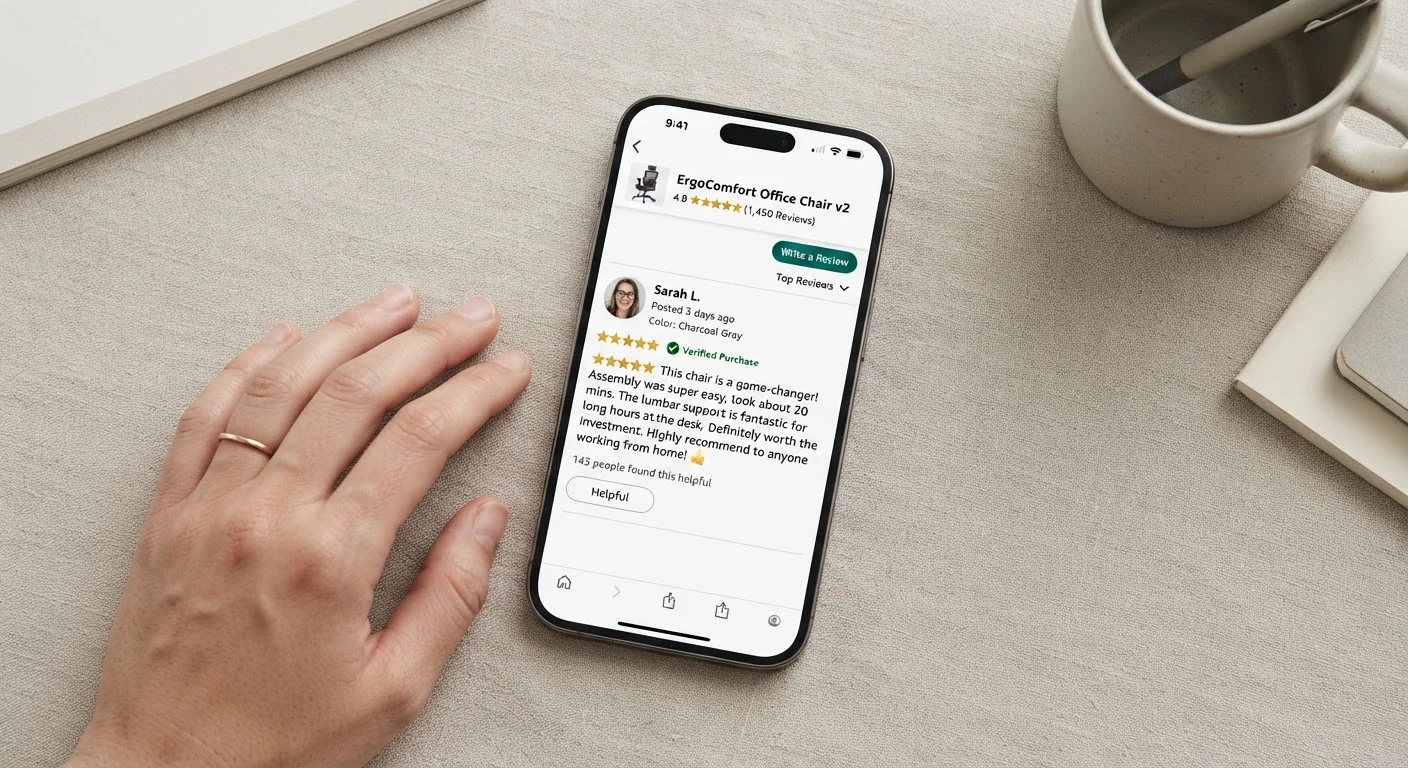
Key Takeaways
- Verified purchase labels confirm a transaction occurred on one platform - not that the review is honest or accurate.
- Unverified reviews can come from legitimate buyers who purchased elsewhere, not just from fraudulent sources.
- Review manipulation can involve both verified and unverified submissions; neither label is a fraud guarantee.
- Review quality signals - specificity, detail, purchase context - matter more than the verified badge alone.
- Platforms filter and weight reviews differently; the same badge means different things on different sites.
Option A
Verified Purchase Review
The platform-confirmed transaction signal.
Best for: Shoppers who want at least baseline assurance that a reviewer bought the item through the same platform.
Option B
Unverified Review
The open-submission, context-unknown entry.
Best for: Readers who want to hear from users who may have bought through other channels, received gifts, or have long-term experience with a product.
If you want a quick authenticity shortcut
Verified Purchase Review
The label at least confirms money changed hands on the platform, giving you one more data point - though it should never be the only one you rely on.
If you want nuanced, long-term user perspective
Unverified Review
Some of the most detailed feedback comes from buyers who purchased through other channels or have used a product for years - unverified doesn't mean uninformed.
If you're evaluating review credibility holistically
Verified Purchase Review
When combined with specific product detail, realistic pros/cons, and a reasonable posting timeline, verified reviews provide a stronger foundation for your decision.
What Each Label Actually Means
When a review carries a verified purchase badge, it means the platform has matched that reviewer's account to a completed transaction for that specific product - purchased directly through the platform at or above a minimum price threshold. It does not verify that the review content is accurate, unbiased, or written by someone who actually used the item.
An unverified review simply lacks that transactional match. The reviewer may have bought the item in-store, through a different retailer, received it as a gift, or - yes - never purchased it at all. The label tells you nothing about the reviewer's intent, only about the absence of a platform-confirmed purchase record.
As our breakdown of what each review element signals explains, the badge is just one data point in a much larger picture.
| Criterion | Verified Purchase | Unverified Review |
|---|---|---|
| Transaction confirmed | Yes - on that platform | No platform record |
| Review accuracy guaranteed | No | No |
| Manipulation risk | Present (incentivized schemes) | Present (no purchase barrier) |
| Can reflect legitimate buyer | Yes | Yes (bought elsewhere) |
| Platform weighting | Often ranked higher | Often ranked lower or filtered |
| Long-term use feedback | Sometimes | Sometimes - no restriction |
| Useful without context | Rarely | Rarely |
Where Verified Reviews Fall Short
The verified label is vulnerable to manipulation in several documented ways. Coordinated schemes can involve real purchases - sometimes incentivized - followed by positive reviews. In these cases, the transaction is genuine, but the review reflects an incentive rather than a candid experience. Platforms have cracked down on incentivized reviews, but enforcement is uneven.
There's also the issue of product variation. A verified purchase from two years ago may reflect a different manufacturing run, formula, or quality level than what's currently listed. The badge doesn't timestamp the product version - only the purchase date.
42%
Of online reviews estimated as unreliable
A Fakespot analysis of major retail platforms suggested a significant portion of reviews showed markers of unreliability, regardless of verification status.
3x
Weight verified reviews receive on some platforms
Some major e-commerce platforms algorithmically elevate verified purchase reviews in ranking and display, according to publicly documented platform policies.
Patterns that suggest inauthentic reviews - like clustering of five-star submissions shortly after a product launch - can appear across verified and unverified reviews alike.
When Unverified Reviews Deserve Attention
Dismissing all unverified reviews as suspect is a mistake that costs shoppers real insight. Consider a frequent traveler who buys luggage at an airport shop: their review won't carry a platform badge, but their feedback may be among the most detailed and use-case-specific available. The same applies to professional buyers, gift recipients, or people who switched platforms but still want to share their experience.
Common rating assumptions that mislead shoppers include the idea that unverified automatically means fake - an oversimplification worth questioning before you filter those reviews out entirely.
Unverified Doesn't Always Mean Anonymous
Some platforms allow sellers, industry professionals, or longtime customers to submit reviews without a matching platform transaction. These may include reviewer profiles with purchase histories, detailed bios, or prior review activity - context that can help you gauge their credibility even without the verified badge. Always look at the full reviewer profile when it's available.
What actually separates useful unverified reviews from throwaway ones is the same thing that separates good verified reviews from bad ones: specificity. Does the reviewer describe a particular feature, mention how long they've owned it, or note a specific failure? That detail is harder to fake and more useful to you than any label.
How to Read Reviews More Effectively
Rather than filtering exclusively by verification status, look for the quality signals that hold up regardless of label. Detailed reviews that mention specific use cases, acknowledge both strengths and limitations, and reflect a realistic timeline of use tend to be more reliable than short, superlative-heavy submissions - verified or not.
Cross-referencing across platforms also helps. If a product has strong verified reviews on one retailer but a very different picture on another, that discrepancy is worth investigating. Reading between the lines of online product reviews covers how to interpret those cross-platform patterns more systematically.
Finally, pay attention to volume and distribution. A product with thousands of reviews clustered at five stars and almost none in the two-to-four range is a pattern worth scrutinizing - regardless of how many carry the verified badge. What popularity labels like "Top Rated" actually reflect is also relevant here, since high review counts don't always translate to trustworthy signals.