

How Canada's Regions Actually Feel to Visitors
Canada is the world's second-largest country by land area, and that scale translates directly into traveller experience. A week in coastal British Columbia feels nothing like a week in Newfoundland, and urban Montréal is a completely different trip from the open Prairie provinces. Rather than treating Canada as one destination, it helps to think region by region - matching your travel style, interests, and available time to what each area actually delivers.
Before booking, it's worth doing the homework that shapes a successful trip. Our guide on researching a destination before you arrive covers the practical layers - transport norms, seasonal conditions, local customs - that determine whether your itinerary actually works once you're on the ground.
Western Canada: British Columbia and the Rockies
British Columbia anchors the Pacific coast with a mix of urban sophistication and raw wilderness that's hard to match anywhere on the continent. Vancouver serves as the main gateway - a walkable, culturally diverse city pressed between ocean and mountains. From there, travellers branch toward Vancouver Island (whale watching, old-growth forests, Victoria's compact downtown), the Sea-to-Sky corridor leading to Whistler, and the northern interior. BC's shoulder seasons - late spring and early fall - often deliver spectacular conditions with lighter crowds.
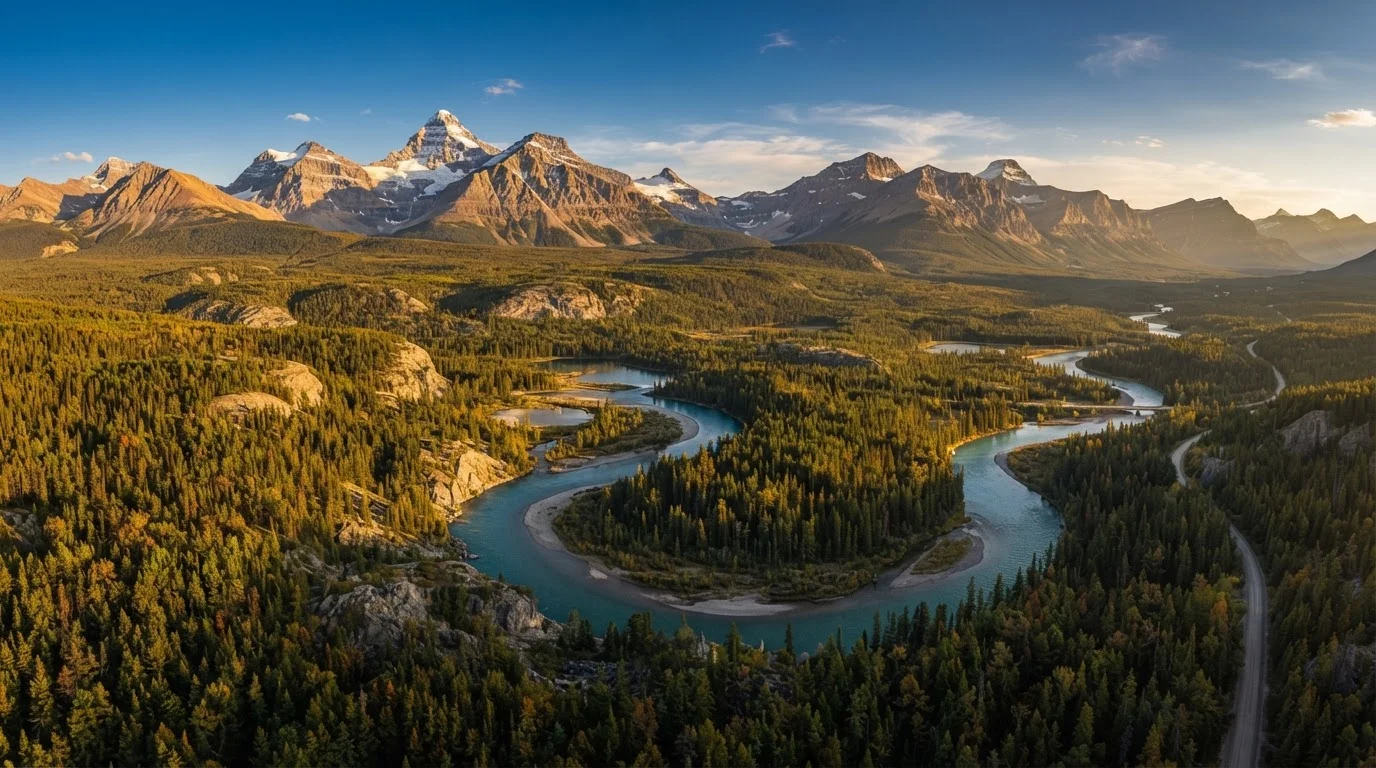
Alberta is where the Canadian Rockies hit their full drama. Banff and Jasper national parks anchor this region, offering glacier-fed lakes, canyon hikes, and wildlife sightings year-round. Calgary provides a practical urban base with its own energy, particularly during the Stampede period. Travellers combining BC and Alberta can follow the Icefields Parkway, widely regarded as one of the most scenic drives in North America - if you're drawn to this kind of road-based adventure, it pairs well with how the American Southwest sequences its own iconic routes across a different but equally vast landscape.
10M+
Annual visitors to Banff National Park
Banff is among Canada's most visited national parks, drawing millions of international and domestic visitors each year.
3,855 m
Height of Mount Robson, BC's highest peak
Mount Robson, on the BC-Alberta border, is the highest point in the Canadian Rockies and a landmark destination for alpine travellers.
~16.5M
Visitors to Québec annually
Québec regularly attracts millions of international tourists, anchored by Montréal and Québec City's cultural and historical draw.
Central Canada: Ontario and Québec
Ontario holds the country's largest city and most visited international gateway. Toronto is a genuinely cosmopolitan destination - the waterfront, the Arts District, diverse neighbourhoods, and day-trip access to Niagara Falls make it easy to fill a week without leaving the province. Northern Ontario offers a starkly different mood: boreal forest, Canadian Shield, and remote lakes that appeal to wilderness paddlers and fishing travellers.
Québec delivers a cultural experience that feels unlike anywhere else in North America. Montréal's bilingual urban energy - festivals, food culture, walkable neighbourhoods - draws travellers who want a city trip that doesn't feel interchangeable with other major North American destinations. Québec City, with its walled Old Town and distinct European atmosphere, offers one of the continent's most historically immersive urban experiences. Visiting in winter for the Carnaval season or in fall during foliage peak each produce a radically different trip. If you enjoy comparing regional personalities across a single country, Japan's regional personality breakdown offers a useful parallel framework.
The Prairies, Atlantic Canada, and the North
Manitoba and Saskatchewan reward travellers willing to look past the obvious. Winnipeg punches above its weight with excellent arts institutions and a thriving food scene. Churchill, Manitoba, is one of the world's most reliable locations for polar bear viewing in fall and beluga whale watching in summer - a genuinely rare wildlife experience. The wide Prairie skies and the dramatically undervisited Riding Mountain National Park round out this region's appeal.
The Atlantic Provinces - Nova Scotia, New Brunswick, Prince Edward Island, and Newfoundland and Labrador - suit travellers drawn to coastal landscapes, seafood culture, and a slower pace. The Cabot Trail in Cape Breton, the Bay of Fundy's extreme tides, and Newfoundland's distinctive outport communities and Viking-era history at L'Anse aux Meadows all offer experiences with genuine depth. Atlantic Canada also tends to be less crowded during peak summer than central and western destinations.
Canada's Northern Territories - Yukon, Northwest Territories, and Nunavut - are remote, logistically demanding, and unlike anywhere else. The Northern Lights, midnight sun, and Indigenous cultural experiences here require advance planning and honest assessment of what wilderness travel involves. For travellers accustomed to structured international itineraries, our long-haul trip planning guide provides a useful framework for managing complex logistics.
Canadian Shield
A large area of exposed Precambrian rock covering much of central and eastern Canada, characterised by boreal forest, lakes, and minimal agricultural land. It shapes the wilderness character of northern Ontario, Québec, and Manitoba.
Outport
A small, historically isolated fishing community along Newfoundland's coast, typically accessible only by boat. Many outports retain distinctive local architecture and cultural traditions.
Shoulder Season
The travel period between peak and off-peak seasons - typically late spring and early fall in Canada - when weather is often favourable but crowds and prices are lower than in peak summer.
Icefields Parkway
A 232-kilometre highway through the Canadian Rockies between Banff and Jasper, passing glaciers, mountain lakes, and wildlife habitat. Widely considered one of the world's most scenic driving routes.
This article provides general travel information only. Entry requirements, travel advisories, and local conditions change - always verify current details with official government sources and your travel provider before your trip.