

Key Takeaways
- Tokyo, Kyoto, Osaka, and Hiroshima each offer fundamentally different travel experiences within the same country.
- Your travel priorities - culture, food, history, or urban energy - should drive which regions you focus on.
- Japan's efficient rail network makes multi-city itineraries practical, but each city rewards deeper, slower exploration.
- First-time visitors often underestimate how much time they need; plan for fewer cities and more depth.
- Seasonal conditions, local customs, and regional transport norms vary significantly across Japan's regions.
Our Verdict
Japan rewards travellers who match a city's personality to their own interests rather than simply ticking off the most famous names. Tokyo suits those who thrive on scale and stimulation; Kyoto resonates with cultural and historical depth-seekers; Osaka energises food lovers and those who want an unfiltered urban pulse; while regions like Hiroshima, Nara, and the Japan Alps offer rewarding contrasts that justify the extra travel time.
| Best for | Recommended |
|---|---|
| First-time visitors seeking modern Japan in full force | Tokyo |
| Travellers drawn to temples, traditional arts, and historic atmosphere | Kyoto |
| Food-focused travellers and those who want vibrant street culture | Osaka |
| History-minded travellers seeking emotional and educational depth | Hiroshima and Western Japan |
Why Japan's Cities Feel Like Different Countries
Japan is compact by geographic standards, but its cities don't feel that way culturally. A visitor moving from Tokyo to Kyoto to Osaka within a single week will encounter three distinct urban personalities - different architecture, pace, dialect, food culture, and social atmosphere. That contrast is part of what makes Japan so compelling for repeat visitors, and why first-timers often feel simultaneously energised and overwhelmed.
Understanding each region's character before you arrive helps you plan smarter and set realistic expectations. See our guide to researching a destination before you arrive for a practical framework. If you're weighing city-focused travel against nature-based experiences, this comparison of city trips vs. nature-based trips is worth reading first.
| Tokyo | Kyoto | Osaka | Hiroshima & West | |
|---|---|---|---|---|
| Primary appeal | Urban scale, subculture, modernity | Temples, traditional arts, history | Food, street life, nightlife | Peace history, scenic islands |
| Pace | Fast, high-stimulation | Slow, contemplative | Energetic, social | Moderate, emotional depth |
| Best for first-timers | Yes - strong infrastructure | Yes - iconic and accessible | Great add-on city | For history-focused travellers |
| Culinary focus | Enormous variety | Refined kaiseki cuisine | Street food, izakayas | Oysters, okonomiyaki |
| Day trip options | Nikko, Kamakura, Fuji | Nara, Arashiyama | Kobe, Nara, Himeji | Miyajima, Kurashiki |
| Crowd pressure | High year-round | Very high in peak seasons | High in Dotonbori area | Moderate, manageable |
Tokyo: Scale, Speed, and Endless Variety
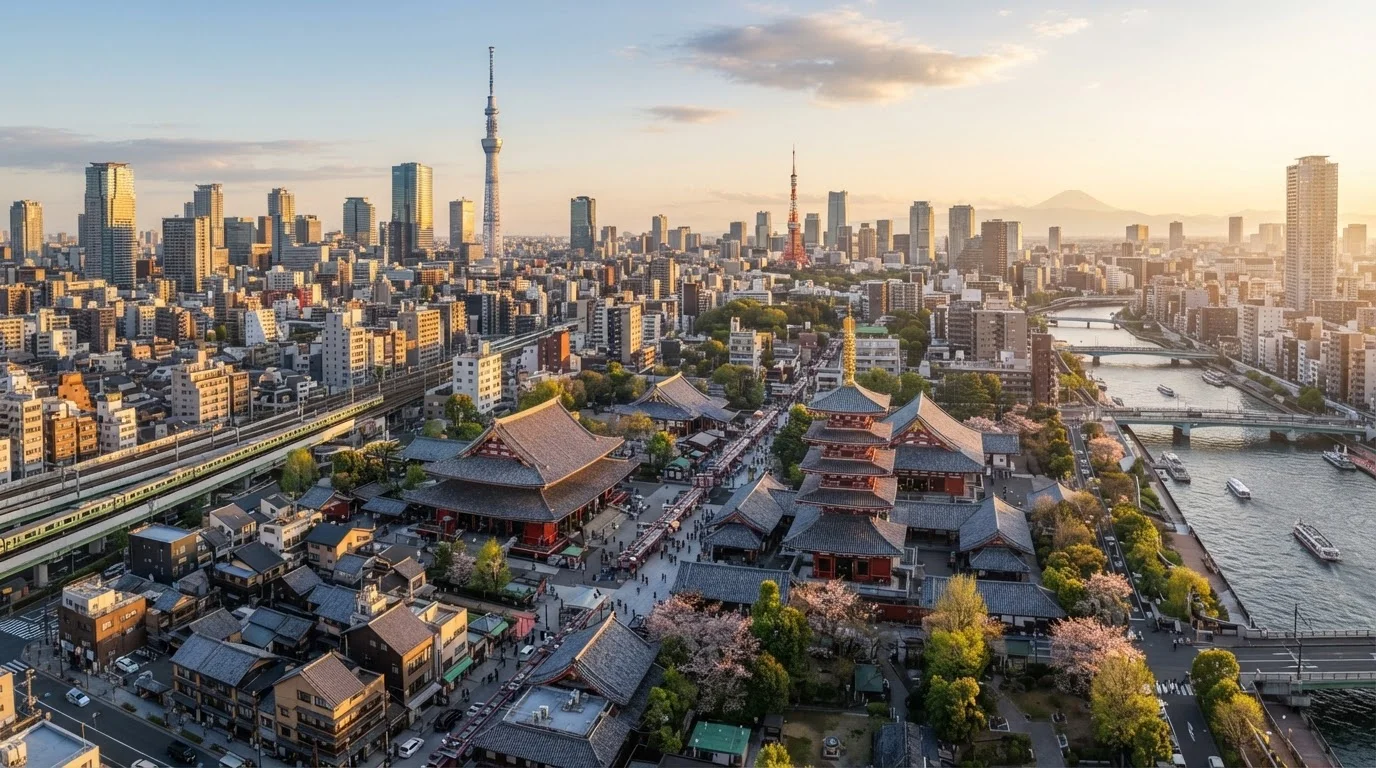
Tokyo is one of the world's most populated metropolitan areas, yet it functions with remarkable order. Neighbourhoods are its real unit of meaning - Shibuya pulses with youth culture and commerce; Yanaka preserves the feel of old shitamachi (downtown) Tokyo; Akihabara centres on electronics and anime subculture; Shimokitazawa draws independent music venues and vintage fashion. Each ward could fill a day on its own.
The city is highly navigable for international visitors. Signage is bilingual, transit IC cards work across trains and buses, and English-language support is widely available at major hubs. The trade-off is density and cost - accommodation runs higher than elsewhere in Japan, and decision fatigue is real. Budget more days than you think you need. Tokyo also serves as the natural entry point for day trips to Nikko, Kamakura, and Mount Fuji's northern lakes region.
Get an IC Card on Arrival
A rechargeable IC transit card (such as Suica or Pasmo) works on trains, subways, and buses across most of Japan, and can be used at many convenience stores and vending machines too. Loading one at the airport on arrival removes a significant daily friction point. These cards are available at major station kiosks and do not require a Japanese phone number or bank account.
Kyoto: Japan's Cultural and Historical Heartland
Kyoto served as Japan's imperial capital for over a millennium, and the weight of that history is palpable. The city holds more than 1,600 Buddhist temples and 400 Shinto shrines, several of which are UNESCO World Heritage Sites. Arashiyama's bamboo groves, the lantern-lit lanes of Gion, and the vermilion torii gates of Fushimi Inari Taisha are all iconic - and genuinely impressive in person, not just on camera.
Kyoto moves more slowly than Tokyo. That's intentional and worth embracing. The city is designed for deliberate exploration - cycling the Philosopher's Path, sitting in a ryokan (traditional inn) garden, watching a formal tea ceremony. It's also the most logistically straightforward city for experiencing traditional arts, geisha district culture, and kaiseki (multi-course refined cuisine). One honest caveat: Kyoto's most famous sites attract significant crowds, particularly during cherry blossom season in spring and foliage season in autumn. Plan visit times accordingly.
Osaka: Food Culture, Frank Character, and Street-Level Energy
Osaka has a well-earned reputation as Japan's culinary capital. The concept of kuidaore - roughly, eating until you go broke - captures the local attitude toward food. Dotonbori's neon-soaked canal district, the takoyaki (octopus ball) vendors of Shinsekai, and the covered shopping arcades of Namba all reflect a city that values pleasure, directness, and unpretentious fun.
Osaka residents are widely noted for being more openly friendly and talkative than their counterparts in Tokyo - a cultural contrast that many international visitors find refreshing. The city also makes an excellent base for day trips: Nara's free-roaming deer and Todai-ji temple are 45 minutes away by train; Kobe's harbour district and beef culture are even closer. Whether you're travelling independently or considering a guided approach, understanding solo vs. organised tour planning can help you get the most from an Osaka-centred itinerary.
1,600+
Buddhist temples in Kyoto
Kyoto's temple and shrine count reflects its 1,000-year history as Japan's imperial capital, according to the Kyoto City Tourism Association.
~14M
Annual visitors to Osaka Prefecture
Osaka consistently ranks among Japan's most-visited prefectures, with international tourism rebounding strongly in recent years according to Japan Tourism Agency data.
2.5 hrs
Tokyo to Osaka by Shinkansen
Japan's bullet train network connects Tokyo and Osaka in approximately 2.5 hours, making multi-city itineraries highly practical.
Beyond the Big Three: Hiroshima, Nara, and the Japan Alps
Travellers who push past the Tokyo-Kyoto-Osaka corridor consistently describe it as a turning point in how they experience Japan. Hiroshima is a city of profound emotional resonance - the Peace Memorial Museum and Hiroshima Peace Memorial Park are sobering and essential for historically minded visitors. Miyajima Island, reachable by ferry just 30 minutes from the city, offers one of Japan's most photographed landmarks: the floating torii gate of Itsukushima Shrine.
The Japan Alps - particularly the Nagano and Gifu regions - offer an entirely different register: mountain villages, hot spring ryokan, sake breweries, and winter skiing. Kanazawa, sometimes called the Kyoto of the Sea of Japan coast, is renowned for its preserved samurai and geisha districts and the striking contemporary Kenroku-en Garden. These destinations suit travellers who want a meaningful contrast to the urban density of Japan's major corridors - the kind of mix of active and leisure travel that makes a trip feel genuinely rounded.
Travel conditions, entry requirements, visa rules, and local regulations change. Always verify current information with official government and destination sources before travelling.