

Key Takeaways
- Actual Cash Value pays what your car was worth on the open market at the time of the loss, minus depreciation.
- Agreed Value locks in a specific payout amount upfront - no depreciation applied at claim time.
- ACV policies are standard and widely available; agreed value coverage is typically a specialty product.
- The gap between what you're owed and what you owe on a loan can leave you short under either method.
- Agreed value premiums are usually higher, reflecting the insurer's guaranteed payout exposure.
- Understanding your policy's valuation method before a loss is the only time it doesn't cost you money.
Option A
Actual Cash Value (ACV)
The standard, depreciation-adjusted payout method.
Best for: Drivers of everyday vehicles who want broad, affordable coverage and accept market-rate depreciation in a total-loss claim.
Option B
Agreed Value
A locked-in payout negotiated before any loss occurs.
Best for: Owners of classic, collector, or high-value vehicles where depreciation formulas don't reflect the car's true worth.
If you drive a standard late-model vehicle with a conventional loan or lease
Actual Cash Value
ACV coverage is built into standard collision and comprehensive policies and suits most everyday drivers. Consider pairing it with gap insurance if you carry a loan balance.
If you own a classic, restored, or collector vehicle
Agreed Value
Depreciation schedules don't reflect the real market for collectibles or restored cars. Agreed value ensures a predetermined payout that honors the vehicle's actual worth.
If your car has significant modifications or custom work
Agreed Value
Standard ACV formulas rarely account for aftermarket upgrades. An agreed value policy can be structured to include those investments explicitly.
If affordability is the primary concern
Actual Cash Value
ACV coverage carries lower premiums than agreed value products. For high-mileage or older vehicles with modest market value, ACV is usually the practical choice.
What Happens When a Car Is Totaled
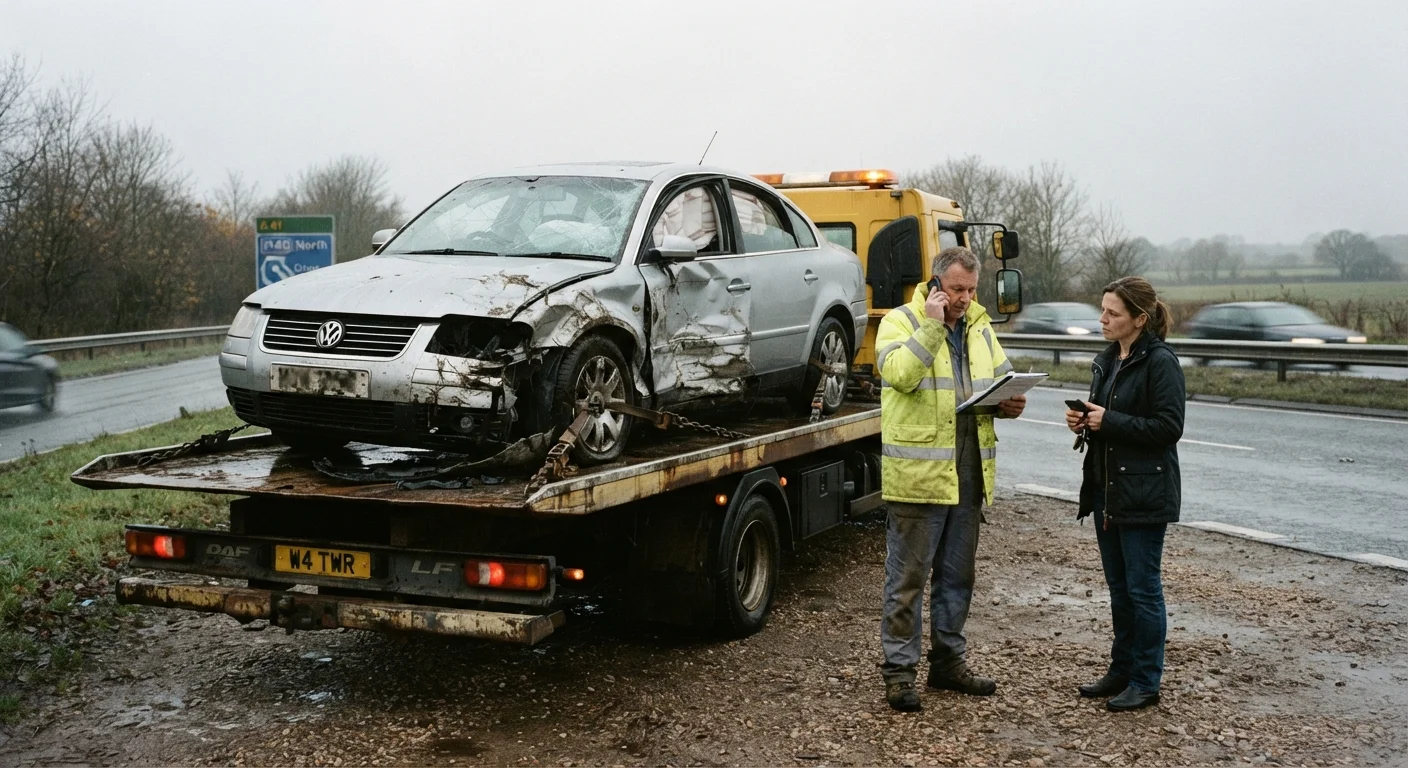
When an insurer declares a vehicle a total loss - typically when repair costs exceed a defined percentage of its value - the question shifts quickly from "how do we fix this?" to "what do we owe you?" The answer hinges almost entirely on one clause buried in your policy: how your vehicle is valued.
Two distinct methods govern that calculation for most US drivers. Actual Cash Value (ACV) is the default in standard auto policies. Agreed Value is a specialty approach negotiated before coverage begins. They produce very different outcomes, and most drivers don't discover which one they have until they're already filing a claim. See our overview of core coverage types for broader context on how these policies are structured.
Actual Cash Value: How Depreciation Shapes Your Payout
Actual Cash Value is calculated by taking the vehicle's replacement cost - essentially what it would cost to buy an equivalent car today - and subtracting depreciation for age, mileage, condition, and market factors. Insurers typically reference pricing guides and local market data to establish this figure.
The practical result: a three-year-old vehicle with 45,000 miles will pay out considerably less than its original purchase price, even if it was well maintained. Depreciation is real and often steep in the early years of ownership.
| Criterion | Actual Cash Value (ACV) | Agreed Value |
|---|---|---|
| Payout basis | Market value minus depreciation at time of loss | Fixed amount set when policy is written |
| Depreciation applied | Yes - reduces payout significantly over time | No - agreed amount paid in full |
| Typical vehicle type | Standard, everyday vehicles | Classic, collector, or high-value modified cars |
| Premium cost | Lower - standard market rate | Higher - reflects guaranteed payout |
| Documentation required | Minimal at policy start | Appraisal and supporting records typically required |
| Payout predictability | Variable - depends on market at time of loss | Fixed - known before any loss occurs |
| Availability | Standard - included in most policies | Specialty - requires specific insurer or policy |
One issue drivers frequently encounter is that the insurer's ACV calculation doesn't match what they believe the car was worth - or what they still owe on it. If you financed the vehicle, the payout may fall short of your outstanding loan balance. That shortfall is exactly what gap insurance is designed to address. Understanding ACV also helps explain why trade-in valuations often disappoint - the same depreciation logic applies.
Agreed Value: A Payout Fixed in Advance
Agreed Value works differently from the ground up. Before the policy is issued, you and the insurer negotiate and document a specific dollar amount that the vehicle is worth. If the car is totaled at any point during the policy period, that agreed amount is paid out - no depreciation applied, no market-day adjustments.
This structure is most common in specialty or collector car insurance, where standard depreciation schedules are meaningless. A 1969 muscle car that has appreciated over decades, or a recently restored vehicle with significant labor invested, won't be served by a formula designed for a 2021 crossover.
20-30%
Typical first-year vehicle depreciation
According to widely cited industry estimates, most new vehicles lose between 20% and 30% of their value within the first year of ownership.
~50%
Value lost after five years (average vehicle)
Industry data consistently shows that the average passenger vehicle retains roughly half its original value after five years, illustrating how significantly ACV payouts shrink over time.
Agreed value policies typically require documentation - appraisals, photographs, receipts for restoration work - to justify the insured amount. Premiums are higher than ACV equivalents because the insurer is committing to a guaranteed payout regardless of market movement. That said, the certainty can be worth the cost for owners whose vehicles don't fit standard depreciation curves.
It's worth noting that "stated value" is a third term you may encounter, and it is not the same as agreed value. Stated value policies often still allow the insurer to pay ACV if it's lower than the stated figure - read any specialty policy carefully before assuming you have agreed value protection.
Choosing the Right Valuation Method for Your Situation
For most drivers with standard vehicles, ACV coverage - bundled inside collision and comprehensive - is appropriate and cost-effective. The depreciation hit is real but predictable, and standard coverage is broadly available from most insurers. Review our comparison of collision vs. comprehensive coverage to understand which policy type even applies to a total-loss scenario.
If you own a vehicle whose value isn't captured by standard market data - a collector car, a heavily modified vehicle, or a restored classic - agreed value coverage merits serious consideration. The premium difference may be modest relative to the payout certainty it provides.
"Stated Value" Is Not the Same as Agreed Value
Some specialty policies advertise "stated value" coverage, which can sound like agreed value but often isn't. Stated value policies may allow the insurer to pay whichever is lower - the stated amount or the ACV at time of loss - leaving you with a smaller check than expected. Always confirm in writing whether your policy guarantees the full stated amount regardless of depreciation before assuming you have agreed value protection.
Whatever your situation, the coverage decisions that often come back to haunt drivers tend to share one feature: they were made without understanding the valuation mechanics behind them. Reviewing your policy's total-loss language now - not after an accident - is the most practical step you can take.
This article provides general information about auto insurance concepts and is not personalized insurance, financial, or legal advice. Coverage terms, valuation methods, and availability vary by insurer and state. Always read your policy documents carefully and consult a licensed insurance professional for guidance specific to your situation.