

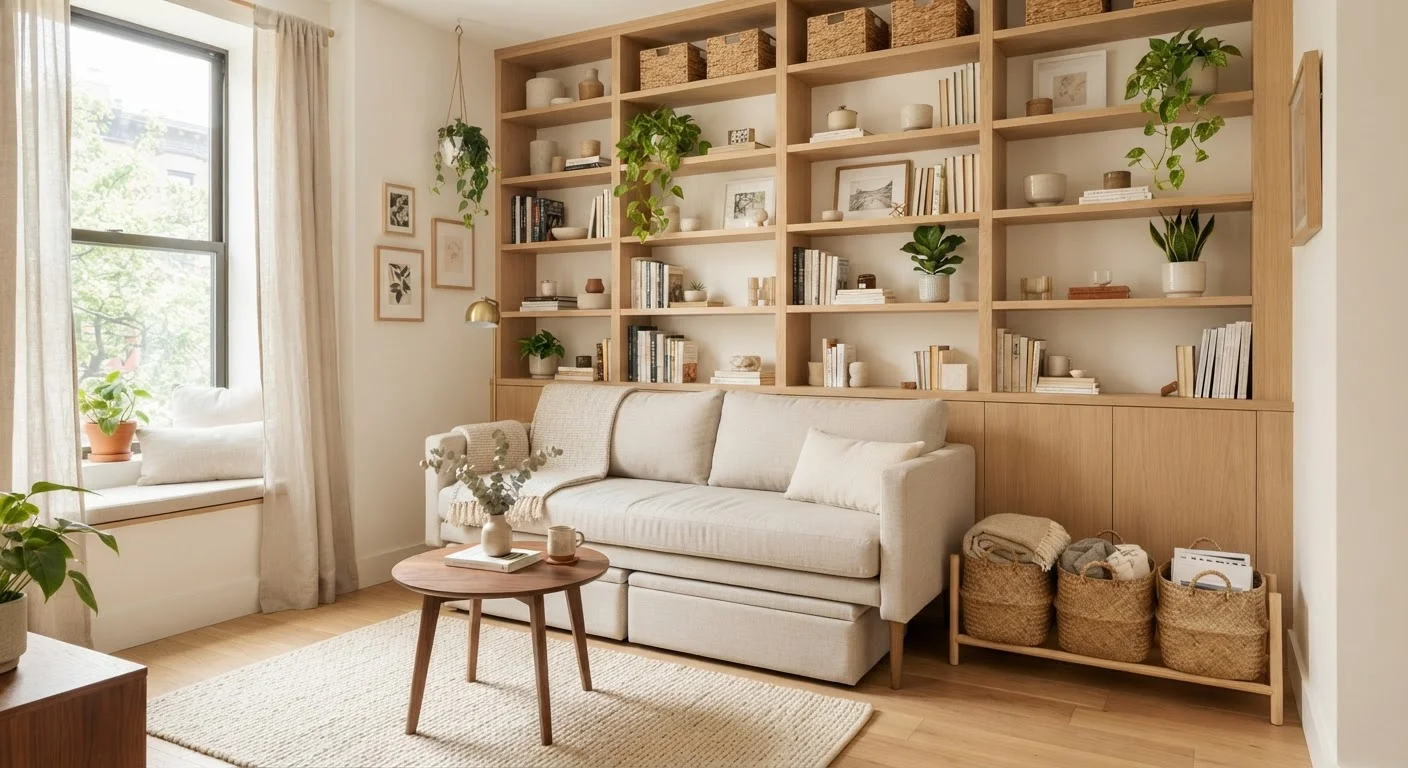
Key Takeaways
- Vertical storage - using wall height rather than floor space - is one of the most effective strategies in small homes.
- Multi-function furniture (storage ottomans, bed frames with drawers) recovers hidden space without adding footprint.
- Decluttering before organizing is essential; more storage does not solve a too-much-stuff problem.
- Open shelving increases visual access but requires consistent tidiness; closed storage hides mess but can feel heavy in tight rooms.
- The right strategy depends on your layout, habits, and how permanently you can alter the space.
Our Verdict
No single storage approach works for every small space. Vertical shelving and multi-function furniture tend to deliver the widest gains for most compact homes, while built-in solutions offer the cleanest results where permanent changes are possible. The most practical path is usually a layered one - combining two or three approaches that suit your specific layout and lifestyle.
| Best for | Recommended |
|---|---|
| Renters or those who cannot make permanent changes | Freestanding vertical shelving and multi-function furniture |
| Homeowners wanting a seamless, high-capacity result | Built-in or custom cabinetry |
| Those dealing with high clutter and limited discipline around tidying | Closed storage with labeled containers |
| Decorating-focused readers who want storage to feel intentional | Open shelving with a curated, consistent display |
Why Small-Space Storage Demands a Different Mindset
In a larger home, poor organization is inconvenient. In a studio apartment or a compact bedroom, it becomes genuinely unlivable. The challenge isn't simply finding places to put things - it's choosing strategies that work with your space, not against it.
The first and most important step isn't buying anything. It's reducing what you own to what you actually use. Extra storage capacity filled with rarely-used items is just organized clutter. Once you've edited your belongings honestly, the approaches below will work significantly better.
For a broader starting point covering every room, see our room-by-room home organization guide.
Comparing the Main Storage Approaches
The strategies below are the most commonly used - and most frequently debated - in small-space organization. Each has genuine strengths and real limitations depending on your living situation.
| Vertical Shelving | Multi-Function Furniture | Open Shelving | Closed Storage | Built-In Solutions | |
|---|---|---|---|---|---|
| Cost to implement | Low to moderate | Moderate | Low to moderate | Low to moderate | High |
| Suitable for renters | Yes, if anchored safely | Yes | Yes | Yes | Rarely |
| Space efficiency | High | High | Moderate | Moderate | Very high |
| Requires consistent tidiness | Moderate | Low | High | Low | Low to moderate |
| Visual impact on room size | Neutral to positive | Neutral | Opens up space | Can feel heavy | Clean and integrated |
| Best for | Books, decor, everyday items | Bulky seasonal items | Accessible daily items | Hiding clutter quickly | Maximum permanent capacity |
Understanding these trade-offs helps you avoid the common mistake of investing heavily in one approach only to find it doesn't suit your habits or layout.
Vertical Storage: Going Up Instead of Out
Floor space is the scarcest resource in a small home. Wall height, by contrast, is almost always underused. Tall bookshelves, wall-mounted cabinets, pegboards in kitchens, and hooks near entryways all reclaim square footage that would otherwise be wasted.
Floating shelves above desks or beds, floor-to-ceiling shelving units in living rooms, and stacked kitchen cabinetry reaching the ceiling are all practical applications. The key is anchoring tall units safely to wall studs - this is non-negotiable for stability, particularly in rentals where freestanding shelves can tip.
Our article on using vertical space for storage goes deeper on specific techniques and room-by-room applications.
Anchor Tall Units to the Wall
Any freestanding shelving unit taller than about four feet should be secured to a wall stud using a furniture strap or L-bracket. This prevents tipping, which is a genuine safety risk - particularly in households with children. Most units come with anti-tip hardware included; if yours didn't, hardware store brackets are inexpensive and straightforward to install.
Multi-Function Furniture: Storage Built Into What You Already Need
In a small space, every piece of furniture should earn its footprint. Ottomans with lift-top storage, bed frames with built-in drawers, dining benches with interior compartments, and sofas with under-seat storage all perform double duty without adding bulk.
This approach works especially well for bulky seasonal items - extra blankets, off-season clothing, or infrequently used linens - that would otherwise occupy valuable closet space. The trade-off is that access is typically less immediate than open shelving, so these work best for things retrieved occasionally rather than daily.
When planning purchases, think about the total cost relative to how much storage you're actually gaining. This connects to broader smarter budgeting principles - spending on furniture that solves two problems at once tends to be a sound investment for small-space living.
Open Shelving vs. Closed Storage: The Visual Trade-Off
Open shelving makes a small room feel larger and keeps frequently used items visible and accessible. The downside is that it demands consistent tidiness - even slightly disorganized open shelves can make a compact room feel chaotic.
Closed storage (cabinets, drawers, lidded bins) conceals clutter and reduces the cognitive load of visual mess, but in a small room, too many heavy closed units can feel oppressive and darken the space. A practical middle ground is mixing both: closed storage for everyday essentials and open shelving for curated, decorative, or frequently-accessed items.
For a thorough look at when each approach makes more sense, see our comparison of open shelving vs. closed cabinets.
More Storage Doesn't Fix Too Much Stuff
Adding shelves or cabinets before decluttering is one of the most common small-space mistakes. New storage capacity fills quickly with items that weren't organized before, leaving you no better off. Spend time editing your belongings first - what you remove determines how well any storage strategy actually works.
Built-In Solutions: The Highest Investment, Cleanest Result
Custom built-ins - window seats with storage beneath, alcove shelving, fitted wardrobes - make the most efficient use of available space because they're designed around your exact dimensions. They also tend to increase a home's perceived value and function.
The significant downside is cost and permanence. Built-ins require a contractor in most cases, involve permits for structural modifications in some jurisdictions, and are not reversible if you move. For renters, this approach is typically off the table entirely.
If you're a homeowner considering a larger intervention, it's worth understanding where built-in storage fits within a broader renovation picture - our article on extensions vs. loft conversions covers how space-adding projects compare more generally.