

Key Takeaways
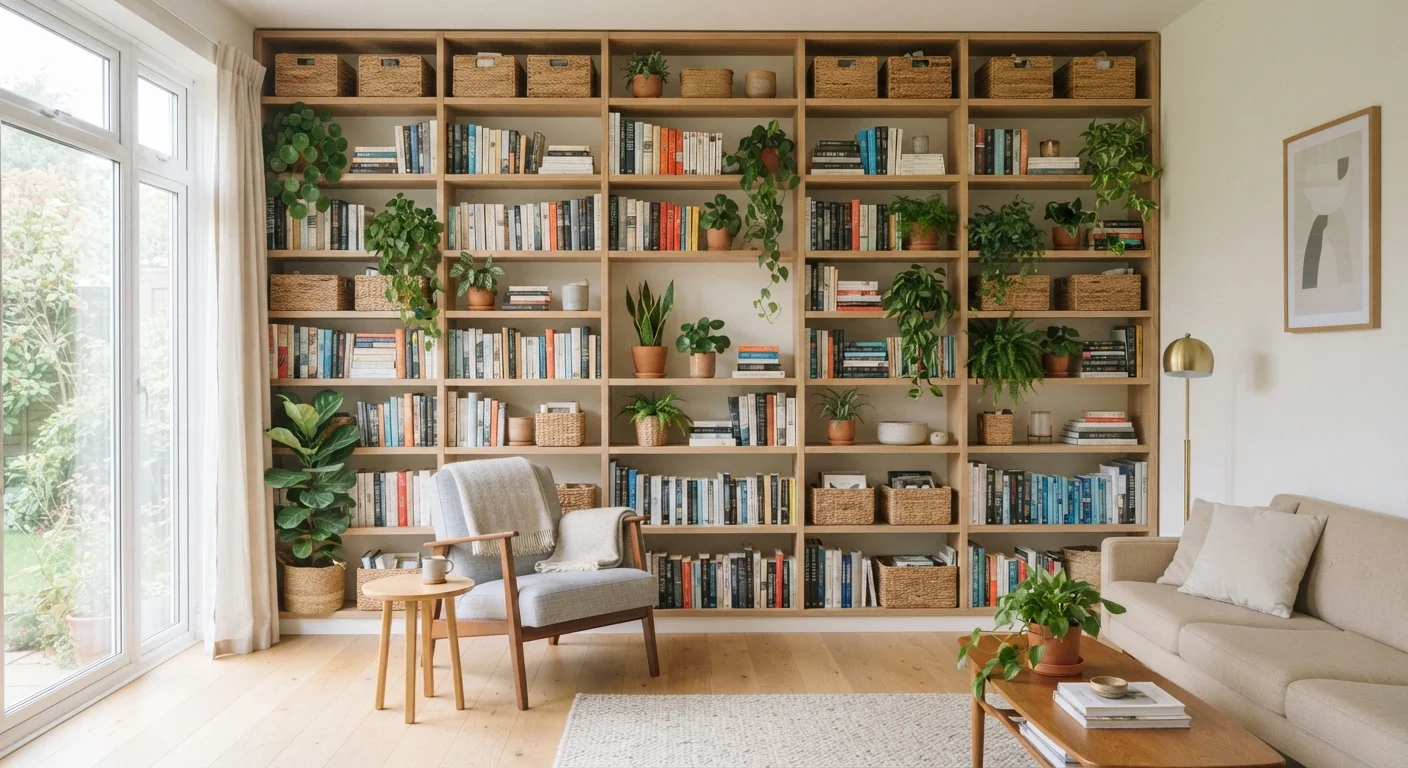
- Most rooms have significant unused storage capacity above eye level.
- Wall-mounted shelving and hooks can reclaim floor space without structural changes.
- Vertical storage works in every room, from kitchens to garages.
- Anchoring shelves to wall studs is essential for safe, load-bearing installations.
- Frequently used items belong at accessible heights; seasonal items can go higher.
Vertical Space in Home Storage
Vertical space refers to the usable area on your walls and in the height of a room - from floor to ceiling - that can hold shelves, hooks, cabinets, or other storage structures. Most people organize horizontally, spreading items across countertops, floors, and low surfaces, while the space above goes unused. Tapping vertical space means shifting storage upward, freeing up floor area and reducing visual clutter.
In storage planning, this approach is sometimes called 'volumetric efficiency' - making use of all three dimensions of a room rather than just the two-dimensional footprint.
Why Vertical Space Goes Unused
Walk into almost any home and you'll see the same pattern: countertops layered with objects, floors disappearing under furniture, and closets stuffed to the point of unusability - while the upper half of every wall stands empty. This isn't laziness; it's a result of how most of us instinctively organize. We reach for surfaces at hand level and arrange things outward rather than upward.
The result is a storage strategy that uses only a fraction of the available volume in a room. A standard room with eight-foot ceilings contains far more usable wall area above four feet than below it. Most of that space does nothing but hold paint.
Understanding why this happens is the first step toward fixing it. See our plain-language reference on home organization concepts for a broader look at how storage thinking evolves.
Renters: Check Before You Mount
Lease agreements vary widely on what modifications are permitted. Some landlords allow small nail holes while others restrict any wall penetration. Before installing shelves or hooks, review your lease and, when needed, ask your landlord in writing. Freestanding alternatives like leaning shelves and over-door organizers sidestep this issue entirely.
Practical Approaches for Every Room
The mechanics of vertical storage are straightforward, but the right approach varies by room and by what you're storing.
Kitchen
Kitchens are among the most cluttered rooms in any home, yet they typically have significant wall space between the top of upper cabinets and the ceiling. Open shelving in that zone works well for items used weekly - pitchers, serving bowls, or overflow pantry goods in labeled containers. Magnetic knife strips and wall-mounted spice rails can free up an entire drawer or section of counter.
Home Office
In a home office, floor-to-ceiling bookcases or modular shelving units transform a wall into a functional filing and display system. Vertical space here also helps reduce desktop clutter, which many people find directly affects focus and calm.
Bathroom
Over-toilet shelving units and tall, narrow cabinets make use of vertical real estate in a room where floor space is almost always scarce. Wall hooks inside the door or on the back of a cabinet door add storage without taking up any room at all.
Garage
The garage may have the greatest untapped vertical potential of any space. Ceiling-mounted platforms, wall track systems, and high shelving for seasonal items can keep the floor clear for vehicles and everyday movement. For a fuller picture, see our look at garage storage trade-offs.
Start With One Wall Before Committing
Before purchasing a full shelving system, use painter's tape to outline where shelves would go on the wall. Live with the mock-up for a day or two. This low-effort test helps you confirm the height, spacing, and placement feel right for how you actually move through the room - before a single hole is drilled.
Mounting Safely and Choosing the Right Hardware
The most common mistake people make with vertical storage isn't aesthetic - it's structural. Shelves that pull away from walls, hooks that give way under coat weight, and cabinets that tip forward are all symptoms of inadequate mounting. Before installing anything intended to hold real weight, locate the wall studs using a stud finder and anchor into them with screws rated for the load.
For walls where studs don't align with your preferred shelf placement, a French cleat system - a pair of interlocking angled boards, one on the wall and one on the shelf - distributes load across a wider span and is adjustable without repainting. Many woodworkers and organizers favor this system for its flexibility and strength.
If you're renting or want a non-permanent solution, freestanding tall shelving units are a reliable alternative. Look for units with an anti-tip strap that can secure to a stud - an important safety step especially in homes with children.
~50%
Typical wall area unused above 4 feet
Home organization professionals commonly note that in most rooms, the upper half of wall surface goes entirely unused for storage purposes.
8-10 ft
Standard ceiling height in US homes
Most American homes built after 1990 have ceilings of at least eight feet, offering substantial vertical potential beyond typical shelf placement.
For broader context on how vertical storage fits into a whole-home strategy, our room-by-room home organization guide walks through each space in detail.
Organizing by Access Frequency
Not everything deserves the same shelf height. A useful rule of thumb: organize vertically by how often you reach for something. Items used daily should live at the most accessible heights - generally between waist and eye level. Things used weekly can go a little higher or lower. Seasonal items, rarely used equipment, and long-term storage can occupy the highest shelves, accessed with a step stool kept nearby.
This principle applies in every room. In a closet, it means everyday shoes near the floor, occasional-use bags on a mid-shelf, and off-season clothing in bins above the hanging rod. In a pantry, it means staple ingredients at arm's reach and backup stock higher up.
This kind of intentional arrangement also makes it easier to maintain - when everything has a designated level, it's much clearer when something is out of place. For those working with particularly limited square footage, our storage solutions for small spaces offers complementary strategies that pair well with vertical thinking.